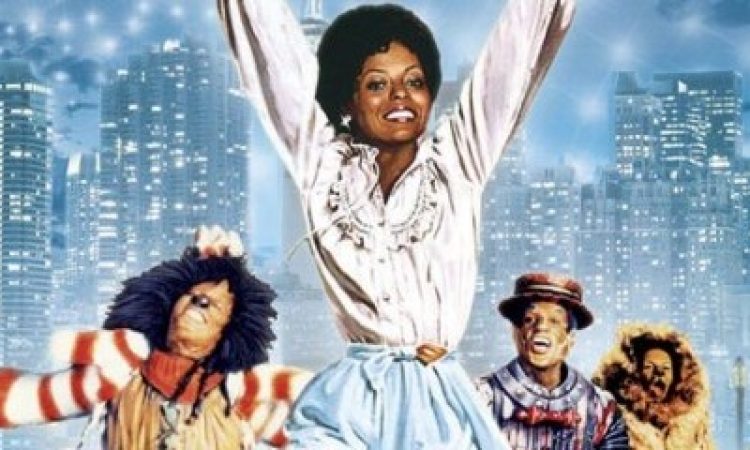
On December 3, 2015, more than 11 million television viewers tuned in to watch NBC’s broadcast of The Wiz Live. Americans got another dose of live TV musicals – having sipped from the cups of Sound of Music and most recently Peter Pan. A re-imagining of The Wizard of Oz, starring Judy Garland, The Wiz boasted a primarily African American cast and the most recent iteration promised to be a more contemporary version of the Broadway hit of 1978 starring Stephanie Mills, and not a remake of the cult classic film of 1975 starring Diana Ross and Michael Jackson. Before the bombardment of things that were wrong with the production, let me just say what I thought was right: seeing performers who looked like me in a prime-time television musical.
But this is not a review of NBC’s The Wiz Live. I do not intend to critique the performers or to analyze the choreography. This is to relive my memory of the Ross/ Jackson version of 1978, with Quincy Jones supervising the music and choreography by Louis Johnson, and a sea of black performers working on such a large-scale production. This is also a reflection on the social climate that places the production on a cultural pedestal, and on the relevance of a remake.
It’s impossible to talk about The Wiz without talking about race. Historically, black representation in television lent itself to white normalcy, illuminating the need for equity on stage and screen. For this reason The Wiz was groundbreaking and it opened the doors for more full-scale productions showcasing people of color.
In 1978, a television set was common in most American households. Jimmy Carter was president, Annie Hall won Best Picture at the Academy Awards, and some of the top television shows were M*A*S*H, Laverne & Shirley, Happy Days, All in the Family, Little House on The Prairie, Three’s Company and The Love Boat. Films such as Saturday Night Fever, Jaws 2, Close Encounters of the Third Kind, Grease, and Star Wars Episode IV: A New Hope, were being shown in movie theaters worldwide while the songs of the Rolling Stones, the Bee Gees, John Travolta and Olivia Newton-John, and the Commodores rode the airwaves. The Broadway shows of that year included The Best Little Whorehouse in Texas, Hello, Dolly!, Dancin, and Ain’t Misbehavin’.
This largely homochromous landscape was indicative of a culture that painted normalcy through a very narrow lens, evidenced in who was being represented. Some might object, “The Love Boat, The Commodores, and Ain’t Misbehavin’ had black people! And The Jeffersons was a spinoff of All in the Family!” I would respond that this level of disproportionate representation does not level the playing field. Still, the grave disparity in the opportunities afforded people of color versus white people makes any visibility of persons of color worthy of celebration – at least it should, especially among other people of color.
In an attempt to unpack the legacy of The Wiz, I surveyed several industry professionals of color on the impact the production has had on their relationship with dance, and how they use its value to analyze race in performance and popular culture.
My initial question to them was: “What is it about The Wiz that dancers were drawn to?” (I framed the question from a dancer’s perspective because it is a familiar place). I soon became aware that the question was limited, so I opened it to include actors and singers. I knew that the dancing and singing made it entertaining, but more than entertainment, I was interested in meaning. So, the question evolved into “How is The Wiz valued and how is it archived in the sphere of black popular culture?”
This is what they had to say:
There’s a sense of recognition where once only disidentification was possible. – Dr. Ariel Osterweis, Visiting Scholar/Artist, Skidmore College
The regal and dignified spirit of the movement vocabulary of both the movie and the Broadway show, were both choreographed in the American black dance tradition infusing ballet, modern, and movement from the African diaspora. I enjoyed that there was a generation of concert black dancers represented in both. – Brian Harlan Brooks, Assistant Choreographer of ‘Motown: The Musical’
It gave black folks a way into an American classic without totally assimilating. – Dr. Nyama McCarthy-Brown, Assistant Professor of Contemporary Dance, University of Indiana
It’s specifically for the black gaze even though it came from a white narrative. It is a part of black ritual when it comes to entertainment. – Ricarrdo Valentine, Co-founder of Brother(hood) Dance!
There’s a combination of nostalgia and agency. For our generation it was most likely the first time we saw ourselves reflected in a musical. The legacy of performers from dancers to singers is a cornucopia of the best and brightest of black popular culture. – Jennifer Harrison Newman, Creative Producer
The Wiz felt like my own dreams. I still watch it. I know every word and I danced to the music for hours as a kid. The emerald city sequence is the epitome of “shade” and black fierceness…. gorgeous black people “strutting.” What Quincy Jones did with the music sounded like blackness at the time. The songs were metanarratives of the black experience. Tell me the song ”You Can’t Win” isn’t a Negro spiritual. When Lena Horne said “Believe in Yourself” you DID! – Dr. Takiyah Amin Anur, Assistant Professor of Dance Studies at University of North Carolina, Charlotte
At a time when the entertainment industry lacked diversity and representation on TV, film, and Broadway, The Wiz was pivotal in creating room for inclusion. With movement that reflected diasporic traditions and music that was accessible, a cast of predominantly African Americans, and a $22 million dollar budget, The Wiz shifted the cultural zeitgeist, allowing many performers of color to be able to chant, “It’s possible!”
The Wiz Live, NBC, December 3.