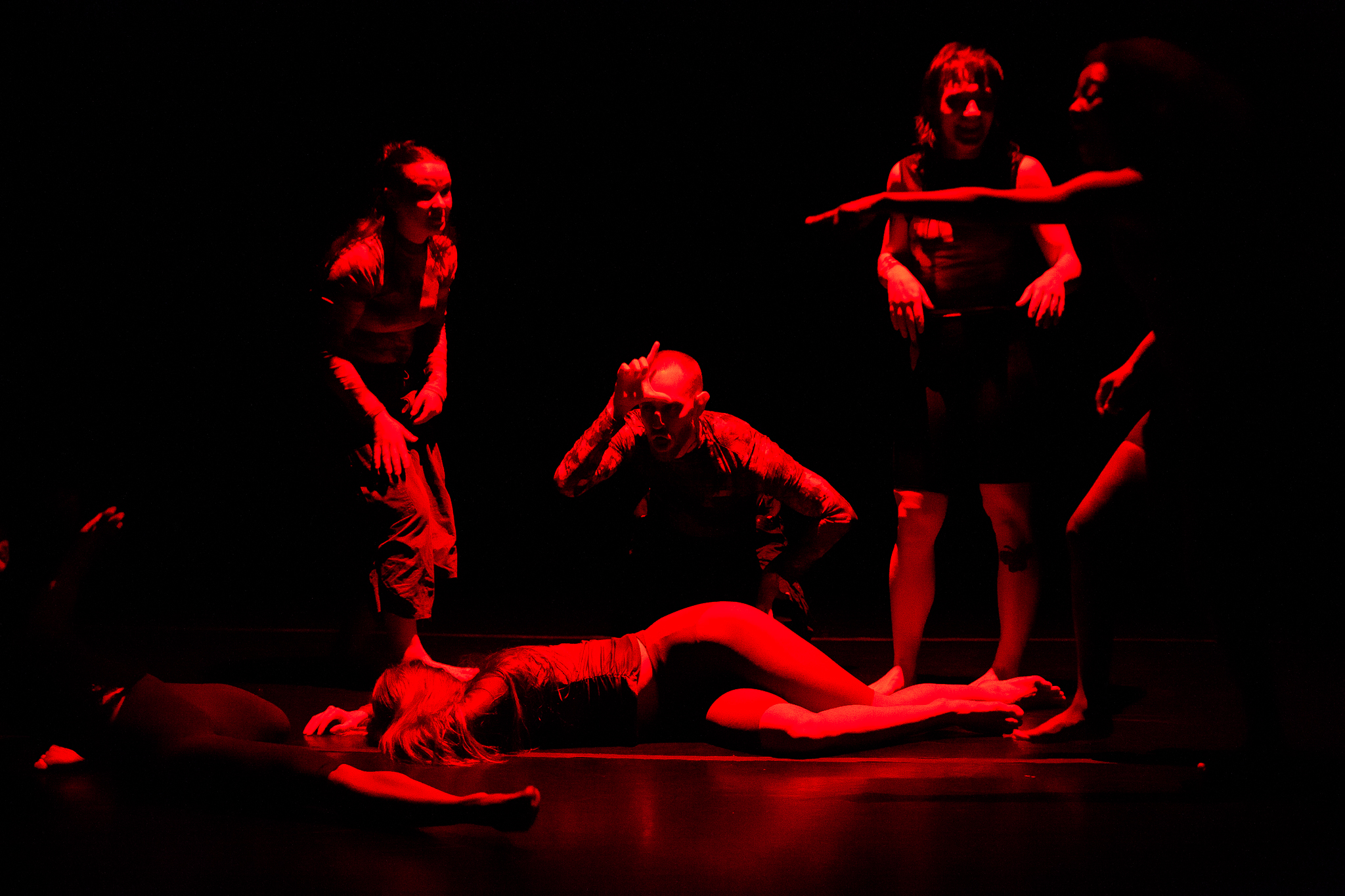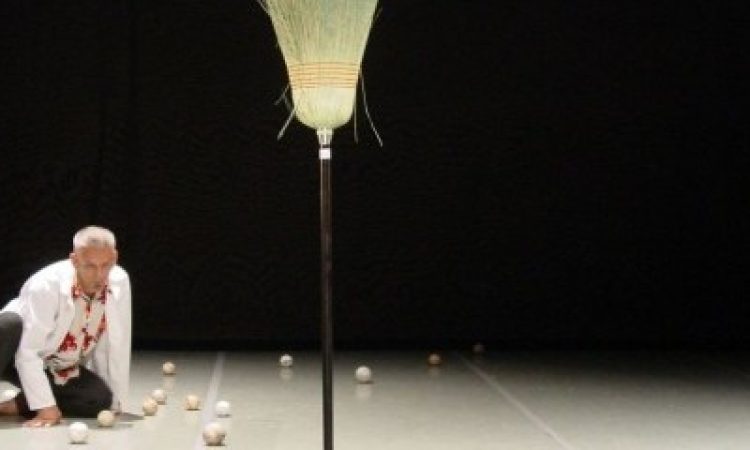
From December 11 – 13, San Francisco’s CounterPulse will present Jess Curtis/Gravity’s Intercontinental Collaborations #6 at the Gray Area/Grand Theater (2665 Mission Street). Curtis, who divides his time between San Francisco and Berlin, has a long history of creating experimental, body-based performances with an eclectic array of collaborators. When the press release for this evening of performance popped up in my inbox, I was intrigued to see philosopher Alva Noë listed as a collaborator and performer.
Alva Noë recently made a bit of a splash in October when the NY Times published an essay of his called “What Art Unveils”, which was subsequently read and shared widely in the dance community. Among various points made in the essay, Noë observes, “Art is a way of learning about ourselves. Works of art are tools, but they have been made strange, and that is the source of their power.” His newest book, Strange Tools, expands on these ideas; the experience of reading it is at once mind-expanding and affirming. As a philosopher working on questions of perception and consciousness, he is among a group of thinkers proposing an “enactive approach” to perception; he asserts, “perceiving is a kind of skillful bodily activity.” What this means, in the most basic sense, is that perception is not a process in the brain; it is not merely “thinking.” Instead we can think of perception as a dynamic “doing” where our embodied interaction with our surroundings both organizes, and is organized by, the world around us. Pretty heavy, abstract stuff—and yet it has found an eager audience in the dance world.
“My first book was called Action in Perception,” Noë told me recently during a phone conversation. “It targeted a mostly academic audience – predominantly in philosophy and neuroscience – but to my astonishment I learned that it was being read by people in the dance community.”
But perhaps it should not have been such a surprise. “People in the dance world – dance makers and dancers – are exquisitely interested in the relationship between consciousness and the body, consciousness and movement,” he said. “Some of the things I was saying seemed to resonate with them. For example, in my view every experience we have is, in some sense, something we make, or compose. So you can even start to think of choreography or dance making as a kind of research into an investigation of consciousness itself.”
Read the full article at Culturebot. Originally published December 9, 2015.
Editor’s note: thINKing DANCE is excited to be sharing articles with our friends at Culturebot. Please let us know how you are enjoying the conversation.
By Andy Horwitz