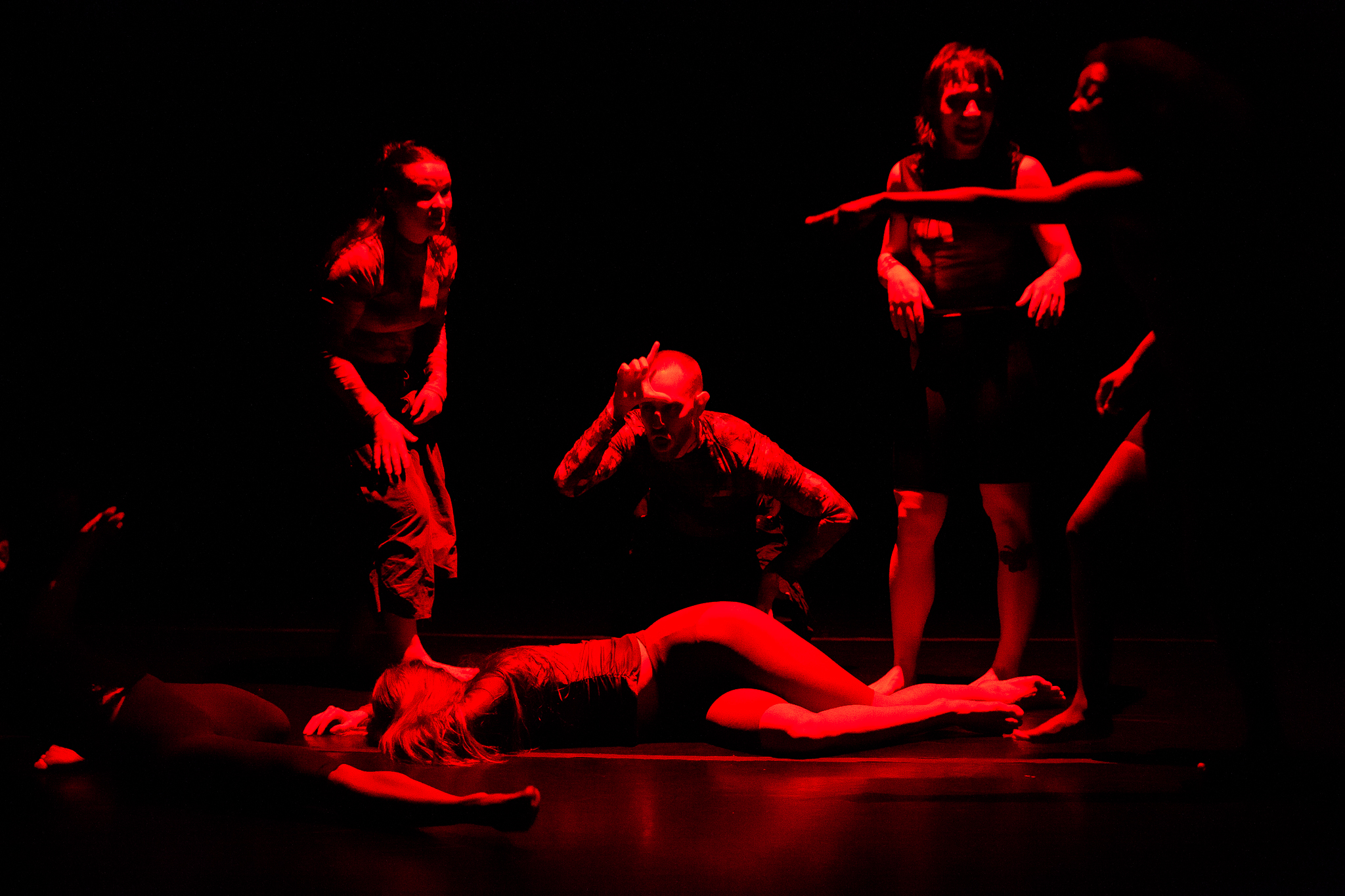
If you’re looking for performance that pulls at the heart, wrenches the gut, pushes boundaries, and invites you into willing or resistant conversation, Jaamil Olawale Kosoko’s Black Male Revisited: Songs for the Dark Divine is a must-see. The work explores place, self, race, and perception in the American social context, using theatrical devices to both inform and entertain. The Painted Bride hosts Kosoko’s on-going exploration of his Nigerian-American masculinity and the manipulation, misrepresentation, and generalization of the Black male presence in this society.
Co-director of the Philadelphia and Brooklyn-based interdisciplinary performance collective anonymous bodies, Kosoko incorporates original songs, poems, first person narratives, and movement, all to move forward his intention—confronting and uncovering the perpetual and multi-faceted elephant in the room. The fact that Kosoko continues to investigate, research, and create performance interventions entertaining this theme (especially today, when both racial and sexual identity and place remain top issues of contention) perhaps demonstrates both his and society’s need to inform and be informed. Kosoko’s work as visual artist, actor, dancer, choreographer, curator, and director is all influenced by his lived experience as a black presence in an often “other-ing” world.
Black Male Revisited: Songs for the Dark Divine is a performance piece that explores race, gender, sex, and society with both a violent and vulnerable awareness and honesty. The work is a response to and continuation of Kosoko’s self-questioning—sparked in part by the ground-breaking 1994 Thelma Golden curated Whitney Museum exhibit entitled Black Male: Representations of Masculinity in Contemporary American Art. It is an effort to remain in dialogue with the queries the museum show inspired:
· How do we tell our own stories?
· How do we combat social amnesia?
· How can we demonstrate true empathy and move towards acceptance of difference?
The relevance of Black Male Revisited is boosted if we consider the rule of three by citing two other serendipitous events. On February 18th, Temple University hosted a conversation based on a recent book by Deborah Willis and Natasha Logan. “Question Bridge: Black Males in America” investigates black male identity through a series of portraits and questions posed to black men by and for black men. Earlier, on February 6th, Beyoncé released her “Formation” video, a comment on perception and identity of all things black. These are pivotal examples, along with Kosoko’s performance piece, not only of art, culture, and politics. The works are a clear call for the need to dismantle, unfetter, and embrace a black identity that has been too often, and for too long, mandated by others.
Kosoko’s first reiterative show, Black Male Revisited is in no way a straight copy of the show which first premiered in Philadelphia’s 2015 Fringe festival. The piece has enough elasticity to allow the different spaces, places, and above all the diverse audiences of each performance, to impact and influence what is actually presented. The Bride show promises not to disappoint; collaborating for the first time with Kosoko are Jeremy Toussaint-Baptiste, a Brooklyn-based visual and sonic artist, and gender-fluid performance artist Imma/Mess. Described by Kosoko as “dynamic forces within the work” the three artists together are sure to offer additional food for thought, as they add their layers to an already dense experience.
Not to miss.
Jaamil Kosoko, Black Male Revisited: Songs for the Dark Divine, Painted Bride, February 25-27.