The 35th-anniversary concert of New York-based Elisa Monte Dance was both a welcome and a farewell. Under newly appointed artistic director Tiffany Rea-Fisher, the season at Aaron Davis Hall, a venue on the City University of NY campus, was more celebratory than melancholy as the program displayed where the company has been, is, and where it’s going.
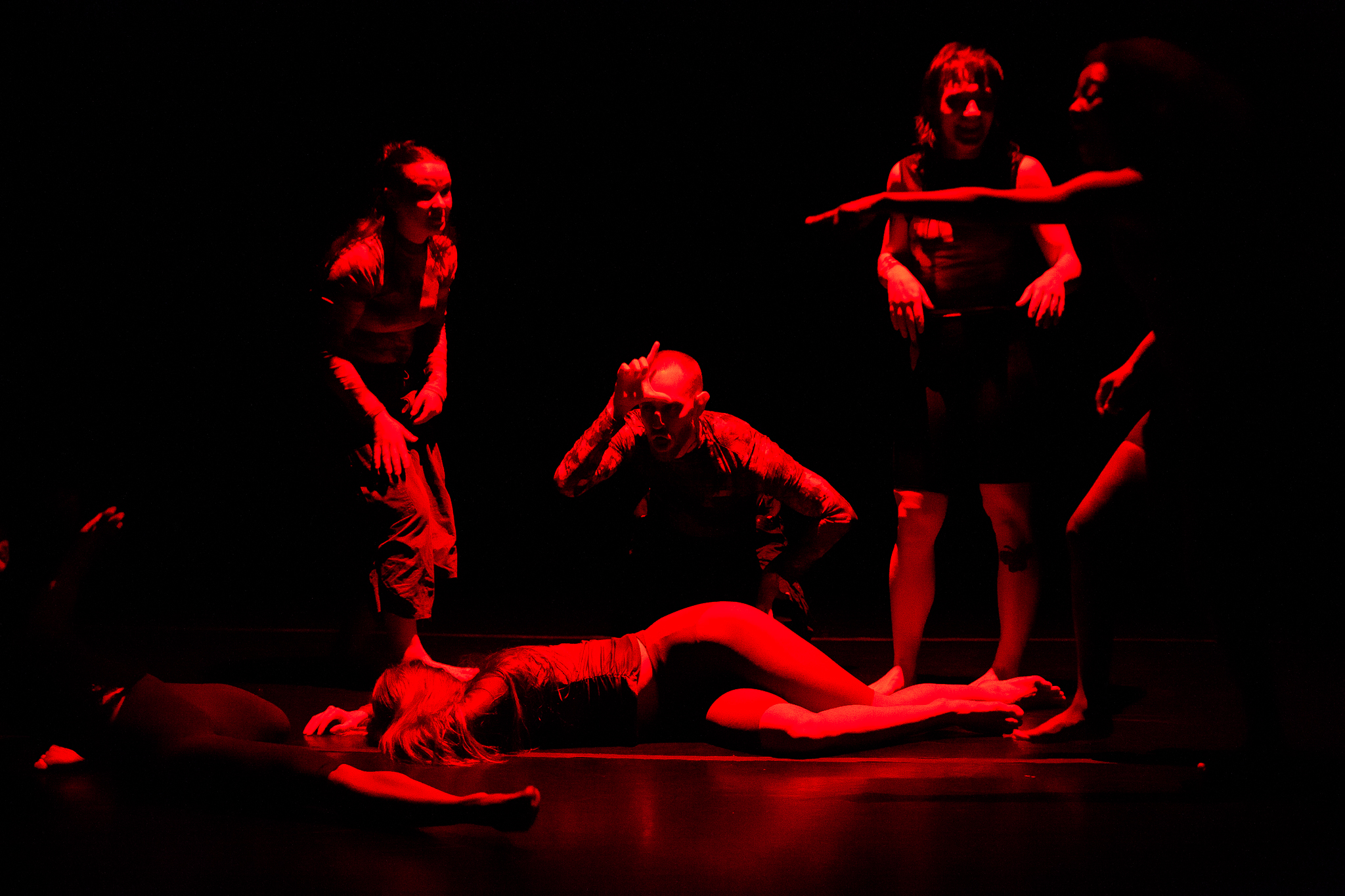
Rea-Fisher choreographed three pieces presented on Saturday evening—Why so curious?, Newton’s Cradle, and Current–while the fourth, Shattered, was choreographed by Elisa Monte herself. I’m not sure how influenced Rea-Fisher is by Monte’s aesthetic or choreographic process, but I noticed that both women are drawn to physicality and athleticism, while keeping the integrity of a classical ballet line. And, although the movement vocabulary was rich with excitement and the dancers were skilled, their abilities played second fiddle to narratives that were unclear due to nebulous plotlines.
I am not a fan of solos. I find they are often used as fillers in dance concerts, and they frequently leave me shrugging my shoulders with indifference. But Rea-Fisher’s Current was exciting to watch and kept me interested with its use of tempos and complex rhythms. Although I kept searching for the plot in Rea-Fisher’s Current, I enjoyed dancer Alrick Thomas’s execution of distorted poses, and how he played with the accents in composer Jack Nitzsche’s music. Thomas’s technical competence shone in his pacing of the choreography, and I appreciated his use of stillness, which punctuated Rea-Fisher’s fast moving work.
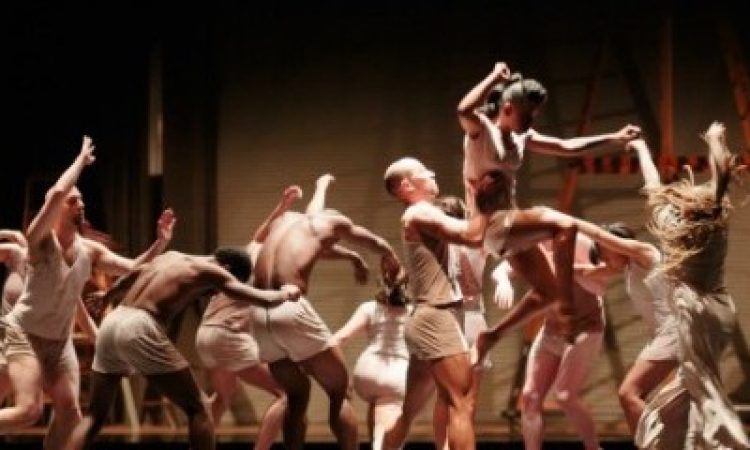
Shattered, choreographed by Monte in 2000, appropriately closed the show and featured dancers who had formerly been with the company. A group piece that comprised numerous sections, Shattered was moving proof that Monte is a master at creating dance. A flicker of light sent the piece into full drive. From a huddle, the group dispersed into configurations of duets, trios, and quartets. Intense physicality reinforced the spatial design and manipulations of large groups that are trademarks of Monte’s choreography. When Monte’s alums appeared, I couldn’t help but notice the maturity and experience these dancers brought with them. Nothing made this more evident than Sarita Allen’s entrance—simply walking as she writhed her body in perfect control. Also a former Alvin Ailey dancer, and a little older than most of the alums, Allen inspired audible whispers from the audience in support of her presence. While the sections she was in were few, when she was on stage, she was enthralling.
But she wasn’t alone.
In Shattered, Rea-Fisher removed her hat as artistic director and let her own dancing demonstrate why Monte’s work has been a perfect match. In an interview, Rea-Fisher talked about her introduction to the company and how her working with Monte was almost kismet. Seeing Rea-Fisher perform Monte’s choreography confirmed for me what Rea-Fisher was attracted to in Monte’s work. Her compact body is the perfect vehicle to channel the fast-paced athleticism of Monte’s choreography, and her performance swirled between the grounded, more direct steps and the lighter, carving movements of Monte’s vocabulary.
Now that the torch has passed, I look forward to the ways in which Rea-Fisher’s works will carry on the legacy and influence of her mentor’s physically driven choreography.
Elisa Monte Dance, Aaron Davis Hall, March 2nd – 5th, New York, http://www.elisamontedance.org/schedule/2015/9/30/35th-anniversary-season-aaron-davis-hall-ny-ny