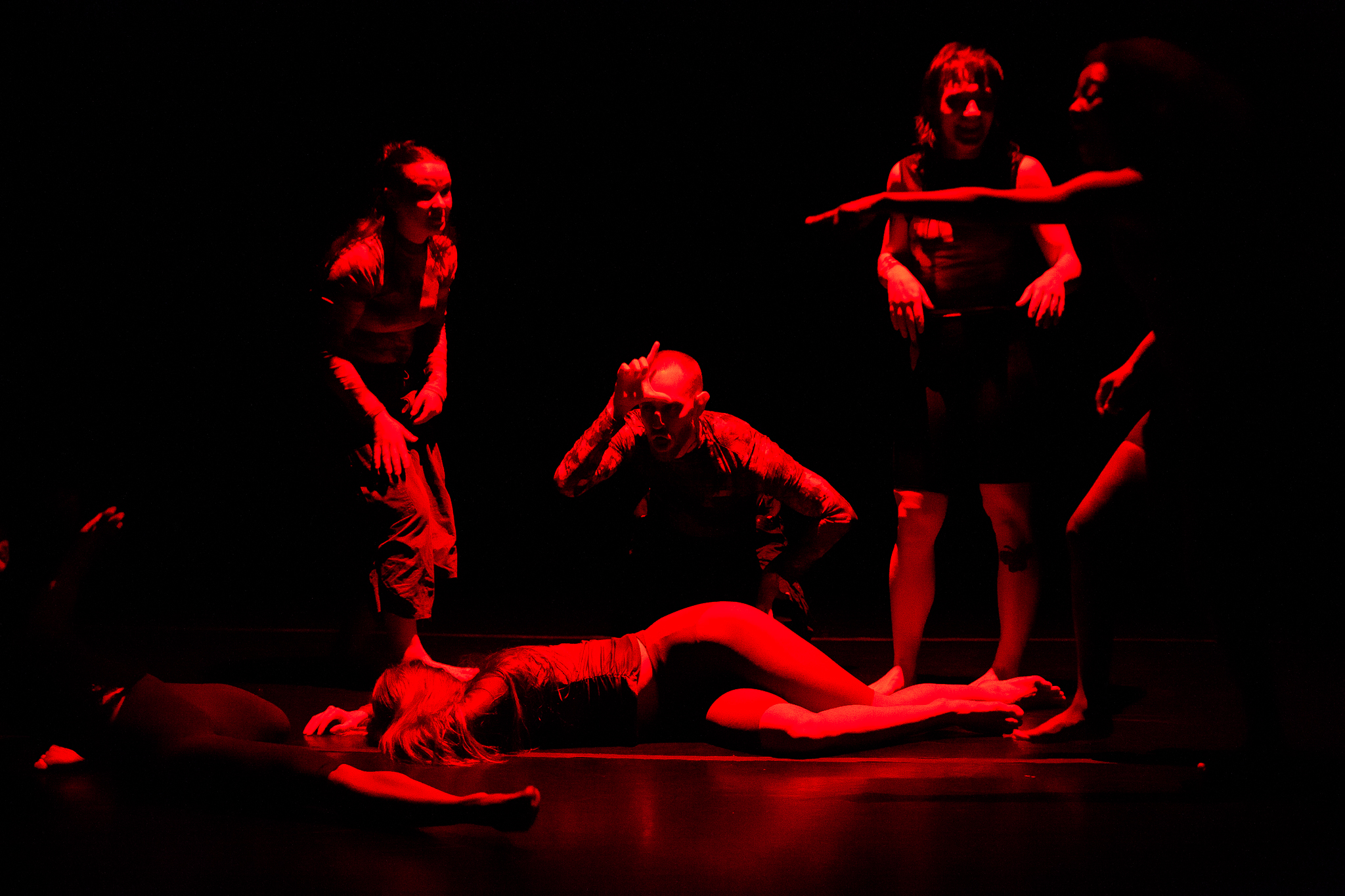
I am overwhelmed from the start as four dancers move through space, making patterns even more diverse than those found on their black and white garments. There is nothing uniform here. Every performer has their own sequence of movement and each seems to draw on a combination of tradition and novelty.
Legs extend high above heads in grand battement and land with a slap from a flat foot on the floor. Knees turn in while heels jut out to the side, conducting intricate placement of feet. Arms thrust rapidly into the air with hands like blades. Video is projected. Shadows are cast. Each movement is decisive and distinct, forming a complex whole, far too much to take in at once.
This density of content is unsurprising given the reading list Reggie Wilson has provided: eleven books and a TDR article, in an article on FringeArts’ site. The texts discuss various black choreographers, musicians, spiritualists, and communities.
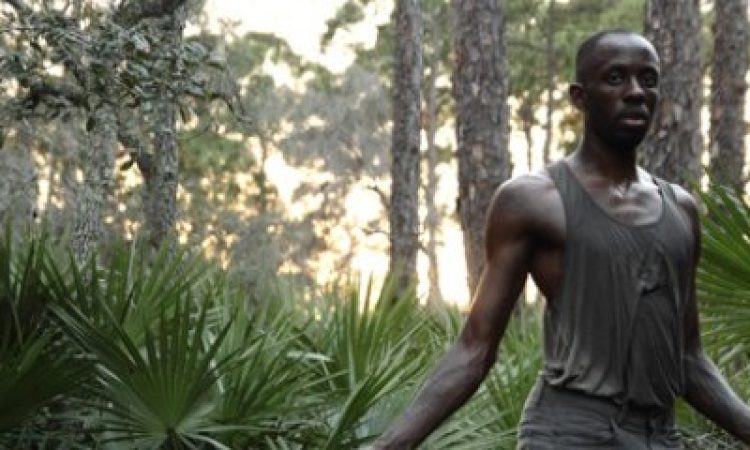
CITIZEN, Wilson’s exploration of group and individual identity, history, and belonging, proceeds with mesmerizingly virtuosic solos and groupings. Raja Feather Kelly emerges as an image of strength, will, and endurance. Gradually, recognizably familiar movements accumulate, and I come to believe that each dancer has a unique yet repeating score, parts of which I witnessed even in the opening sequence. Yet there is difference at each repetition. The rhythms and music are ever-changing and cover a variety of songs sourced from various traditions within the African Diaspora, from afro-american prayer bands to melodic drums and foreign tongues. Changes in tempo and energetic quality provide yet further diversity.
There is multiplicity here: various histories, traditions, and lineages. As the dancers once more cohabitate in the space, they begin to displace each other to new locations and orientations on the stage. Their collective kinesthetics grow to a climax before arriving together, grouped in stillness. They withdraw from the stage only to have, quite unexpectedly and delightfully, a new, yet unseen body enter the space.
This fifth dancer introduces a new score but draws on previous movement. Each in their own time, the other dancers return and adopt this new sequence. Eventually they synch up, moving rapidly in unison, then slow and deviate to their own time signatures before accelerating to conformity once again. They clap their hands together leaving one held in the air, pinky and ring finger tucked in, pointer and middle joined and extended, thumb cocked back. I connect the image to our country’s present issues with police brutality.
CITIZEN, Reggie Wilson / Fist and Heel Performance Group, FringeArts, September 8 – 10. fistandheelperformancegroup.org/.