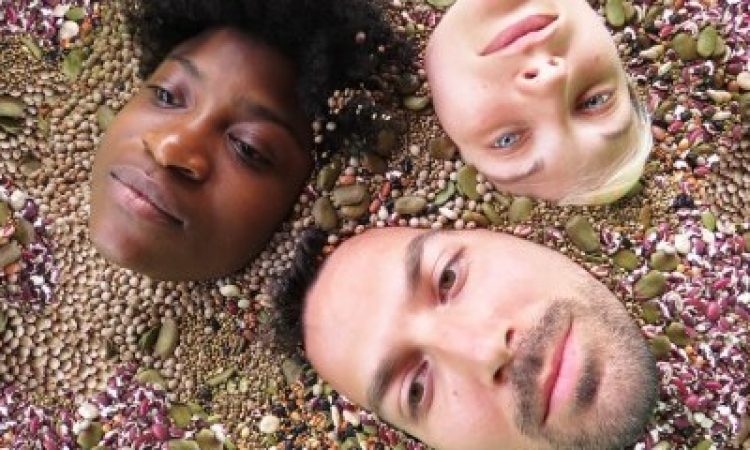
“These are the constants,” says Brett Ashley Robinson. She is wearing an outrageous yellow tiara made of trash and referring to a set of small tupperwares: “the fats, the sugars, and the salts.” She makes a paste—“the candy”—out of the ingredients, and breaks off little chunks for everyone at the table.
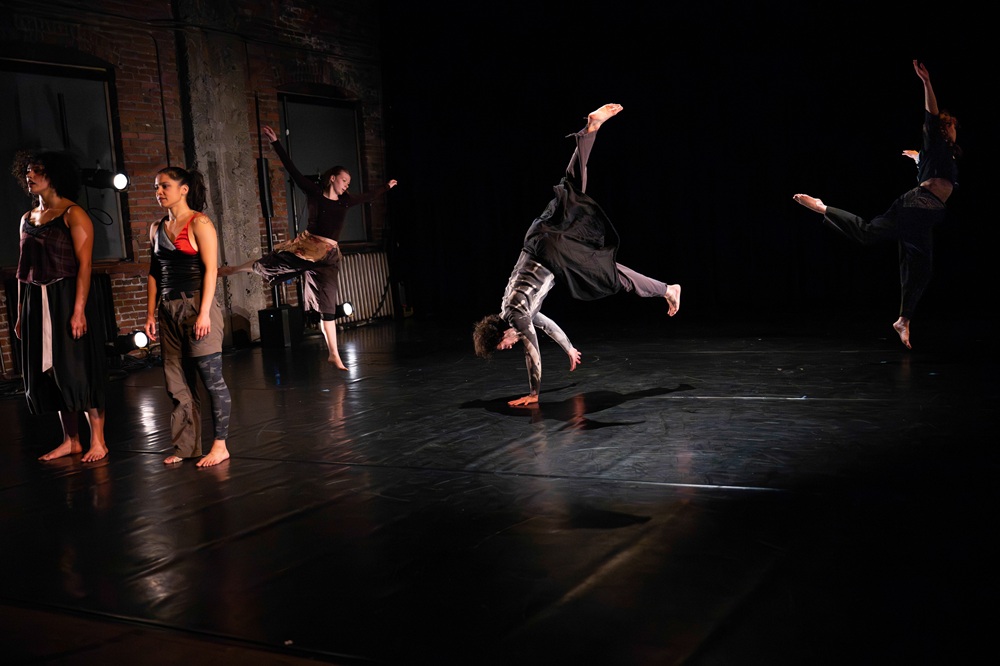
Feed, Applied Mechanics’ immersive performance about our food systems, doesn’t feel finished. The performances feel emotionally thin, the text a bit thrown-together, and I wonder why I am being shown these particular characters at these particular times. The performers address me, but I never understand what my relationship to them is or should become, and I wander aimlessly from scene to scene.
Looking back, though, there’s a lot to chew on, and in this moment with the candy, I’m both afraid and excited. I should try it—how much of what I eat on a daily basis starts from a base of lard and sugar? Robinson’s nun-like character represents a simple society where everything used or consumed is created or foraged by the consumer. Though she has no idea of the history of her world, she has a greater understanding of what she consumes than I do. Putting this disgusting lard ball into my mouth is a form of knowledge just like touching.
It tastes like confectioner’s sugar. The pickled radish I ate in an earlier scene had a much more aggressive flavor, one that twisted up the tongue, cheeks, and throat.
This visceral description isn’t mine. In a later scene, performer Thomas Choinacky samples a series of spices like pepper, salt, and turmeric, then shares them with us. His character’s language is divorced from ours by time and technique: it has fewer words, more tonal meaning, and more drama in physical expression. When he tastes the chili powder, his face twists and his head shakes. When he tastes the turmeric, he squirms.
I exist at the extreme end of gustatory privilege, able to acquire both Doritos and Skittles for under $5. Food has a visceral relationship to our daily experience of the world, and throughout Feed, the characters tell their story through shared food and drink and aromatic herbs. When they prize a soy paste or shiver over the smell of pepper, I remember that wars are fought over spices, and people die daily for food.
Feed, Applied Mechanics, Painted Bride Art Center, September 7-19, fringearts.com/feed-2/