Kulu Mele: Brazil and Beyond is a showcase. A festival of lights. A raucous debate between drummers, dancers, and audience. It is a declaration and an adventure, a comedy and a tragedy, a beacon of purpose. It is an homage to those who came before, to those who are living, and to those who will come after. A call and response. A call to arms.
Members of Kulu Mele, the cultural institution, has taught and performed music and dance of the African diaspora for close to fifty years. A sense of heritage, of many decades of tradition, was palpable in their show at William Penn Charter School’s Kurtz Center for the Performing Arts. When the lights dimmed before the first piece, drummer Ira Bond performed a symbolic libation with a water bottle in hand. In Wemilere, the seven Orishas—Yoruba spirits who play a prominent role in the Afro-Cuban religion of Santeria—introduced themselves to the audience with colorful, athletic solos. And in Mask Kanaga, which originates with the Dogon people of Mali, dancers donned enormous masks to represent the relationships between ancestors, animals, the creator, and the Earth. All of these moments presented rituals, cultural artifacts to be preserved.
But Brazil and Beyond is not only about the past. In Hip Hop, a crew of women with shorts, tank tops, and plaid shirts tied around their waists performed vigorously to Timaya, a contemporary Nigerian Afro-beat and hip-hop artist. Modern influences also made an appearance in Danza, a traditional wedding dance from Mali in which women in white dresses and men in blue shirts and pants engaged in fiery, pulsing dialogues with the djembe drummers. As the women took center stage, one of the male dancers, reluctant to stop moving, performed a casual robot in the corner. Others laughed and joined in. Then, as the drums accelerated into a powerful finish, they lifted their arms and ducked their heads in a grinning, fast-paced Dab.
But Brazil and Beyond’s most future-oriented piece may have been Tiriba, beautifully performed by Omo Kulu Mele, or The Children of Kulu Mele. A host of boys and girls aged five to eighteen flooded the stage, enchanting the audience with fierce, giddy West African dance and expressions of uncontainable joy.
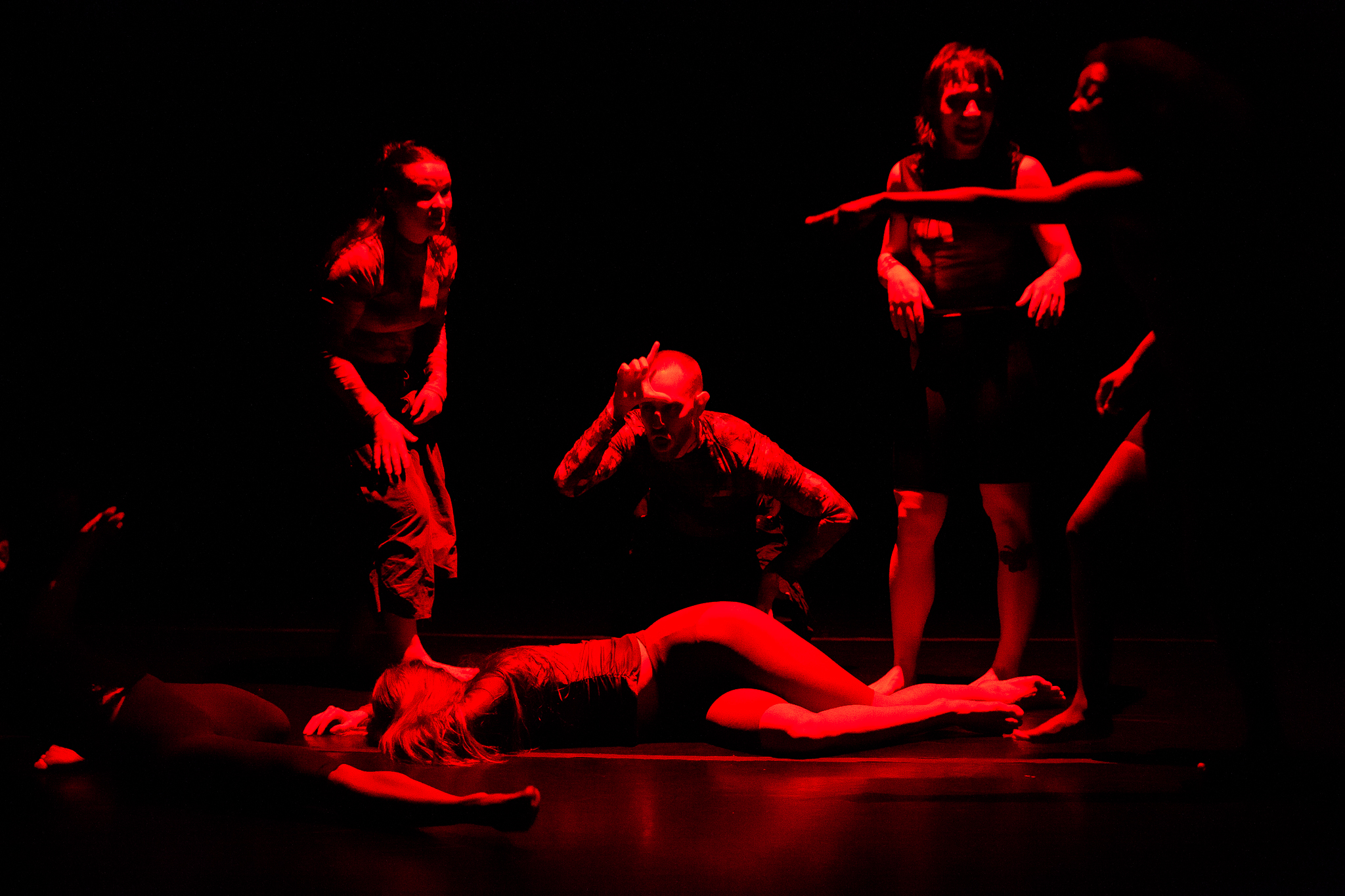
In a calmer moment, Omar Harrison performed a spoken word piece, detailing with lyrical versatility both the struggles and the promise of contemporary Black America. These sentiments were echoed in Undercurrent/Gathering, an emotional piece depicting the pressures placed on women of the African Diaspora to hide their Blackness in order to blend in. Women in loose brown dresses wound in a wide circle, each branching out and working her way back to the group. Then the music evaporated, leaving the women to create their own beat. They did so in a tight ring, pounding and stomping in a manner reminiscent of Step, their bodies directed inward, toward one another.
Male collaboration flourished, too. Just before the final act, Djembe drummers took turns circling the stage, each stirring up a ferocious litany of sound before yielding his place to the next drummer in line. This interlude left the audience breathless, whooping hoarsely, ecstatic at the power of palms and drum.
And so Brazil and Beyond had everything. Heritage and tradition. Novelty and modernity. Individuality blended with the collective. Competition tempered with thoughtful poignancy. Extravagance. Simplicity. Identity, the show seems to declare, is everything you come from and everything you make for yourself and everything your children and your children’s children will be. Here. It is yours.
The audience laughed, shouted, cried, and eventually rose to its feet, clapping gratefully, the message well received.
Kulu Mele, Brazil and Beyond, Kurtz Center for the Performing Arts, Oct. 22, http://www.kulumele.org/event/kulu-mele-presents-brazil-beyond-2/