Artists are patient; artists are the only people I know willing to wait 40 minutes past start time with nonchalance and a chuckle. It’s chilly in the theater of the Christ Church Neighborhood House but this thought keeps me warm, nestled alongside the fact that, somewhere in this building, Yvonne Rainer too awaits the screening. I’m ”fangirling” hard over her, as she’s something of a demigod and something of a dance great-grandmother, while I anticipate the forthcoming screening of Jack Walsh’s documentary Feelings Are Facts: The Life of Yvonne Rainer. Unfortunately, an odd medley of technical difficulties prevents the computer from playing the film, then the projector from transmitting sound and playing the film straight through, necessitating someone to lie on the floor next to the set up and manually click on each new chapter from the menu.
Amid an inadvertently chopped-up presentation, the film collages the highlights of Rainer’s 56-year career as a dancer/choreographer, filmmaker, and now choreographer again. She and notable others (including Steve Paxton and Lucinda Childs) discuss on-screen her work with the Judson Dance Theater, her significant contributions to feminist and LGBTQ filmmaking, and, of course, her seminal Trio A. In real life, Rainer sits two rows down and to my left. When the projector reverts back to the menu screen prematurely, clipping the last phrases of a few scenes of Rainer, she indignantly chirps the words for us in real time.
Moments of sweetness: Rainer recalls the “baby artists” founding the Judson Dance Theater as unaware of their future careers and potential; Rainer describes her No Manifesto as something that has “plagued her ever since publishing”; Paxton fondly describes Rainer’s oddly-formed-for-dance body and her “weird head”; Rainer gets giddy over Baryshnikov; members of the Judson Dance Theater perform Trio A with Flags, a version of the famous piece in which the dancers are naked save for American flags tied round their necks and draped over their fronts; Rainer mentions that she and her brother are named Yvonne and Ivan; Rainer looks at the camera and tells the audience that lesbians are statistically more likely to owe for late library books (this scene we watch multiple times over as people tinker with the projector).
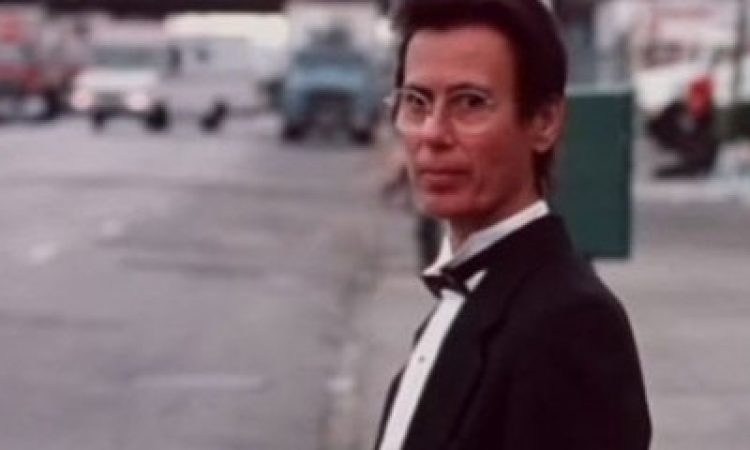
Moments of poignancy: Rainer gives her then-lover Robert Morris an ultimatum to choose either art-making or her, and he concedes to stop making art; Rainer and her brother recall the foster home they were ejected from in early childhood; Rainer the intellectual never cared for theory though she read it all; Rainer wears a tuxedo for a film with one side of the inner shirt missing, revealing one of her breasts removed; Rainer trots around the stage while her voice-over relives the story of her dementia-addled mother tottering off the sidewalk into traffic; Rainer doesn’t take herself, or anything, too seriously; Rainer, well into her seventies, tenderly dances Trio A alone.
When she answers questions afterwards, flapping her hands in gesture, I want her wrists to be thicker, less frail.
Feelings Are Facts: The Life of Yvonne Rainer, by Jack Walsh, Christ Church Neighborhood House, October 20, https://www.facebook.com/christchurchneighborhoodhouse/