With their boundless energy and an often uncertain grasp of social niceties, little kids can be a challenge to bring places where silence and stillness are expected. Imagine the even more complex scenario faced by the parents of an autistic child whose impulse leads her to jump up and burst into a run. Or by the guardian of an adult who registers reactions that others find strange—like laughter or applause or groans when the prompt isn’t obvious to others. Enter “Relaxed Performances,” events where a performing group or theater welcomes people with sensory, learning, and communications differences.
Pennsylvania Ballet staged a Relaxed Performance of its holiday Nutcracker with these accommodations:
- House lights on at a low level,
- Volume levels moderated, especially for startling or loud sounds,
- Strobe or other startling lighting reduced,
- Viewers free to talk, vocalize, and leave their seats during the performance as needed,
- Space available throughout the theater for standing and movement,
- Patrons invited to bring noise-cancelling headphones, sensory stress toys, and/or anything else needed to ensure maximum comfort and safety.
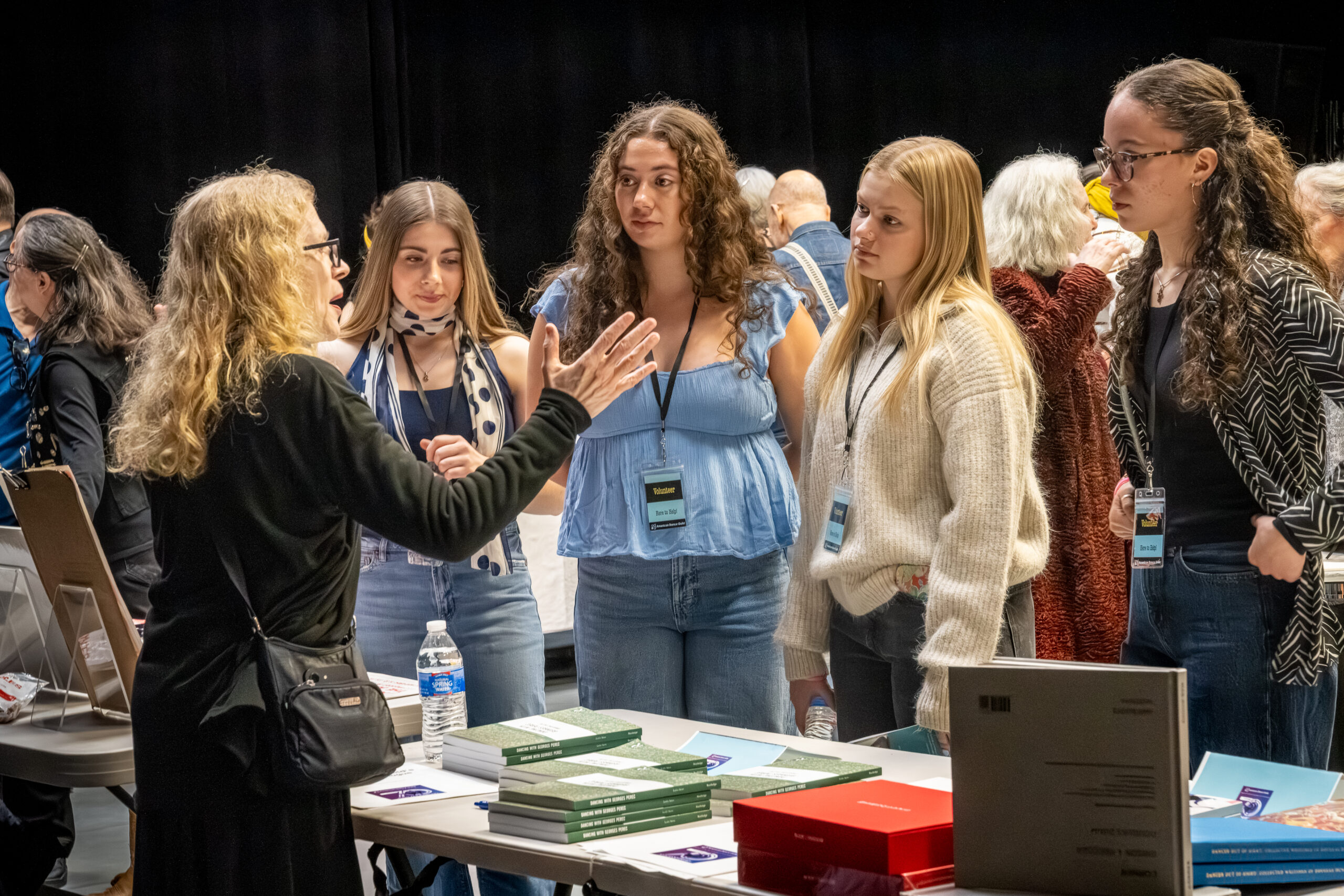
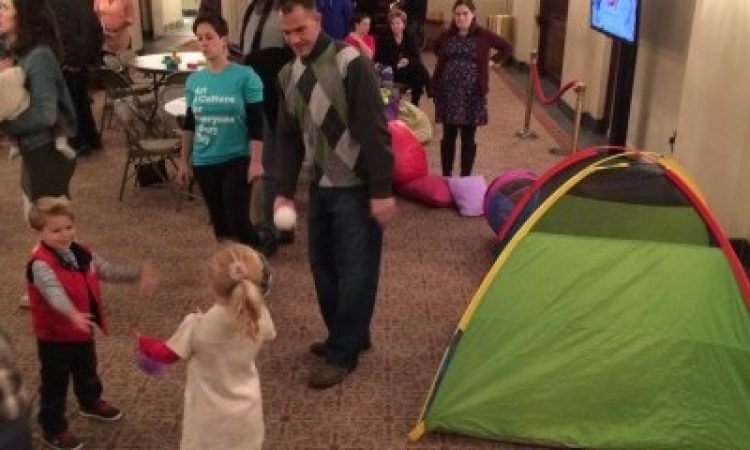
The welcoming program note and pre-show announcement made these adjustments known to everyone. Also, turquoise t-shirted members of Art-Reach, the organization partnering with PA Ballet to facilitate the special show, were at the ready to assist in a variety of ways. “We have fidget toys for kids if they seem a little disregulated. We are stepping in just to let parents know we’re here if they need us,” said Genna Clayman, one of the volunteers. ”We have a chill-out room (pictured above) for kids to come and watch the show on the TV if they’re feeling a little overwhelmed by the stage and the lights.” That room, with its playroom tent and tunnel and tables with colorful blocks and balls, was popular throughout.
Clayman, who is currently training in occupational therapy at Temple University, noted: “A lot of families have expressed how happy they are that it’s inclusive and they feel they don’t have to apologize for their kids who are having some sensory challenges. The hope is that this will be a more prevalent thing in the future so that all families can feel included in the holidays and all year round for events like these.”
“It’s wonderful,” echoed Lynnece Trice, the mother of Jordan, a senior at Abington High School. “It’s an opportunity for all the children to experience it in a way that’s acceptable so they’re not disturbing anybody and it’s comfortable for them.”
As we spoke at intermission, Jordan’s head swayed and his focus kept shifting. His words were difficult for me to understand. But his dad, Charles, helped out: “He liked the tree and the snow. And the music.”
Jordan wasn’t the only one captivated by The Nutcracker’s theater magic. At the end of act I, during the reveal of the pastel-tinted winter scene, a cluster of children rushed down the aisle to watch the snow falling, seeming eager to enter the scene themselves. Volunteers and parents placed themselves nearby. Likewise, the Christmas tree that miraculously grew through Herr Drosselmeyer’s spell brought enthusiastic squeals and applause.
Sometimes, especially when there was spectacular dancing, like that of Aleksey Babayev in the Cavalier role, or during some of Balanchine’s complex deployments of larger groups, the house was relatively quiet and focused. At other moments, especially when dancers were absent and music only was featured, there was noticeably more activity in the audience—movement, fidgeting, and sound of all kinds.
For dance-goers accustomed to more straight-laced performances, this show was freeing too; one’s attention might go anywhere. With the onstage virtuosity just one part of the whole, a viewer might be drawn to the perfect O-shaped mouths of the boy singers accompanying the snow scene, the gilded sculptures and sparkling chandelier in the Academy of Music, or the awesome audience itself.
The Nutcracker (Relaxed Performance), Pennsylvania Ballet, December 22. paballet.org Info on Art-Reach and its programs is at art-reach.org