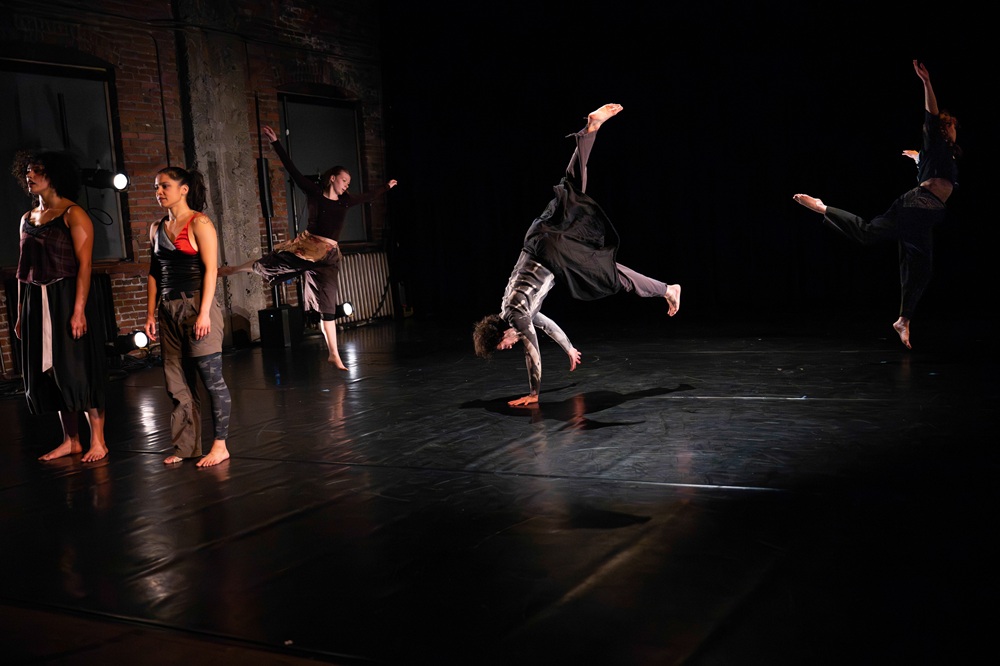
After a morning of embodying the Graham technique at Jeanne Ruddy’s Intensive, I was interested in experiencing the technical contrasts between Graham technique and Doug Varone’s release-based technique. This masterclass, offered free to Philadelphia dance professionals through NextMove’s programming, was taught by Varone dancers, Xan Burley and Hsiao-Jou Tang; it gave me a nice taste of Varone’s choreographic style. Embodying his technique prior to seeing the performance that evening led me to understand his choreographic choices with greater acuity. Here are some things I noticed:
We started the class in a relaxed X-position. Burley, our leader as we warmed up, prompted us to think about energy spiraling up our spines, extending in both directions beyond the lengths of our necks and sacrums. From there we began to improvise, thinking about the diagonals between one arm’s fingertips and the other leg’s toes.
In watching each of Varone’s works, I recognized these diagonals kinetically. They were energized, but not “placed” as one might see in more shape-oriented dance forms. In class, this diagonal pathway manifested on the floor, allowing my muscles to relax into gravity rather than resist it. In performance, these stretched diagonals flowed through the dancers’ bodies in the vertical plane, spiraling them into turns, under-curves, and relaxed balances.
Tang taught us a short phrase of repertory from ReComposed (2015). I noticed the seamless transition between vigorous, virtuosic dancing and pedestrian presence: nonchalant walking followed large, tossed, attitude jumps; relaxed skips led to large leg kicks; a weighted lunge chugged back onto a one-legged balance. After my morning of Graham technique—comparatively resistant to gravity, shape-oriented, and muscularly engaged—I appreciated the ease with which the Varone dancers smoothly switched from energetic dancing to composed walking. It called forward the many different approaches to performance technique; in this case, a more dramatic emoting (Graham) contrasted with unexaggerated presence (Varone).
The one moment in the evening performance that stood out as counter to the style I worked on in class was Burley’s solo in ReComposed. She wore a bold red and black unitard, which contrasted with the other two-toned costumes featuring muted shades of black and strips of color. Burley’s hands were clawed and splayed. This felt like the first tense and strongly emotive shape in Varone’s evening of work—while there were countless other shapes, they were relaxed, and the dancers moved through them fluidly, subtly. Burley’s head was tucked while her long limbs reached away from her center—she was snakelike and writhing. She sat at downstage center, her body contracted, her eyes focused on her clawed fingers. The lights made her costume pop, red and angry. She shook her hands aggressively, so vigorously that they blurred against the black of her costume. This image hit me like a bullet, shocking out of me an audible “wow.” This brief, yet potent, gesture was anger in the flesh and pulsed from her like a heat wave.
Catching Burley briefly after the show, I brought up this moment, applauding her for its power. She responded saying that she felt incredibly angry today and that she channeled all of it into that solo. At first I was concerned, wondering what she could have been so angry about. Then it clicked. It was January 20th, and the anger I witnessed on that day will likely fuel her performances for years to come.
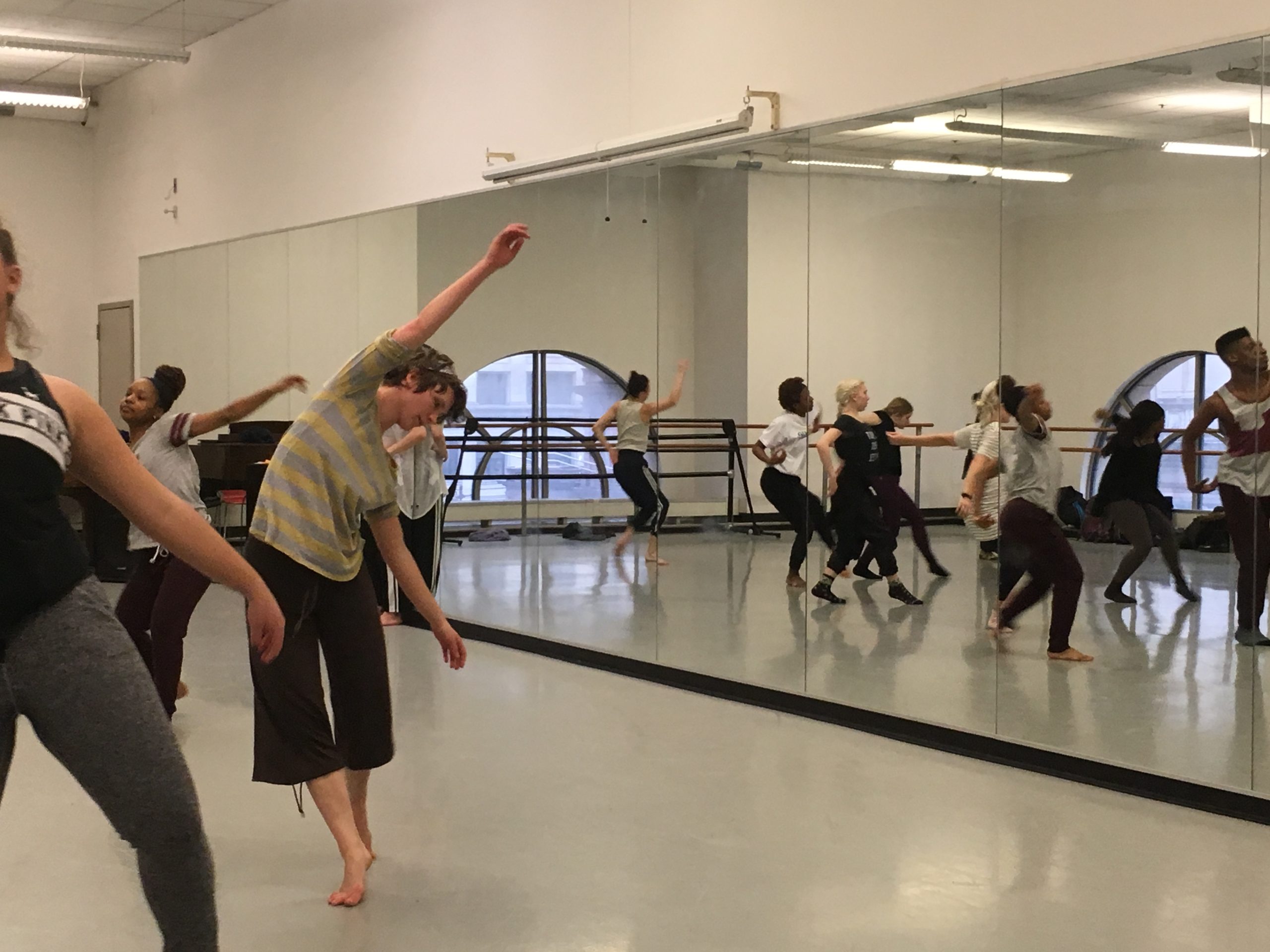
Doug Varone Masterclass, Friday January 20, free class to dance professionals and UArts students offered through the NextMove Dance Series. Doug Varone and Dancers, Prince Theater, January 18-22, 2017.