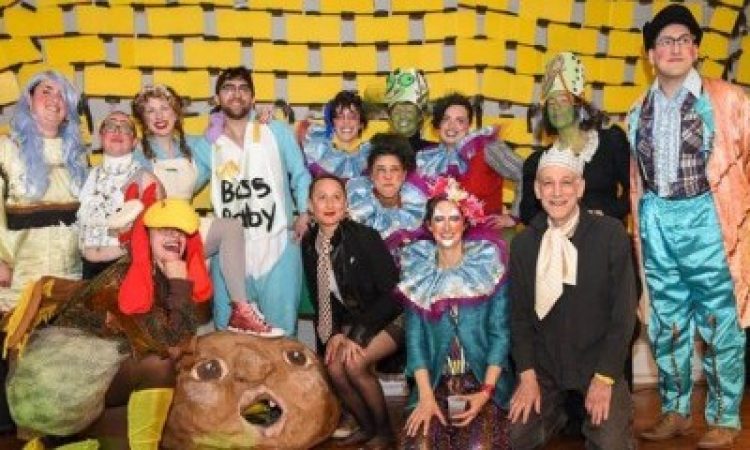
The ballroom of the William Way LGBT Center shimmers as Purim shpil attendees pour in, many wearing sequins, glitter, and wigs. My good friend Ezra Berkley Nepon, aka “Killer Sideburns,” comes onstage wearing Marx Brothers suspenders hooked onto booty shorts. They introduce their work, “No One Mourns The Wicked: The Wizard of Shushan,” co-directed by jaclyn Pryor, which is a mashup of the Book of Esther with the Wizard of Oz. They declare that the venue is ideal because “Purim is the queerest of Jewish holidays.”
Rabbi Linda Holtzman, dressed in a nun costume, comes onstage and says “Bless you all.” She describes Purim as a holiday in which everything is turned upside down: “The fact that Purim was the first Jewish holiday after the inauguration is exactly right.”
As an opening act, Jeannine Osayande from Dancing for Justice Philadelphia has the audience pull their chairs into a circle for a call and response, written by Lela Aisha Jones:
In between the lines
We must know
Is the only place we can go
The only place to bestow
The grace it takes to set a fire
A fire that burns just for us
The water comes, cause it must
Who will save us?
Only us
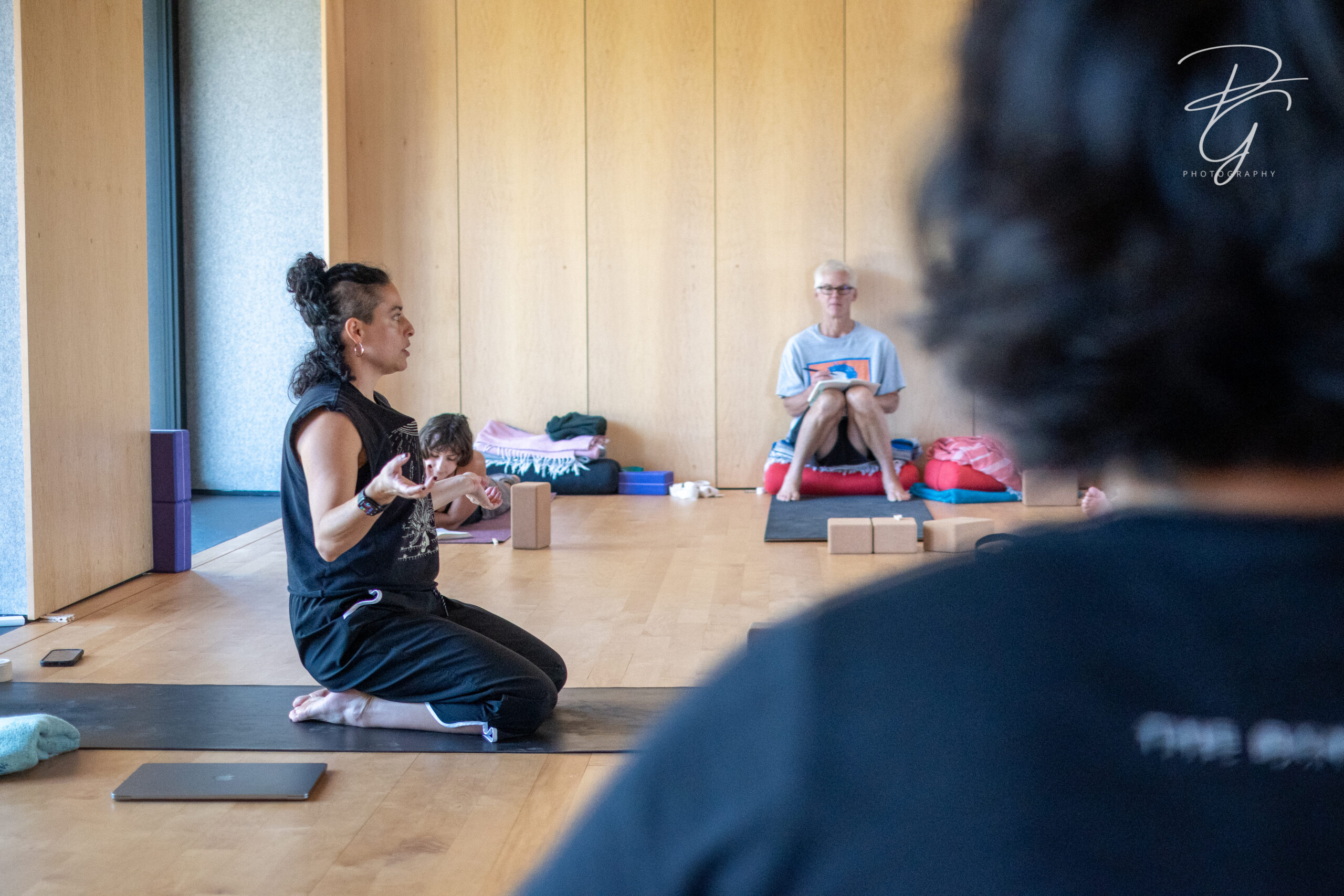
She points to pages on the floor outside the circle with photos and names of unarmed people of color killed by police, 1999-2014 and more recently. Jeannine asks audience members to take the pages and say their names individually as she plays an F note on her singing bowl, which she says is connected to the heart chakra. She strikes and slides the mallet along the bowl creating layers of sound that build upon one another.
We say their names. Rest in peace.
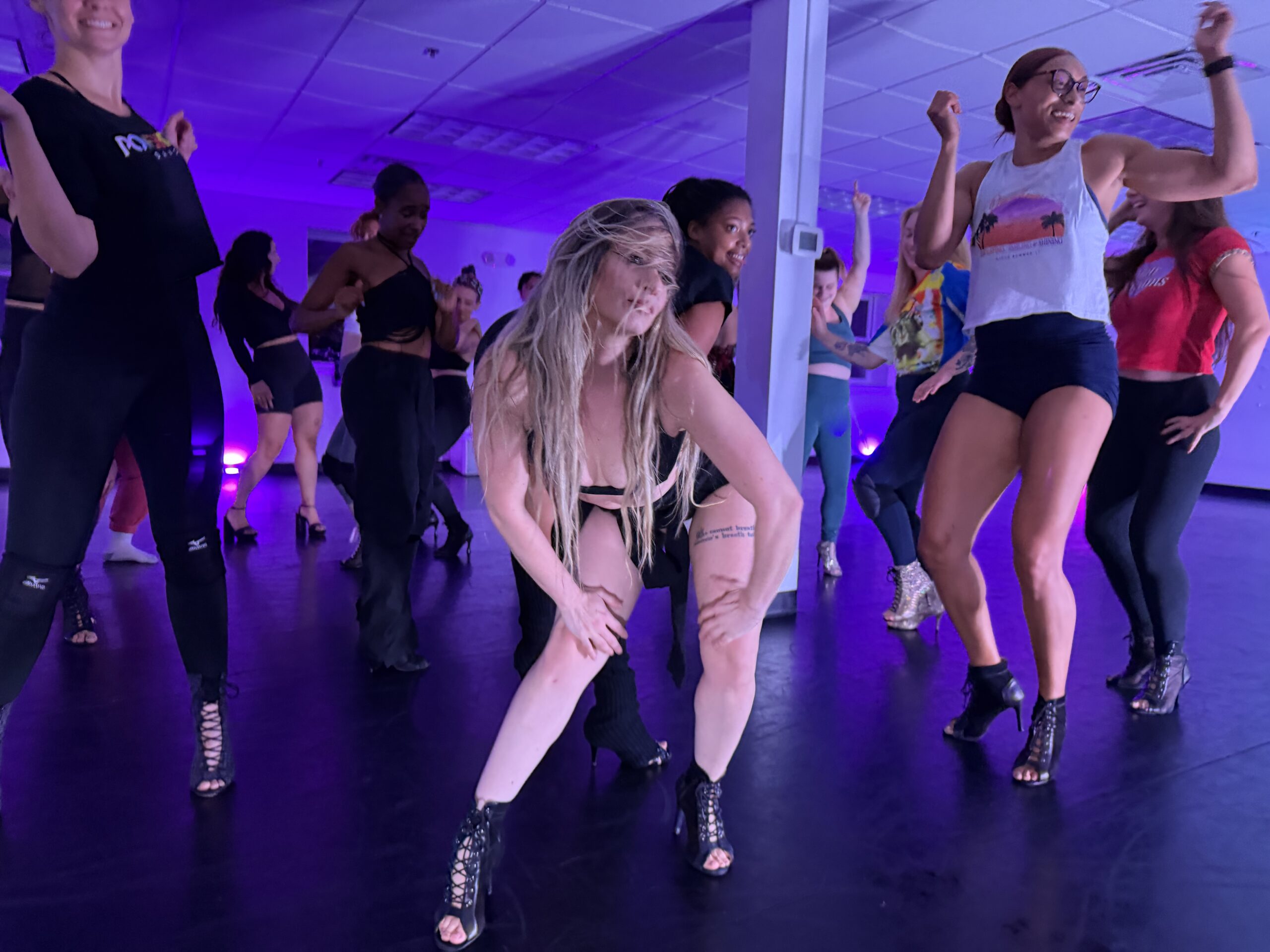
In the spirit of inversion, Jeannine shifts gears and leads the audience in a movement phrase that includes stomping, crossing our arms over our hearts, reaching toward each other and to the sky in cathartic release. We dance in concentric circles to Drum Talk by Jamemurrell Stanley with the joy and awkwardness of 100 people who did not expect their evening to be like this.
The shpil begins. Esther, played by Maryruth Stine, and Toto, a rooster played by Julia Factorial, are not in Kansas anymore. They are in Shushan. The tornado has killed the White Witch, and the Lullaby League––one of whom reads their lines from a small square of paper––sings the “Goodnight White Pride Lullaby Song,” written by Rachel Brown, which is so catchy (and included in the program) that the audience joins in:
Goodnight white pride. Your time has come to an end. The things you’ve justified I won’t defend.
The Witch Against White Supremacy, played by Nicole Sugerman, arrives in the form of a beaver in a brown hood who delivers a speech about stochasticity: “It means the randomness that can emerge from complex systems, like storm and flood patterns, or social movements! The same processes occurring in the same environments do not always lead to the same outcomes! In chaos, anything is possible. When beaver dams break, as they so often do, beavers quickly adapt, rebuild, or move on. Beavers are stochastic stars, dancing gracefully with the winds of change!”
Esther and Toto are inspired by the beaver to defeat the Grand Wizard of Shushan, played by Matt Berkman, who turns out to be a puppet ruler controlled by a coven of Pepe-bedecked “Wicked Snitches.” The Wizard wears a huge papier-mâché baby head and powder blue coverall pajamas with a bib that says “Boss Baby.” He whines:
Waaaah!! Waaaah!!! I need atttentionnnnn!! Feed me!!
Get my bottle! Change my dirty diaper!
SAD!!! I want a strong golden diaper now!
Waaaah!! Waaaah!!! Get back here! You OWE ME! You can’t quit, you’re FIRED!
In the end the Boss Baby melts to the floor in his dirty diaper, along with the Wicked Snitches as a result of the success of striking workers and magical migratory birds. This satisfying reversal of power performed onstage is a ritual for survival.
No One Mourns The Wicked: The Wizard of Shushan, Ezra Berkley Nepon; Dancing for Justice Philadelphia Pop-up Action, William Way LGBT Center, sponsored by Jewish Voice for Peace Philadelphia and the Tikkun Olam Chavurah, March 12.
• Note: the author is a member of Jewish Voice for Peace and Dancing for Justice.