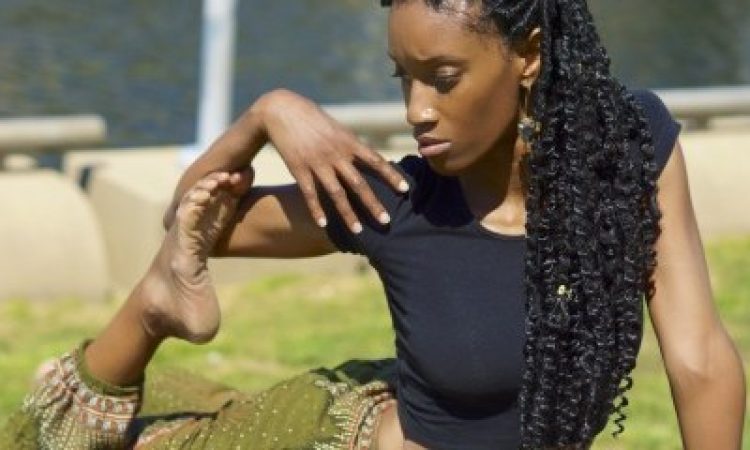
With a rising interest in burlesque within the community, I sought out Sophie Sucré, who is one of Peek-A-Boo Revue’s finest gems. Burlesque is more than pasties and flexibility—it can exist as commentary on larger social issues—a truth which Sucré began to disclose.
Whitney Weinstein: If you could tell the world three things about burlesque, what would they be?
Sophie Sucré:
- You should see it before you judge it.
- They’re just boobs.
- It’s not for everybody.
WW: How would you describe burlesque?
SS: Burlesque is a pastiche. If you go back to the beginnings of vaudeville and some theater when hooch tent girls, adult satire, and comedy were leaving the circus and going into proscenium stages, you had different levels of socially accepted entertainment. Burlesque used to be viewed by the aristocracy as “working class.” After WWI, classism created a larger middle to lower class, so shows began to shift to the more common, modern-day man. Working women, caring for themselves and their children, began touring circuits with burlesque acts to titillate, to please, to make careers.
The value of burlesque performance was diluted by the creation and infiltration of go-go dancers in the ’60s and ’70s. You saw a decline, then a resurgence in the ’90s into the 2000s. Burlesque is humor and sexuality and sensuality, all rolled up into one.
WW: How did you discover burlesque and Peek-A-Boo Revue?
SS: I found out about burlesque when I was in college. I hadn’t seen a show, but I knew [burlesque] was something bubbling beneath the surface in the underground scene. When I moved to Philly to work as a professional dancer, a college friend was performing with Peek-A-Boo Revue and mentioned they were looking for another performer.
I auditioned and started working with Peek-A-Boo in 2009. Peek-A-Boo Revue has a strong dance background, so the rehearsals had me learning a lot of intricate choreography. It didn’t dawn on me that we were taking our clothes off; I was naïve about burlesque. I was only in the dancing numbers because I was new and didn’t have a character yet. It wasn’t until I actually did the show that I realized this was burlesque!
WW: What kept you coming back for more?
SS: I think the presumption is that we go out to dance and be sexy. While that’s a big part of it, that’s not all. The very genuine conversation about sensuality is the kernel that I’m still figuring out. That has something to do with focus and intention and I feel like there’s an unspoken dialogue between me and the viewer. I think my job is to play with whatever that closeness or tension or distance is.
WW: How do you think burlesque is accepted into the “traditional” dance scene?
SS: There are more dancers stepping into burlesque and vice versa. A lot of professional artists straddle dance, theater, and clowning. Burlesque is another form of expression in a very vast world of performance styles. I will always be maintaining an outside career with contemporary performance. I want to be blending that line.
WW: Could you speak to any safety concerns?
SS: When you are a performer (in this instance a self-identifying black female body) who uses sexuality and sensuality as a means of engagement with your audience, there’s a certain assumption by the general public, oftentimes males, that your personal, physical self is for public consumption. We have to find and work that line between wanting to engage with you, being thankful you came to the show, and also acknowledging our boundaries. This will be a long-term issue. In society as a whole, we are still exploring what it means to have the erotic in the public space.
I don’t think there’s any burlesque performer who hasn’t had an uncomfortable moment when they questioned their personal safety. That’s part of the nature of being a performer who uses sexuality as expression. It’s not right, but it’s going to happen, there’s always a person who is going to cross the line. It’s important to be vigilant. And issues such as misogyny and racism will play a factor in why these kinds of things happen. They happen all over the place, but especially to marginalized bodies, such as our queer and trans performers.
WW: You mentioned pure entertainment, but also the development of characters and plot. Could you speak to that?
SS: There’s the overall experience that you create for an audience from a show’s beginning to end, and that’s entertainment. I’m always thinking of a cohesive journey from the beginning to the end of the solo. It’s a trajectory for the audience member. Especially because there are five to six dancing girls in Peek-A-Boo at a time, we each have to do something with a distinct personality.
WW: How would you describe your own style?
SS: I’m very rhythmical. There’s something gratifying about when your movement articulates what you’re hearing, but I’m also a fan of playing on the in-betweens of that. Another great thing about Peek-A-Boo is that all the girls come from different backgrounds, so I’ve gotten a certain amount of education, ways of thinking and doing, from them.
WW: Is there anything else that you want to let readers know?
SS: Go see as much live performance as you can!