Shakespeare’s words, like a foreign language, often intimidate readers, especially when they attempt to understand a story unfamiliar to them. My neighboring audience members, arguing during intermission at Die-Cast’s Pericles, seemed to feel this way. One declared that a character “definitely threw that baby into the ocean,” but was quickly contradicted by the other. A king’s riddle, seemingly solved in act 1, remained a mystery to some of us: one man exclaimed, “I have no idea what in the world the answer was!” Another laughed, “What was the riddle?”
The difference between reading the play and watching a staged performance, though, is the accessibility of the body.
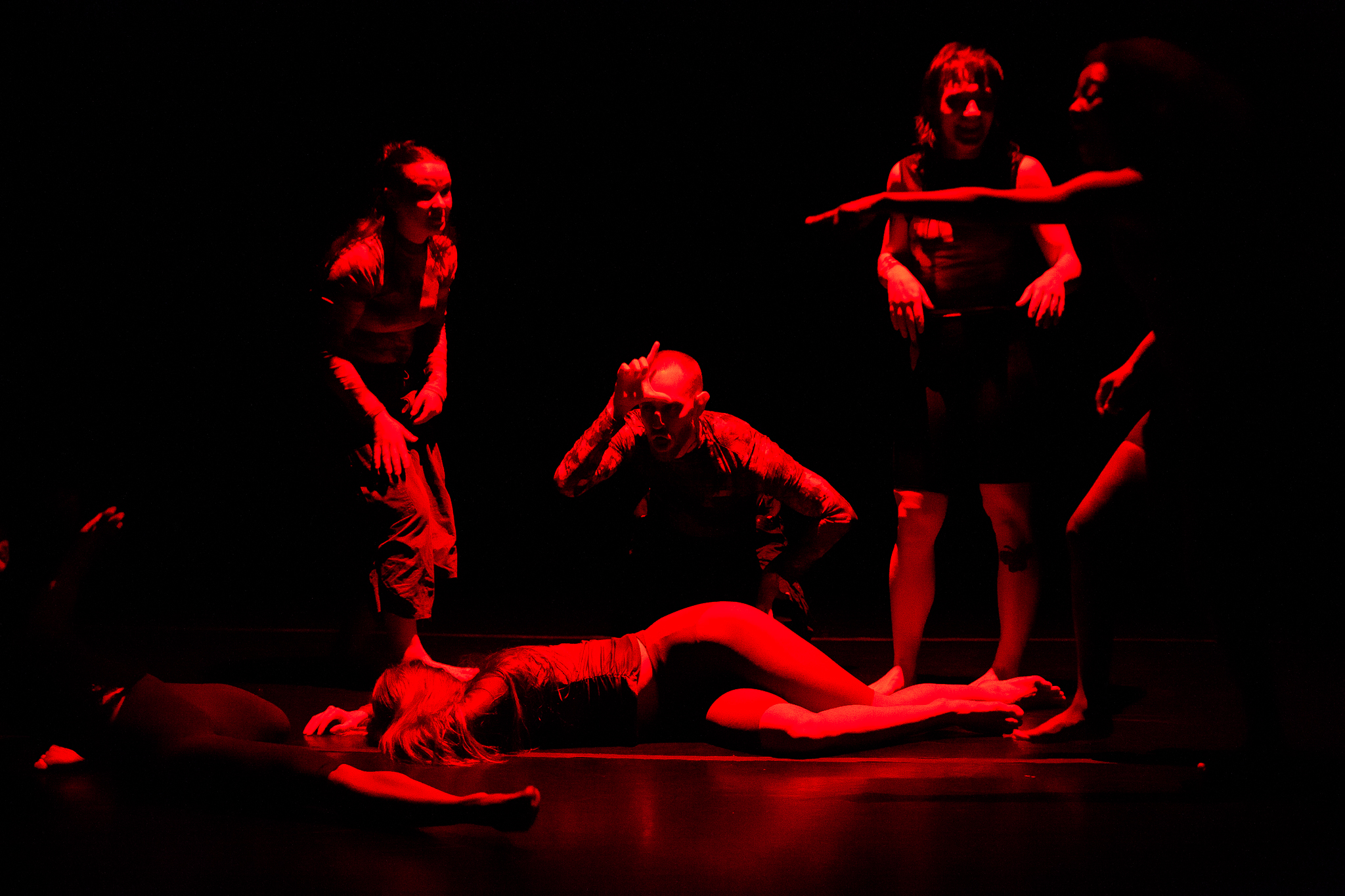
I didn’t necessarily need to be acquainted with the plot’s details to have a sense of its overarching themes, to disdain a character, or grasp a situation. I could perceive the love, conflict, and political intricacies without comprehending the words. With lust, limbs elongated to wrap around merging bodies. When hierarchy was asserted, lips and brows tensed. As violence turned to bargaining, gestures slowed.
I was interested in congruency of spoken text, voice intonation, facial expression, and body movement. How did they join (or not)? If I closed my eyes, would I have the same experience as if I closed my ears? In the moment when Pericles was reunited with his daughter, did I respond equally to visual and auditory cues?
In Die-Cast’s version, absolutely. The synchrony of voice and movement heightened my emotional response.
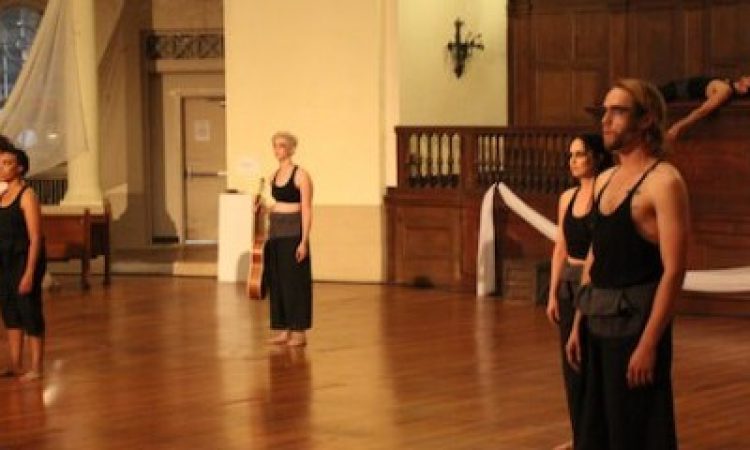
The cast was particularly attentive to the circular, domed space, which resonated and amplified effects. A cappella voices harmonized. They sang melodies that layered into canons.
At one point, two characters faced each other, arguing, as three ensemble members inched towards them, crouching. Speeding up as the argument heated, they fueled the momentum of the moment. As they closed in, the noise roared like the explosion of a simmering volcano.
In that instant, I felt the concurring elements: body, voice, and environment fused, propelling me on a journey that paralleled the characters’. I got it.
Despite differences in era and language, movement remains relevant. The human capacity for physical communication is a strength that could overcome communicative barriers.
Pericles, Die-Cast, The Rotunda, September 7-9, http://fringearts.com/event/pericles-2/