Michael Kiley’s upcoming Philadelphia Fringe show Close Music for Bodies is all about discovering, acknowledging, and celebrating the individual voice. A singer “since always,” the composer, sound designer, performer, and educator admitted in an interview that he first butted heads with conventional ideas about vocal instruction and production while in college in New Mexico: “The notion that if people are unable to exactly reproduce pitches and successfully arrive at pre-determined objectives means they’re incapable of singing is unacceptable. It’s an extremely limited concept of vocalizing.” Kiley’s strong belief in the body as an instrument in itself—the voice’s vessel—is at the heart of his self-developed training and teaching practice, Personal Resonance. “Bodies, like musical instruments, come in all different shapes and sizes. The sounds one’s voice emits are directly impacted by the shape, size, and movement of that individual’s body—the consummate acoustical instrument.”
Embracing singing and the vocal emission of sound as a full-body experience fuels Kiley’s persistent willingness to “see what happens.” What happens along the journey trumps verbatim reproduction of preconceived end-products. In his community-based sound and movement workshops, participants are encouraged to distance themselves from the array of assumptions disseminated throughout our society about gender, race, class, and how one is “supposed” to sound. With expectation left by the roadside, Kiley’s aim is to get people closer to and more trusting of their own voices, without judgment.
Kiley’s particular love for dancers has produced some great collaborations—Headlong, Nichole Canuso Dance Company, luciana achugar, The Yard, and Danspace Project are just a few of the artists and incubators for whom he has created soundscores. Though these works certainly involve back-and-forth between key players, a colossal amount of solitary studio time is nevertheless required to mix, manipulate, and masterfully combine the ingredients of any composition carrying his signature. Says Kiley, “The totality dancers exude for what they do made me want to be an integral part of that art form; that kind of force and dedication was compelling. Long hours alone in the studio, though, made me aware of how much I appreciate and need contact with people, not just machines.”
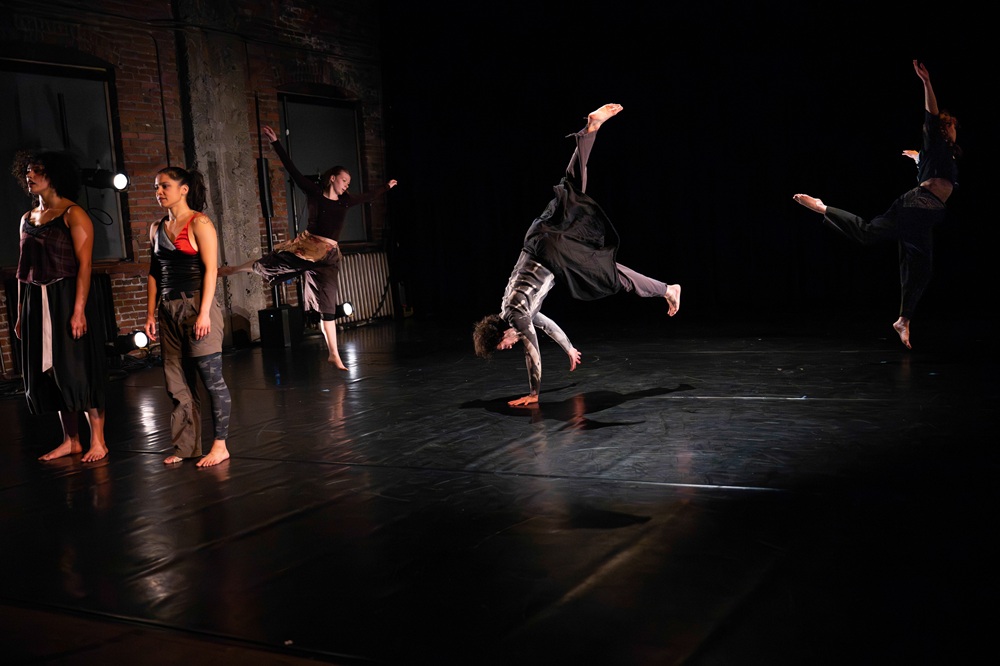
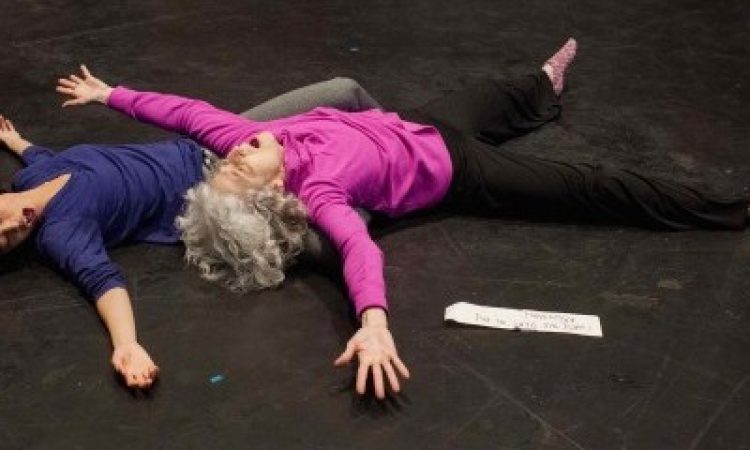
A clear response to his cry for contact, Close Music for Bodies places Michael Kiley right in the room with his cast. It is his baptismal foray into a completely acoustic world of sound and movement. Kiley unites idea, method, and development in a container of his own making, taking to heart and stage the risk/reward challenge of allowing things to unfold. A cast of eight performers, purposefully diverse in appearance, experience, and expertise, will inhabit the Christ Church Neighborhood House. The theater’s seats have been removed, and the standing audience (65 places only) will be the opening grid through which performers will move (and yes, make music). The piece is designed from an all-points perspective, with spectators and performers freely moving about.
What will they do, you ask? Is there a story? Kiley offers this: “There is movement, text, and melodic information, completely scored, all a result of collective and individual exploration and improvisation of the entire cast. It’s really been collaborative. Everything is live, no canned sound. What does it all mean? We’ll see: it’s all about the journey!”
Close Music for Bodies, Michael Kiley, Christ Church Neighborhood House, Sept. 20-24, 2017, fringearts.com/event/closemusicforbodies/