In twenty-five minutes of musical-theatrical hilarity, Aurora Classical shared Lee Hoiby’s take on Julia Child, chocolate, and chamber opera. David Pasbrig performed the piano reduction of the original chamber-ensemble score, to which Susan Weinman, channeling Child, sang Hoiby’s brilliant setting of the recipe for Le Gateau au Chocolate, l’eminence brune.
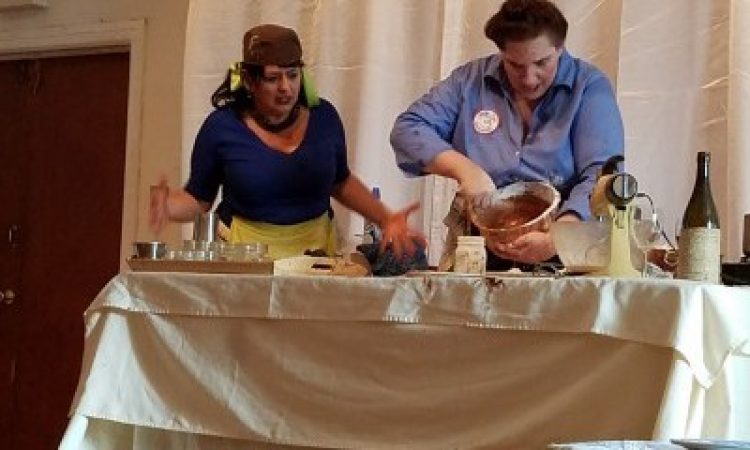
Aurora, which Weinman directs, aims “to introduce the art [of classical music] to those who may not have had access before and provide opportunity for classical performers to share their work.” This they did at the one Fringearts performance of Bon Appétit, to a full house—so full that, before the show began, audience members pitched in to set out additional seats in the crowded banquet hall of the Hotel Brotherhood. The audience listened and laughed as Weinman exuberantly dumped flour, sloshed egg whites, and smeared batter, all the while navigating the intricacies of the sung monologue, the music, and the movement.
“Chocolate is much more complicated than any of us suspected,” she sang. “You have to have a battle plan” (as the piano accompaniment quoted the Marseillaise). Weinman, indeed, had one, gesturing broadly, singing full-throatedly, tossing down wine, and decorating her apron, tablecloth, and floor with flour and chocolate. In this rendition, assistant Paula Minacci, who assembled the ingredients, bowls, and utensils that figured into the recipes’ realization, became a character in the play, silent but sometimes a bit too visible; her mugging (in mocking disapproval of Childs/Weinman’s antics) became, for me, a distraction to the dramatic arc. Weinman plowed hilariously forward. Despite her powerful mezzo soprano delivery, her words were occasionally obscured by the whirring of the electric beater or the accompaniment of the piano. But Hoiby’s recipe—for cake, humor, and music—came deliciously through.
Hoiby’s work is too little heard today, overshadowed by his more famous and experimental contemporaries, but he deserves wider exposure. His beautiful melodies, musical wit and, above all, realization of American English inflections and rhythms yield an authentic and delightful lyricism. The work’s intimate set and brevity fit perfectly into both the Fringearts mission and the banquet hall—capped by the added pièce de résistance: slices of rich chocolate gateau, served at the work’s conclusion, gobbled up as attendees chatted with one other and the performers.
Thanks to Weinman and associates for bringing this work to Philadelphia. Let’s hear and see more!
*And thanks to Christopher Brooks, my companion at the performance, for his musical insights.
Bon Appétit! The Hotel Brotherhood, September 17, http://fringearts.com/event/bon-appetit/