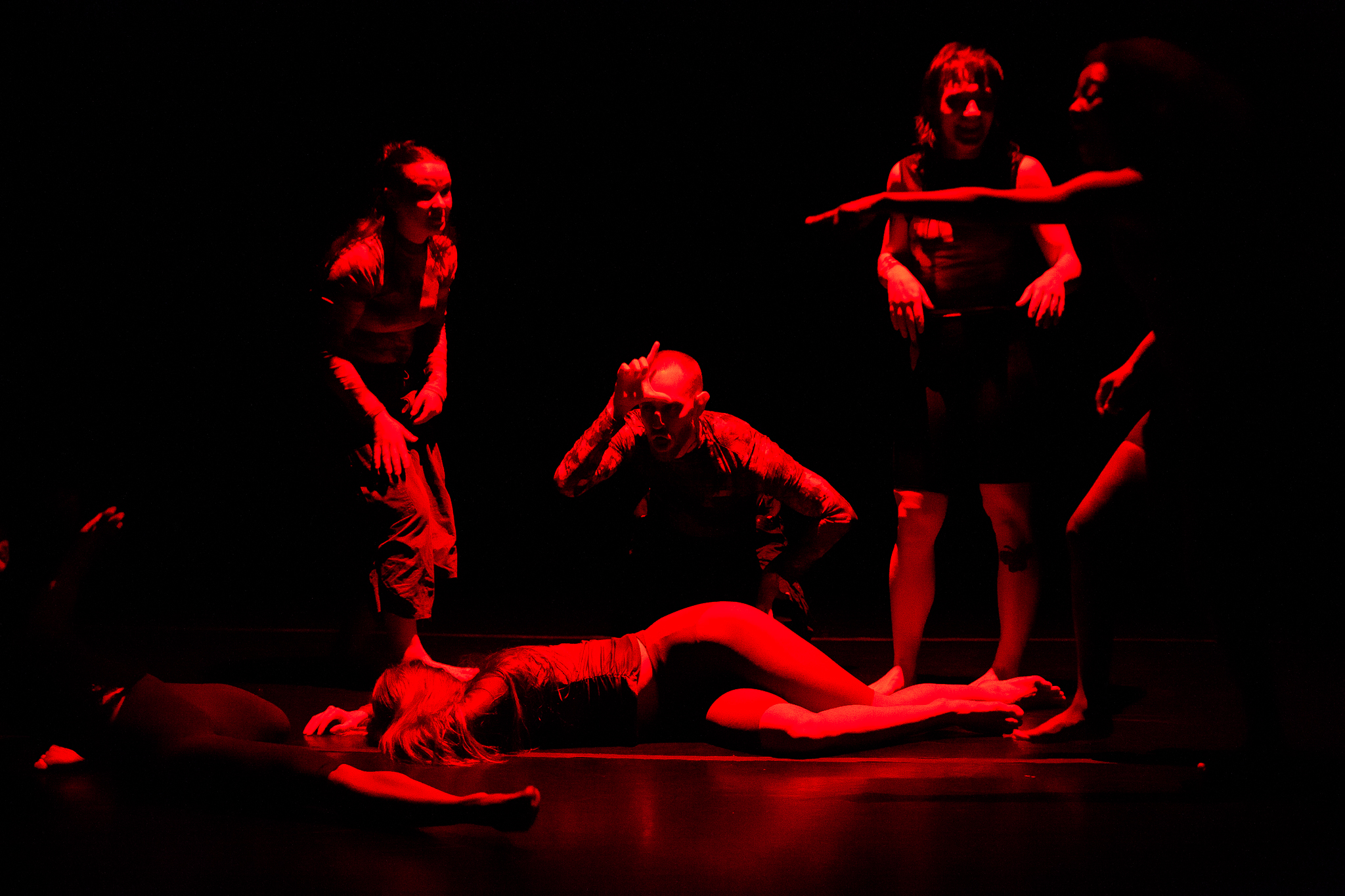
Performance art is characterized by its ability to blur lines and offer experiential complications to fixed terms and ideas. For example, it might ask what is performative and what is pedestrian? Who is a performer and who is not? What unspoken rules are guiding the experience? What happens when we remove them? Such were the questions posed, with great irony, humor, and prop usage by Philly Kerplop’s CHICHI CHIP (an ode to the gnarly).
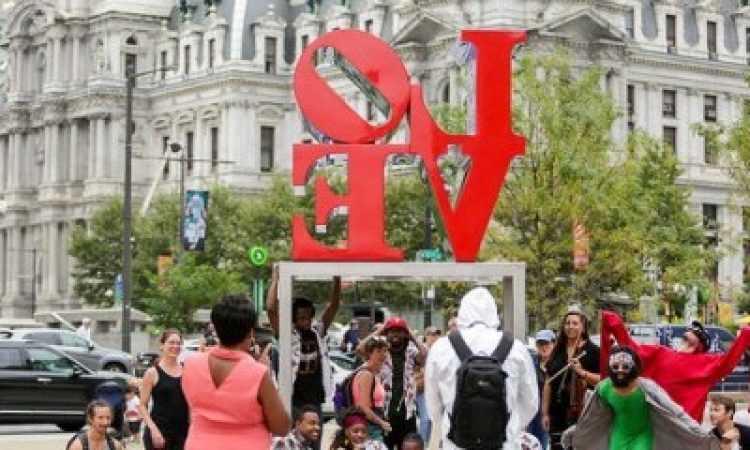
It felt fitting that I meandered into LOVE Park, the site of the performance, several minutes after the show’s scheduled beginning at 2pm, propping my bike against my leg as I watched its elusive logic unfold. Immediately I was thrown into energetic chaos: performers in pastel-printed shirts (designed by Amalia Wiatr Lewis) ricocheted throughout the park where the audience had gathered, pausing occasionally to, as if displaying the seventh wonder of the world, raise their outstretched arms toward audience members, bikes, signs, feet, and benches. Musicians on violins, drums, and a saxophone jammed out as Vince Johnson, the creator of the ensemble, clad in a green-screen-colored body suit, sunglasses, and long grey robe belted from a handheld megaphone:
“This is America! It’s a party!
This is America! It’s a party!
It’s a party, America!
Look, it’s a party!
Look, America!”
The piece was not only concerned with notions of spectacle and entertainment—it shouted these concerns through a loudspeaker accompanied by siren sound effects in the middle of Center City. The character of voice-coming-through-the-megaphone provided both nonsensicality and mental nourishment throughout. Using a large foam hand attached to a stick, Johnson directed our attention and bodies various places in the park throughout the next hour, as dancers performed virtuosic break dancing, miming, tutting, displays of hysteria, upbeat characters, full-on-flailing, or portrayed police officers asking various members of the audience to leave. As we watched the dancers’ fantastical and frenzied performances, Johnson’s words ushered our thoughts toward notions of meaning-making, comfort, art, performance, capitalism, the American experience, and marginalized bodies.
“You’re too distracted, you’re missing the social commentary!”
“Humans who are confused find lines!”
“Corporate America has the attention! We do not have the attention!”
“I need zyrtec! I need benadryl!”
“I feel free when some white dude tells me what I’m allowed to do!”
“Help me put myself back inside myself!”
“It’s only a party when we all dance! It’s only a party when we all dance!”
One particular onlooker from the park became taken with the performance when Johnson sang an atonal song about America; so much so that he became a regular contributor to the megaphone with songs like “Yankee Doodle Dandy”, and wielded several props for the rest of the show. The performance was vast and complex, but something about a seemingly homeless man joining a cohort of hip hop performers to sing “God Bless America” while waving a butterfly net, while another performer impassively yells “Clap through the injustices” into a bullhorn, says it all better than I can give boundaries to with words.
Chichi Chip (an ode to the gnarly), Fringe Festival, LOVE Park, September 21