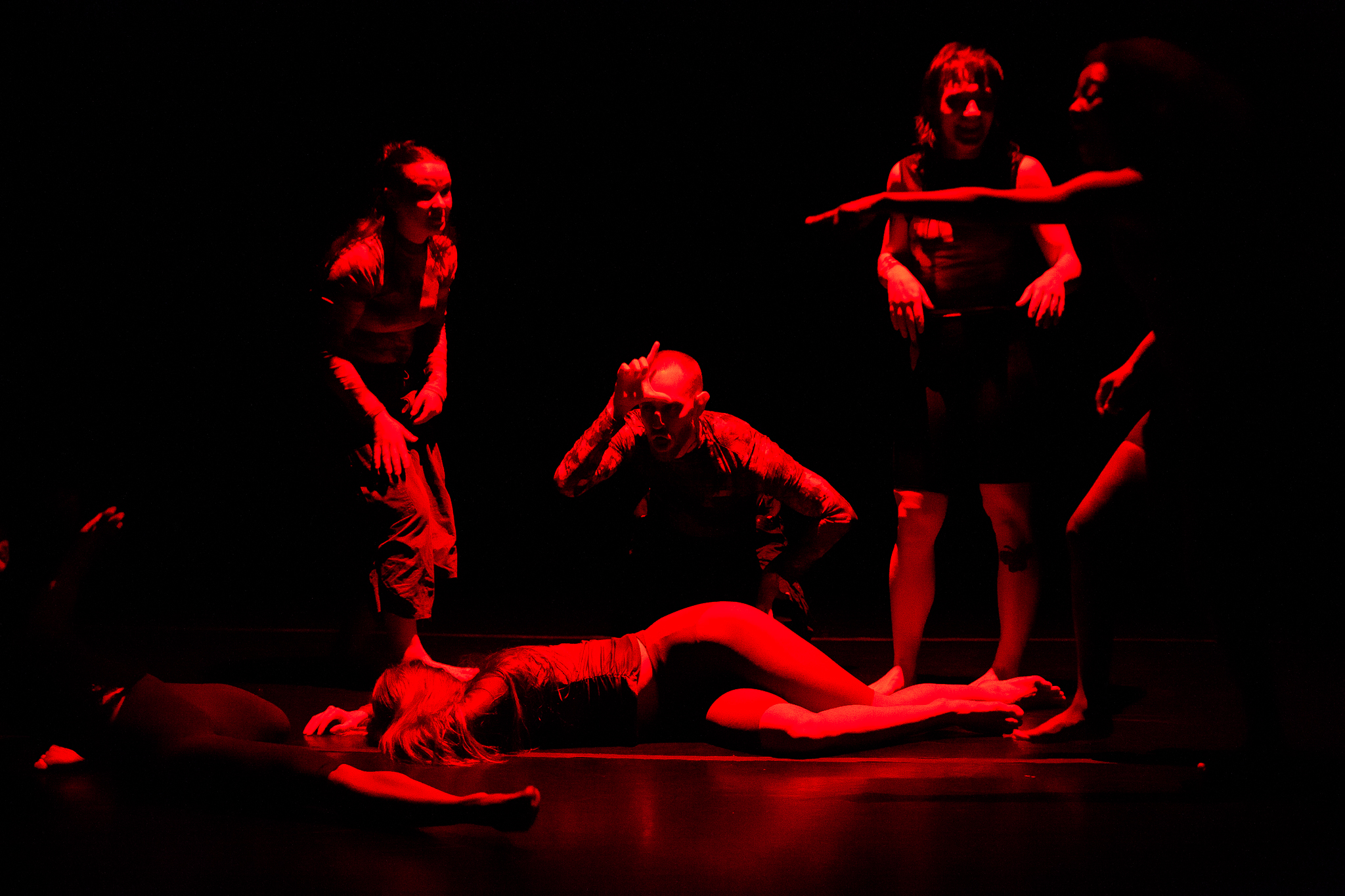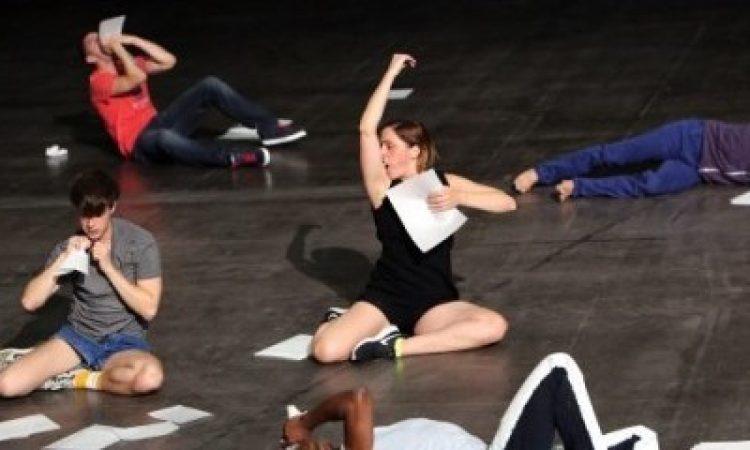
It’s Saturday night at FringeArts. The bleachers are pushed aside, leaving a bare room and people standing in random, unsure clumps. Ten dancers hold sheets of paper and walk among us. Throughout the course of manger, the dancers will eat this paper. This is exactly what happens and only part of what happens. The dancer closest to me begins methodically; even bite marks along the top edge. They lick, munch, tear off strips, and stuff clumps of it down throats. A beautiful singing begins, the harmonies wafting from all directions, through full mouths. They collapse, gagging, onto the floor.
These dancers play games with their food. One throws a wad into his mouth and lets it drop back into his hand to the beat of the singing—it’s almost stylish among the others’ grotesque munching and gyrating. One wraps the paper around her sneaker and bends her leg back at an impossible angle to get her foot into her mouth. We hear–
This man was full of shit.
Boris Charmatz’s manger is as much about the audience as the performers. We self-organize: standing, crouching, and sitting; half-smiling or grimacing. I walk around, the slow walk of someone in a museum contemplating the “aesthetic object.” The aesthetic objects in this Philadelphia Museum of Dance move wildly, but stay contained in our watching.
And they chained him
And put him in the show
The shifts of movement and soundscape keep me engaged, but the piece never deviates from its prevailing theme. The isolation is total. The dancers fuss on the floor, clasping their hands between their thighs. They thrust their fingers under their ribs and blow out their bellies, reminding me more of the distended stomachs of malnourished children than of gluttony. They keep eating. They are all muscular and thin, by the way.
They find their way towards each other. Brief spurts of movement—running in circles, big jumps, spins—fully executed but going nowhere. They sing—
Hey light
I can wear my moccasins
You have made me smile again
—grazing the floor for scraps as they move to the edges of the space. I meet one dancer’s kind eyes. He almost smiles at me; I’ve been craving that release. Fin.
There’s one paper ball left after the dancers exit. I rip off a little piece and chew. At home, I devour a hunk of bread. I lie in bed and clasp my hand between my thighs. The movements have made their way into my body. The why’s and wherefores are still to be understood.
manger, Boris Charmatz, FringeArts, Sept. 22-23.