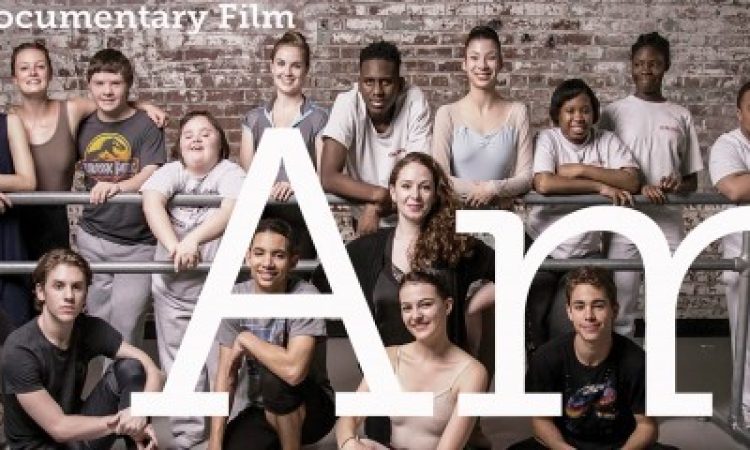
Sometimes the standards and definitions of art can deter artists who don’t fit the mold. In the dance world this has yielded exclusion, particularly for differently-abled or disabled individuals. There is a clear message that if your body and mind move in a way different from the majority, then you don’t have a place in dance. Philadelphia-based Art Reach’s new documentary, I Am, breaks down barriers and opens the door to those left out of the performing arts. I attended a recent screening of the movie and was deeply moved by this example of diversity, equity, and inclusion in the arts.
In a time where many organizations are rushing to stomp out long-standing exclusionary practices, Art Reach models how we can accomplish this thoughtfully and ethically. They orchestrated a collaboration between six students from St. Katherine’s Special Education Day School and eight dancers from the Second Company of the Pennsylvania Ballet. During a ten-week program, choreographer Jessica Kilpatrick guided the group in inclusive collaborative art-making. In the film, we see Kilpatrick embody the tenet of letting the community guide the art. She leads by letting go—a rare quality that is missing in many aspects of collaborative art. During her first session with just the St. Katherine’s students, she asks them to dance freely. Kilpatrick observes their movements, which she calls “phrases.” These phrases become the students’ “I Am” statements—revealing who they are through their bodies. They spin and twirl, arms reaching and curving, shoulders rising and dropping, bobbing and side-stepping. These gestures contain a powerful energy. Over the next weeks, the St. Katherine’s students and dancers from the Second Company train side-by-side while building meaningful connections. Kilpatrick creates a ballet performance that blends organic student-generated movement with classical ballet techniques.
In the final segment of the film, the group performs live in front of an audience. The piece vacillates between all the dancers moving in unison huddled close together to solos and duets. Collaboration becomes a living organism comprised of each dancer. So many attempts at inclusive art leave those from marginalized groups feeling othered, separate, or forced to assimilate. I’m refreshed that this is not the case. I Am depicts each performer as a thread to be bound together to create the whole. The dancers are given agency and creative control. This trust is what turns the St. Katherine’s students’ timidness to confidence. They’re empowered to be the author of their story. They’re not just given a seat at the table, they’re able to build the table on their own terms.
I think of the words of fellow tD writer Mohan Bell. In a recent thINKingDANCE meeting on inclusivity he said that inclusion isn’t just about including outsiders, but actually shifting the lens and culture to invite their individuality and experiences. This film reminds me of the need to expand the aesthetics of movement to include forms and bodies that have traditionally been denied access. I Am helps us to question our own prejudices and imagine a truly inclusive dance world.
I Am, Glenn Holsten and Art Reach, Drexel Performing Arts, Mandell Theater, October 18.