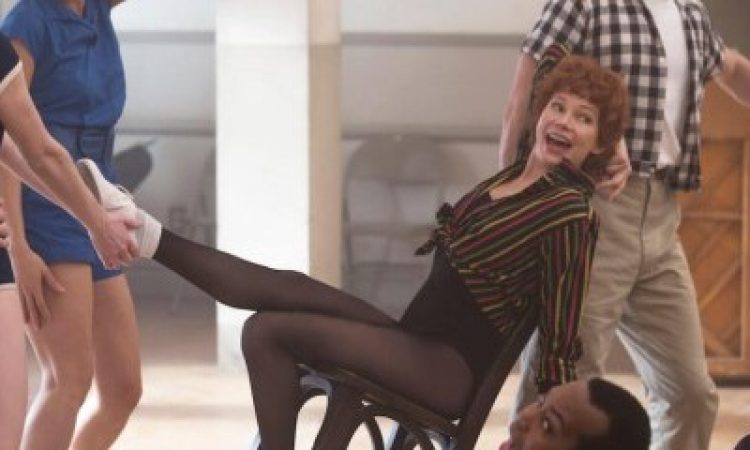
Carol Burnett once called Gwen Verdon “the sweetest, and most talented dancer in the whole wide world.” In Fosse/Verdon, a mini-series produced by Lin-Manuel Miranda on FX, Verdon emerges as the heroine in contrast to a bitter, terse Robert [Bob] Fosse.
The mini-series tracks the parallel biographies of the choreographer Fosse and the dancer-muse Verdon through the course of their courtship, marriage, divorce, and beyond. Fosse is the household name of the couple, but this series offers an equal amount of screen time and narrative space for actor Michelle Williams to portray Verdon as a full human being. Sam Rockwell as Fosse brings out the choreographer’s tortured pursuits of fame and glory.
The best part of this series, by far, is the wickedly talented ensemble of concert and stage dancers who perform reconstructions of the classic Fosse numbers as created for the screen by choreographer Andy Blankenbuehler. This crew includes Georgina Pazcoguin in “Big Spender” from Sweet Charity, Heather Lang in “Mein Herr” from Cabaret, and Bianca Marroquín as Chita Rivera in Chicago, among other stand outs. These Broadway dance reconstructions serve as a delicious Fosse career retrospective spanning approximately 1955 to his death in 1987. Blankenbuehler does Fosse justice in translating them to the screen, although several, such as Cabaret and Chicago, have already been presented as films prior to their inclusion in this mini-series.
Unsurprisingly, Fosse/Verdon is created for a general audience, perhaps for the period-drama market looking to fill the void left by Mad Men or The Marvelous Mrs. Maisel. Thus, Fosse’s nefarious adultery steals much screen time from the dancing itself. This series frankly could be called “Mad Men, but with dance numbers.”
The teleplay pays great attention to the through lines of lover-who-becomes-wife, wife-who-becomes-ex-wife, and so on. In the case of Fosse, the three major relationships represented on the show are also major dancers in their own right—Joan McCracken played by Susan Misner and Ann Reinking played by Margaret Qualley, in addition to Williams’ Verdon. This theme of sexually exploitative choreographer-muse relationship reads old and stale, especially when compared to the high-octane dance performances by the stellar cast.
The dim lighting, pastiche background music, and cliché-ridden teleplay relegate the show to something pulpy, a mere guilty pleasure for Broadway insiders. While it is excellent to see the artists’ trust, The Verdon Fosse Legacy, advocate for and protect the work through the careful choreographic reconstructions, it would be more valuable to have the dances without the sensationalized fluff.
Fosse/Verdon, Choreographer Andy Blankenbuehler, FX Networks, April 9 – May 14.