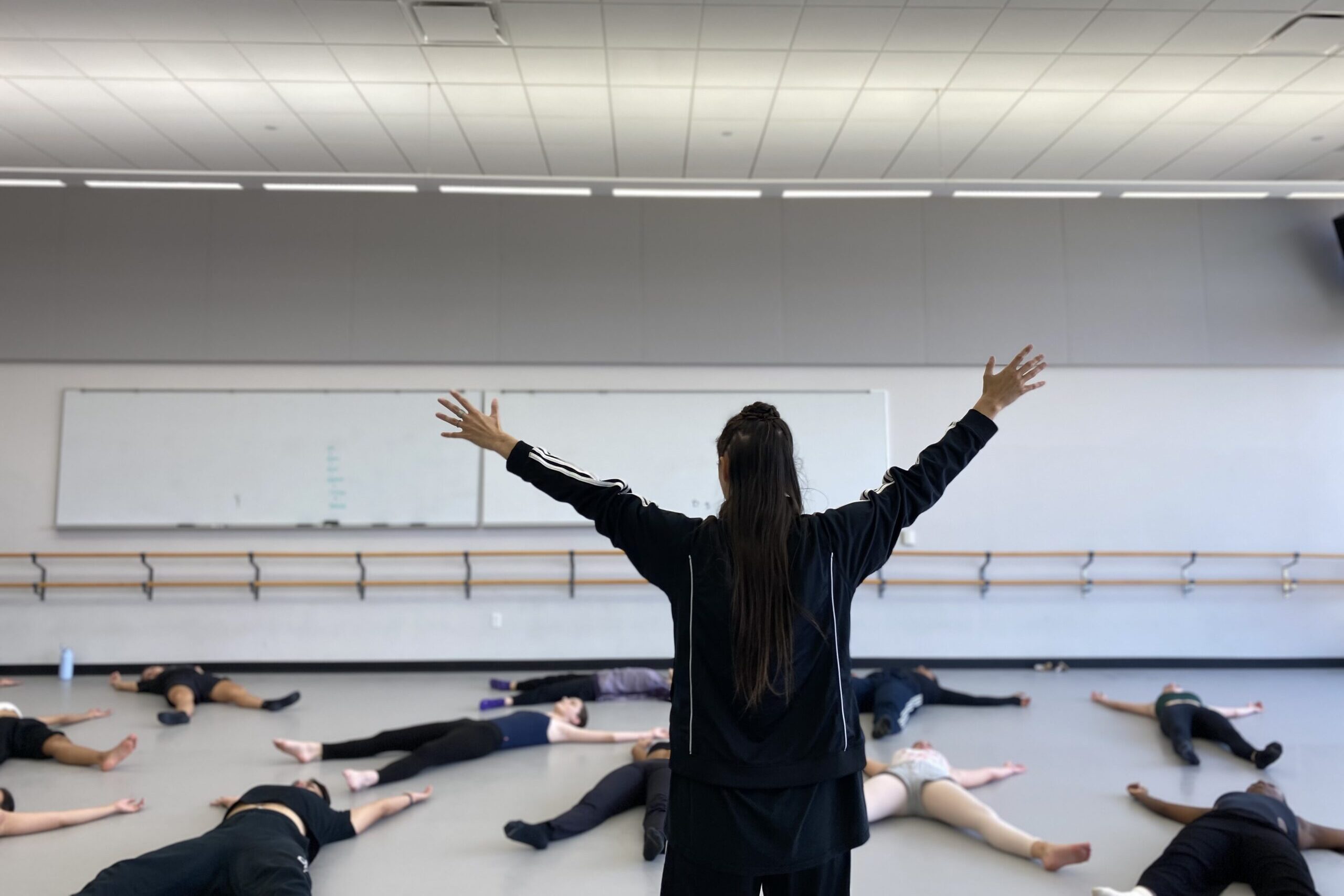
On Saturday, October 26, 2019, thINKingDANCE writers had the opportunity to work intensively with theatre artist and educator Morgan FitzPatrick Andrews in exploring techniques developed by the Theatre of the Oppressed. Originated by Brazilian director and activist Augusto Boal, Theatre of the Oppressed practices aim to empower vulnerable communities to fight the everyday oppressions in their lives. This real-world application appealed to us, as contemporary artists and writers. Initiated by tD’s Education and Intersectionality committees, this workshop was a step toward stimulating conversations about diversity and inclusion in our community, in the arts, and in culture today.
Andrews, one of the facilitators at the Philadelphia Theatre of the Oppressed network, led 16 tD members through a range of theater-based exercises designed to help us question the power structures and relational dynamics in which we participate as writers, critics, creators, dancers, movers, viewers, and community members. In the course of the six-hour workshop, we practiced movement games, brainstorming, goal-finding, sharing of movement and words, and questioning. Working sometimes in pairs, sometimes in larger groups, we challenged ourselves to move, think, follow, lead, contribute, name, articulate, and reveal our blind-spots, focuses, intentions, objectives, and concerns.
In a follow-up discussion at our November writers’ meeting, participants voiced appreciation for the opportunities the workshop gave us to move together at length, to interact in ways different from our usual talk-and-write modes, to experience laughter as well as discomfort, and to raise questions about our tD community and its relationship to broader rings of community, including the arts world and the city of Philadelphia.
Where from here, we asked? Onward to further expand and explore our goals and community in ways we continue to articulate as an evolving group of engaged arts advocates, participants, and audience members.