“The nearly straight-line configuration of three or more celestial bodies in a gravitational system.”
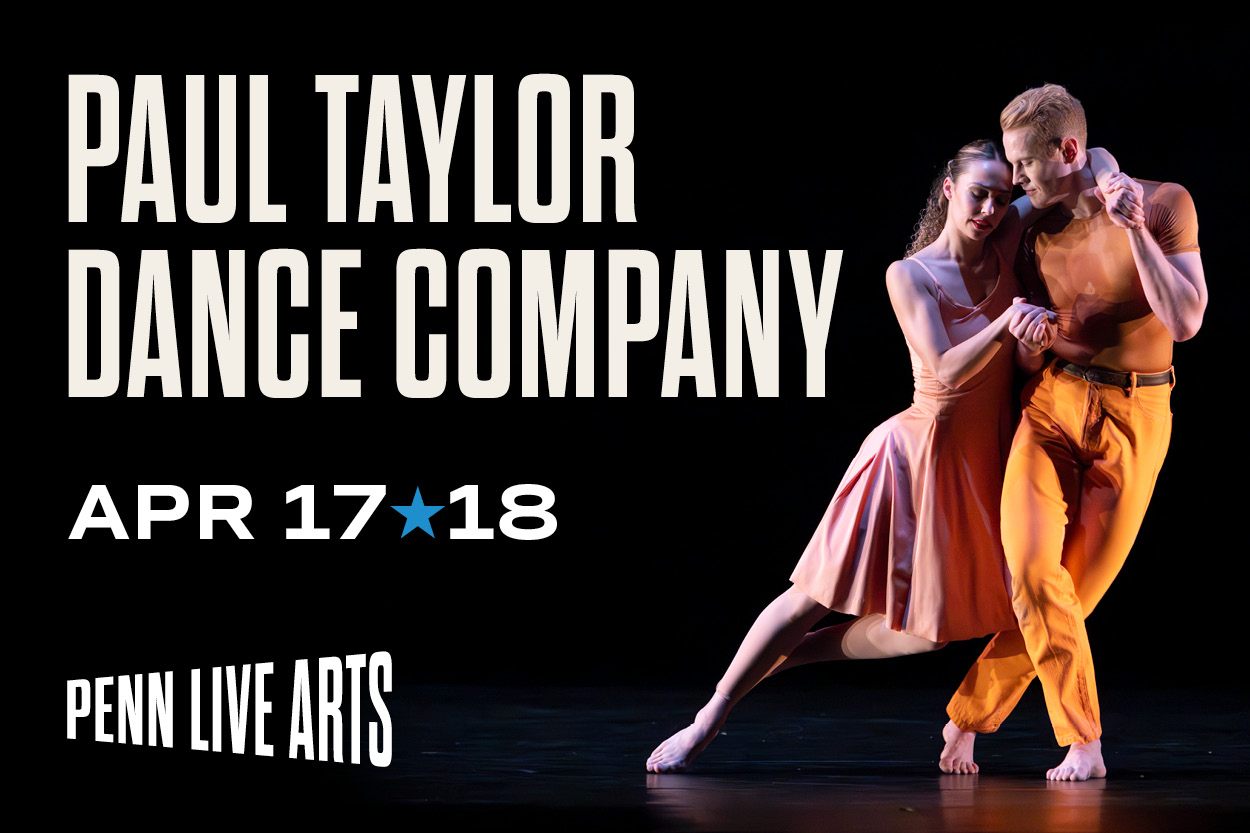
That’s how the program notes defined the term “syzygy,” the title of the opening dance on a program of works by modern-dance icon Paul Taylor. Definitions I found elsewhere include “a conjunction or opposition, especially of the moon with the sun,” and “a pair of connected or corresponding things.” The word’s origin comes from the Greek “to yoke.” It was a fitting metaphor for the evening, the company’s first appearance in Philadelphia since Taylor’s death in 2018. At this moment of transition—with successor Michael Novak still establishing himself as Artistic Director, the company in the midst of an international retrospective celebration tour, and a cadre of new dancers after a slew of retirements— many bodies are entering and exiting the company’s orbit. Fortunately, it still soars sublimely.
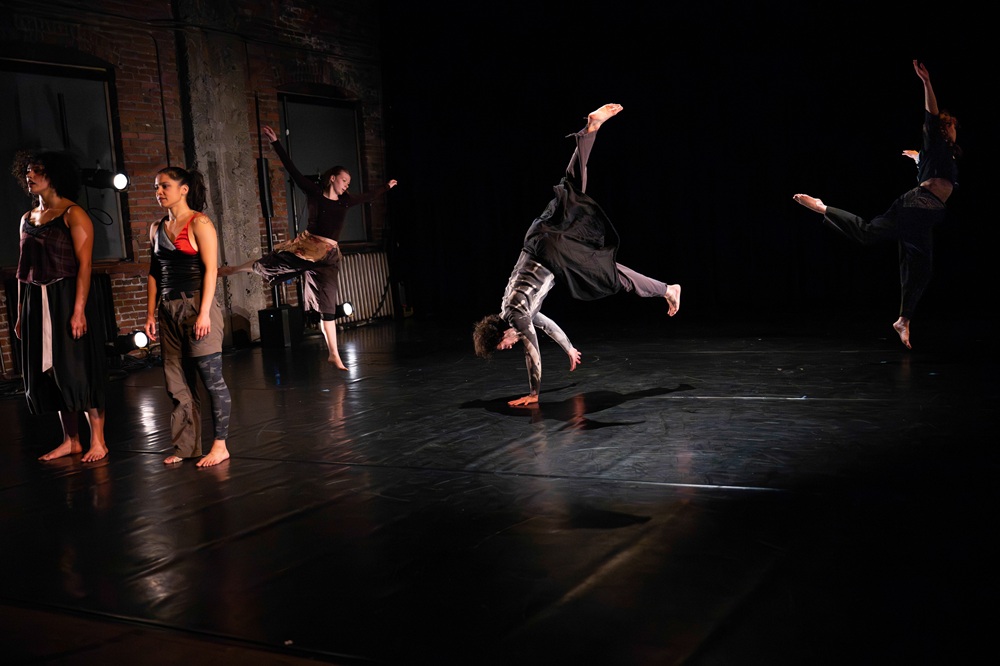
Of the three pieces on the program, Syzygy (1987) captivated me the most. The curtain opened on a scene of squiggling limbs, giving me the feeling of having arrived at an odd happening already in progress. The dynamism of the piece (driven by a tinkling, syncopated, almost midi-like score by Donald York) was at full speed from the beginning, and we in the audience had to keep up. The dancers were in such whirling motion that moments of alignment and stillness were ever-so brief. After I settled into the frenetic pace of the piece, I was able to take in all its delicious detail: flicks and tosses of the wrists, arms, and legs simultaneous with the strong precision and clean lines Taylor’s work is known for—the strongest, most specific floppiness I’ve ever witnessed. During intermission, I reflected on the piece with my dance colleagues. One wondered, “how can they be so imprecise so perfectly?” The dancers’ athleticism was on full display, with suspended leaps, repeated runs and slides across the floor, lifts that seemed to go on endlessly. The structure of the piece dissolved into floaty chaos, and the curtain fell on just one dancer revolving in a simple attitude promenade as the others spiraled out of orbit; I felt a collective exhale from the audience (quickly followed by enthusiastic applause). As in his whole career as a dancemaker, Taylor created his own universe, and we got to ride along in it.
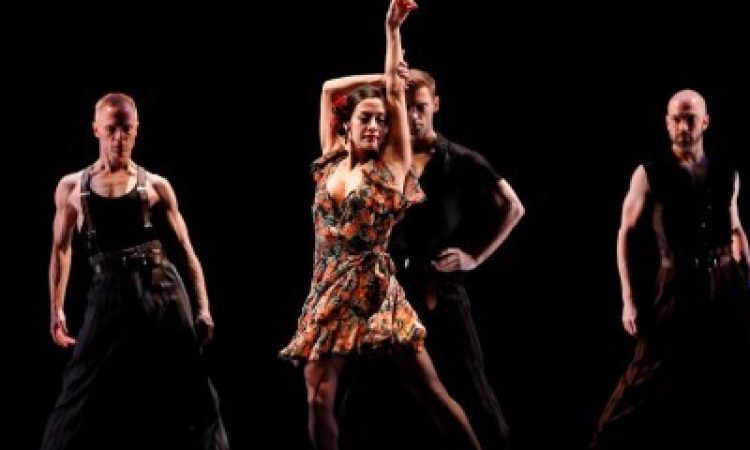
Also on the program were Sunset (1983) and Piazzolla Caldera (1997). A viewer could be forgiven for thinking that the bill featured three different choreographers, rather than one versatile and wide-ranging creator. The dancers shape-shifted from celestial bodies to soldiers home from the war and the loved ones left behind, then again into sensual characters in a Spanish café atmosphere. Sunset was a tender foil to Piazzolla Caldera’s raw sensuality. Its beautifully held yet pedestrian qualities brought the characters to life. The unexpected insertion of a nature soundscape of loon calls and spring peepers into the string orchestral score brought an avant garde dreaminess to a concept that could otherwise have veered into overdone tropes. Piazzola’s sexiness also had a gritty, dark, almost frantic quality. These pieces contained portraits of gender both traditional and challenging, a classic Taylor device. Sunset’s coy flirtations of the soldiers and their girls gave way to a vulnerable duet between two soldiers exploring complicated male intimacy. Early in the tango-inspired Piazzolla Caldera, the dancers paired off in male-female couplings until two men remained, dancing the same steps as the others (later, two women also tangoed).
These three works spanned a range of styles in Taylor’s repertoire. Before the curtain rose, we also saw a short film with excerpts from dozens of additional works, along with footage of the choreographer himself (at one point saying he felt he had “been ordained” to dance). But Taylor’s legacy wasn’t the only one celebrated at the opening night performance. The program was dedicated to producer Randy Swartz, current Artistic Director of NextMove Dance, who is retiring at the end of this season after decades curating dance in Philadelphia. He and Taylor had a special relationship, with Swartz bringing the company to Philadelphia 17 times since the 1970s (see a 2013 review here) and even commissioning the work Speaking in Tongues (1988). In the post-show talkback, Novak said that the pieces on the program were chosen with Swartz, since they were special to him personally. Paul Taylor Executive Director John Tomlinson also honored Swartz at the top of the program with celebratory words and a commemorative plaque, apparently to Swartz’s surprise.
Taylor, Novak, Swartz, dancers old and new—all yoked together in a brief, glorious moment of syzygetic alignment.
Paul Taylor Dance Company, Annenberg Center for the Performing Arts, Jan 24-25.