As the pandemic continues to change the conditions for creating, rehearsing, and performing, it’s a small miracle that Philadelphia’s Fringe Festival is unfolding as thoroughly as it is. Unsurprising, it includes many works that have undergone deep revision and renewal over the past six months.
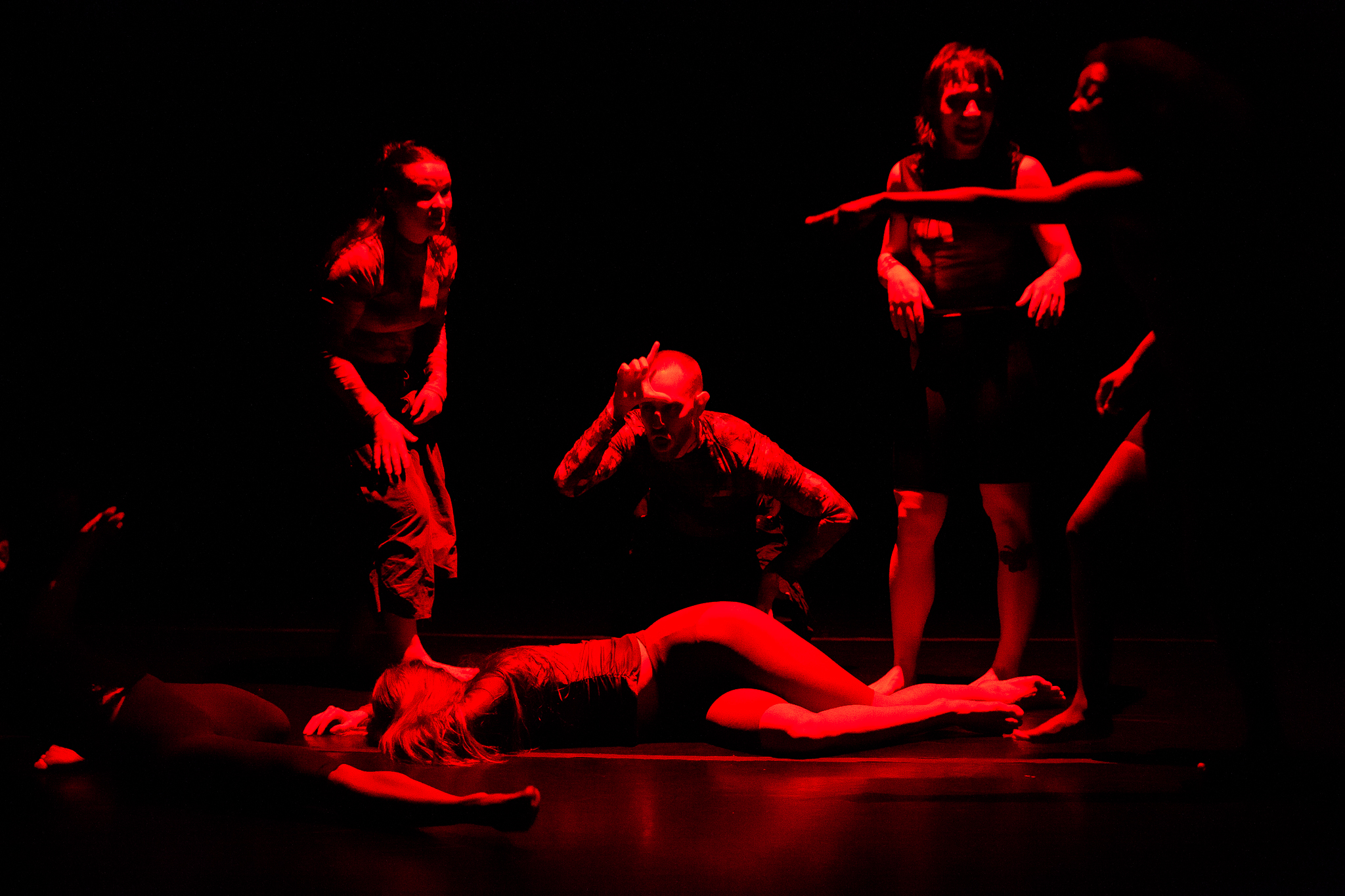
Created by poet Kyle Dacuyan in collaboration with the Antigravity Performance Project (directors Michael T. Williams and Francesca Montanile) and artists Andalyn Young, Kate Liebman, and Michael Costagliola, the original Legal Tender was primed for transformation before the pandemic by nature of its themes and interdisciplinary structure. The duet of poetry and movement explores consumer culture, labor, media environments, and truth.
The Legal Tender that Fringe audiences will experience carries those same themes, but the structure is now more fractured and nonlinear. In a sprawling collage of video, text, and audio, Legal Tender includes pieces of its process and past lives. In an email exchange with Dacuyan, he described the transformation and process as a “circular, shared approach to the authorship and assembly.” (Not unlike the ethos surrounding the Judson Dance Theater.)
In a thoughtful prologue to the live performances on September 17–20, Dacuyan et al launched an online exhibit that includes poetry, notes, rehearsal footage, and other ephemera. For better and for worse, the virtual experience mirrors my daily life online since March. Listening to an hour-long audio piece (“a polyvocal text read”) while flipping through other browser tabs, stopping and starting rehearsal footage, googling new words and new names—it says as much about my own oversaturated consumption of the internet as it does the work’s malleability. I can hone in on what most interests me; I can space out then check back in.
The approach is resistant to traditional forms and open to interpretation, with poetry at the forefront. “I think what draws me to poetry is that it is a space of language where we can be freed from certain kinds of obligation,” Dacuyan writes. “Those dimensions of obligation are different for each of us, but in general, I think we all experience pressure in our speech to convey meaning, or authority, or interest, or value. I like that poetry proposes alternative kinds of relation to one another through language.”
“American Vernaculars”—a poem written and performed by Dacuyan with video by Liebman and sound by Costagliola—is a gripping, hypnotic narrative of erotic desire, racism, citizenship, and personhood. It’s easy to lose the thread of words within the array of visuals, and vice versa. The rehearsal footage is an all-too-familiar recreation of a video meeting, with a three-by-three grid of separate films dominated by repeating sequences and gestures. It is impossible to take it all in at once.
Williams’ three unadorned vocal solos—“longing,” “comforts me,” and “love towards another person” —are thoughtful counterweights to the rhizome-like collection. The first two in particular, with their resonant and drawn-out timbres and vibrato, slow down my overall experience of time.
When it comes to the live component, such an open-ended aesthetic and structure can be difficult to enter. Where are the familiar signposts of narrative and intention? “All of our media have units of meaning-making,” Dacuyan writes. “I don’t think we are deliberately ANTI-meaning or completely abstract (what is completely abstract?) but I think that when we destabilize the norms of our elements—words, gestures, pictures, tones—we open up these really wonderful sites where unexpected feeling can happen. And from unexpected feeling there comes unexpected attention.”
Legal Tender, Zoom performance and online exhibit, 2020 Fringe Festival, Sept. 17–20.