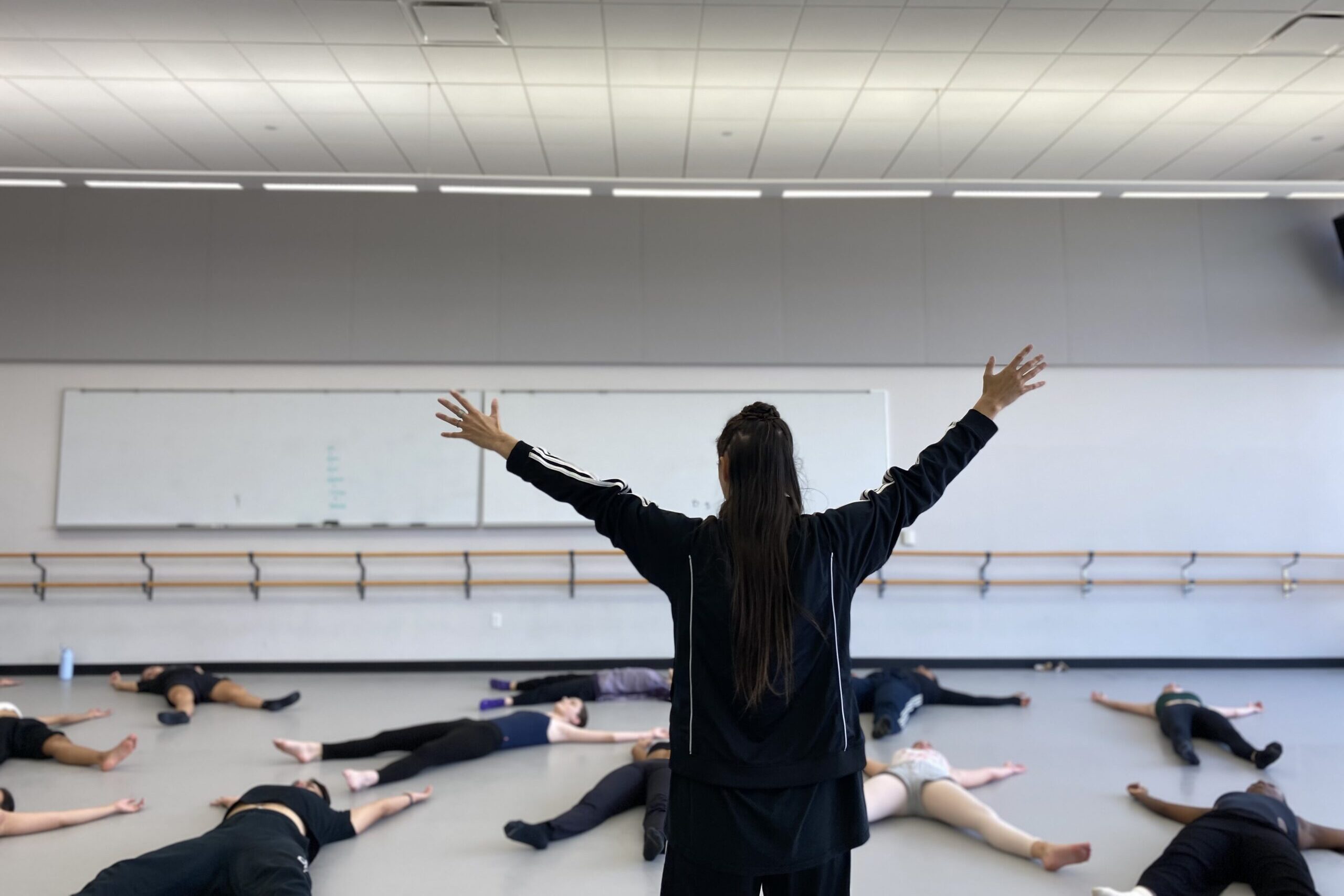
I’m struggling to write this review about Henry Alford’s And Then We Danced: A Voyage into the Groove. Whenever I sit down to think about the book, I want to get up and dance. Not the contained limb waving I’ve been doing in my makeshift office/gym for the past six socially-distanced months. I want to really dance, to untether my creative self from my increasingly inactive body, to release my movements from the confines of an 8-by-10-foot space cluttered with furniture, to reach my arms towards a ceiling I have no chance of touching even if I jump. I want to move so expansively that my heart thunders in my ears and my lungs ache for air. I want to dance in unison with other people, freely and blissfully, as Alford does in his book. Before reading it, I missed dancing. Now, I miss it even more.
Alford, who is a humorist and participatory journalist, started dancing at age 50 while writing about Zumba for The New York Times. Although he typically abandons the practices he adopts for writing assignments, which have ranged from cooking with 99 Cent Store purchases to wearing a solar-powered jacket, he stuck with Zumba and then ventured into other dance genres. His sudden interest in the art form inspired him to write And Then We Danced. In the book, he interweaves his explorations of New York City’s dance scene with anecdotes about famous performers to better understand why people dance. Each of nine chapters is dedicated to a different role that dance plays in society, from politics and religion to expression, healing, and more.
Published two years ago and marketed as part cultural history and part personal narrative, the book is now entirely history, thanks to the pandemic. In between stories about iconic dancers such as Martha Graham, Bob Fosse, Michael Jackson, and Savion Glover, Alford recounts his own experiences going into crowded dance studios, chatting with his teachers, and moving within six feet of total strangers.
Rhythmic and expressive, Alford’s writing shares elements of good dancing. Through his humorous descriptions, I can vicariously experience how it feels to be with “more than one hundred people rehearsing in a space the size of an airport Cinnabon” (78); to “have held my body against someone else’s long enough for the patch of sweat on her T-shirt to transfer to my T-shirt” (186); “to want to move in a way as beautiful as the surroundings” (93); and to experience that “moment when you’ve been bodily thrashing for a couple of hours and realize that you’ve burned off the alcohol in your bloodstream but have seamlessly replaced it with something equally enlarging” (174).
In presenting the joy that comes with moving your body to music, Alford provides a portrait of dance that is relatable and inclusive. Whether describing an unforgettable wedding dance floor or the rehearsal process for Twyla Tharp’s The One Hundreds, he employs the same celebratory tone. Stripped of pretension, his stories depict the dance world I long to return to.
I had originally meant to read And Then We Danced when it came out two years ago but never got around to it. Perhaps this delay was for the best because I wouldn’t have appreciated the book as much had I read it before the pandemic. My favorite passages evoke memories of experiences I previously took for granted: walking through a dance studio’s history-filled hallways, talking with other students before class, dancing beside someone I admire and pushing myself to match their energy.
And Then We Danced reminds me of what dance was like before the mass spread of coronavirus, but it also makes me question if I’ll ever experience dance in that way again. Performers have left the city, studios have permanently shut their doors, and dance floors are collecting dust. The way we dance seems to have permanently changed. I’m starting to wonder if I’ll ever be able to look back at this time and say about its conclusion, “…and then we danced.”
Henry Alford, And Then We Danced: A Voyage Into The Groove. New York: Simon & Schuster, 2018. 226 pp.