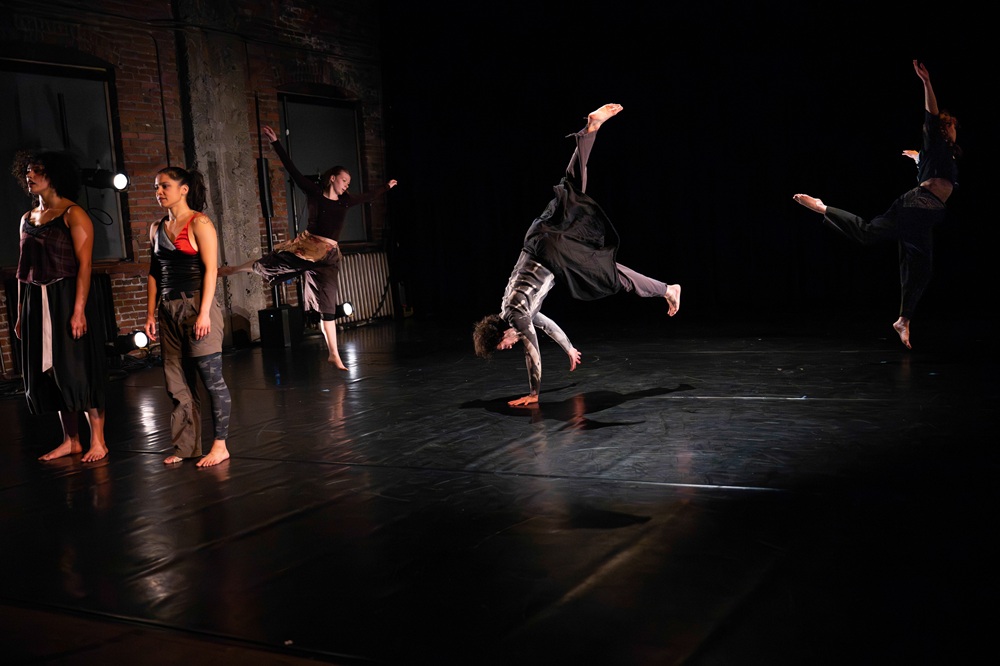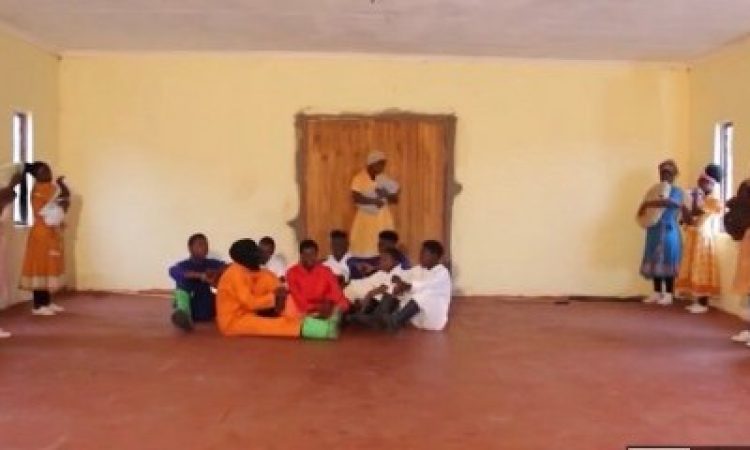
Kangaroo Zulu Dancers live-streamed five different performances as part of the Philadelphia Fringe Festival between September 11-27. On September 22nd, I witnessed one of the five shows, Simunye (meaning “we are one”).
The opening vignette began with a group of men and women chanting, a collective voice of rich lyricism, in call and response. The men sat together in the middle of the space: a room, not a theater, void of stage lighting. The place architecturally reminded me of settings I am accustomed to growing up in the Philippines: painted cement walls, wooden doors with large windows. In this room, the women chanted around the perimeter, carrying what seemed to be a baby wrapped in a bundle, which they later handed to the men. I have heard of practices in which only women can be around the sacred space of birthing, and fathers have to wait outside until the baby is born. This section reminded me of such traditions, and I recall that many Africanist dances relate to a celebration of a life event.
The opening dance set the stage for more pulsating, rhythmic dancing showcasing what appeared to me as solidarity between brotherhood and sisterhood. The women danced in unison, demonstrated grace, eloquence, and even flirtatiousness. The men performed energetic, ferocious outbursts of rhythmic stamping, body percussion, singing, and chanting, calling forth images of warriors. In their militaristic unison, I saw some resemblance with step dance in African American fraternities and sororities, often demonstrated in HBCUs (historically Black college or university).
The thirty-minute performance ended with two dancers contrasting each other’s movement aesthetic and costuming. Dancer A, dressed in a grass-reed skirt embellished with beads, demonstrated a raised leg stomp, massive kicks, and percussive movements, landing each time in a warrior stance. Dancer B wore sweatpants and a tank top, flaunting breakdancing power moves from airflares, backflips, windmills, and various freezes. As a Filipinx, I have engaged in conversations on the challenges of keeping the purity within Philippine traditional arts. After researching the aesthetics of traditional Zulu dances, I wonder if this vignette was a statement on those same challenges of upholding the traditional versus embracing modernity.
The Zulu people are an ethnic group of South Africa who have had a long dark history with apartheid, an Afrikaan word that means apartness. Similar segregating laws were enforced during South African apartheid as in the United States, and both countries have residues of racial inequities that are very much present today. In the US, we continue to grapple with systemic injustice as seen in police brutality and the wrongful deaths of many African Americans. Because of this, I saw the performers in Simunye breaking down the barriers of inequality, highlighting that we have a shared humanity—a message much needed in today’s socio-political climate.
Kangaroo Zulu Dancers, 2020 Fringe Festival, Sept. 11-27.