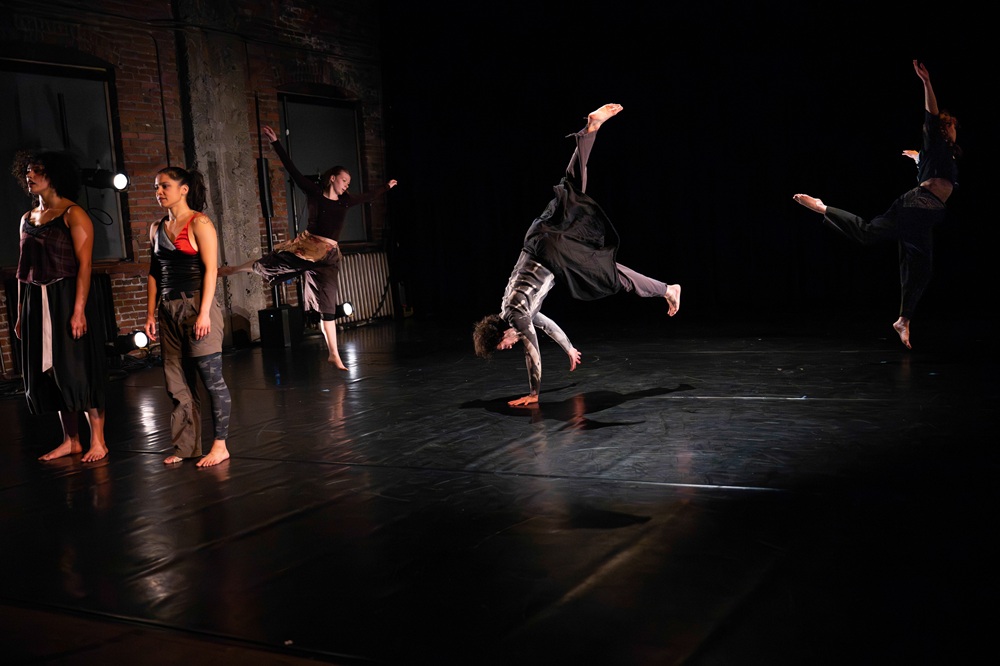
Responding to the pandemic, Kun Yang Lin/Dancers presented Inhale on Camera, shifting its formerly live, quarterly performance series to a socially distanced in person film screen. Through a curatorial process in the Inhale showcase series, selected artists are given free space to perform at CHI Movement Arts Center (CHI MAC) and then receive solicited feedback from audience members after the performance. With the capitalistic pressures of producing a finished product, I found that the prior Inhale Performance Series a valuable platform to get feedback and test work. However, this time, the audience was not provided with a survey form, and I am curious if Inhale on Camera will stray away from providing artists with feedback.
Ellie Goudie-Averill and Beau Hancock presented A Place Called Lost (16mm film). The use of 16mm film began in the 1920s continuing into the present and is used to symbolize memory or a flashback in today’s cinema (as in Spike Lee’s Da 5 Blood’s flashback scenes). The 16mm here gave a sense of nostalgia. As the program notes mentioned, the two artists (both tD writers) have danced together for over 20 years, which made me think that the film choice celebrates this partnership.
Irreversible by Project SK+A/Seyong Kim featured beautiful pas de deux choreography. The long takes from a wide-angle gave me the impression that this work was a set choreography with the camera as an added element.
Anima Animus by Anabelle Lenzu is a text heavy film with lines such as, “We have an audience. We have to entertain,” still resonating with me. Based on the dialogue, I first thought this was a statement on the commodification of dance, driving away experimental and provocative works that Lenzu seems to be engaging with. However, the title Anima Animus confused me. This Carl Jung theory, that the title references unpacking gender performativity, was buried in the long film.
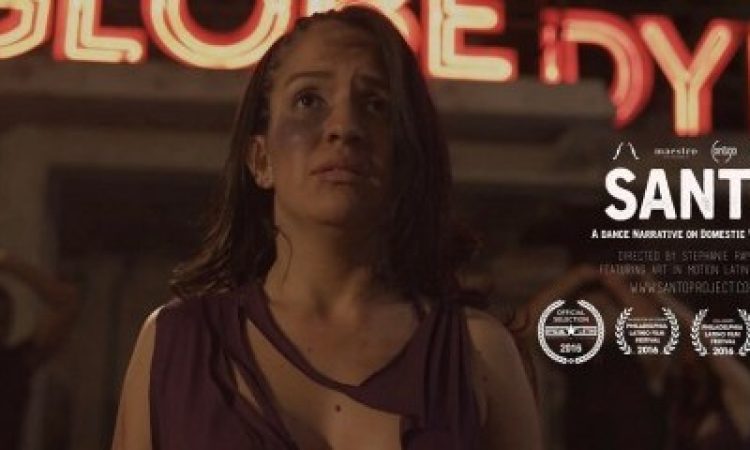
My favorite was Stephanie Ramones’ Santo (image above), a dance narrative on domestic violence. A salsa dancer herself, Ramones made brilliant use of salsa as a metaphor for male dominance and domestic abuse. Traditionally in salsa dancing, it is the woman’s role to follow the man’s lead. All the decision making–to do the basic step, a cross-body lead or a dip are led by the man, leaving no accountability to the woman except for her ability to listen and follow the man’s directions. This film goes beyond entertainment. It tackles real issues and requires critical analysis from its audience.
Ramones used a clear narrative structure, starting with fast cut editing choices to introduce the abuse, the urgency to seek help, and the couple seeking family counseling. I was most interested in the shots on the central characters, the couple, allowing us to stick to following the throughline. The resemblance with manhandling a woman in salsa dancing (man gripping the woman’s arm, grabbing the neck, tossing a woman’s body) was excellent, but could be lengthened and amplified. I found the duration of shots of the group salsa unison dance a distraction to the narrative, giving more of a music video aesthetic rather than screendance. This film is an abridged version, and I am curious to see the whole.
Screendance is an emerging and evolving art form, a pas de deux of camera work and choreography. My favorite screen dances have a clear merging of dance choreography with visual storytelling. This was superbly captured in Takako Vs. Nine Lives by Laura Katz Rizzo, directed by Lauren Wolkstein and Jen Schneider as director of photography. The film used ballet and wrestling modes, two seemingly different vocabularies to show beauty and monstrosity. I saw the competition and cutthroat behavior overtly present in wrestling and covertly inherent in the ballet world.
Mignolo dance came next with De-Eschatology, a tongue and cheek film expressing self-isolation at a time of COVID-19. Wrapped in plastics, the two performers danced within approximately six feet from each other, expressing desire to break free from the clingy plastic wrapped all over their bodies. A close-up shot of Lysol at the end of the film provided the viewers with some levity for our current crisis.
Soft season by E’lise Jumes had numerous camera movements which felt disorienting at times leading me to wonder if this was intentional. The production quality was excellent, providing vivid poetic images of the skies, mountains and moving bodies.
The great thing about shifting the series to screendance is the opportunity for makers from geographically distant places to submit work. However, I do question how KYL/D can foster economic equity not just geographic diversity. With smartphone footage having lower image qualities, will screenings be limited to viewing works only by artists who have access to high definition camera equipment, editing programs, colorists, and more? And with screendance being accessible mostly in academic institutions and festivals, I question how accessible this will be for local independent artists with little to no budget.
*Ani Gavino is a senior member of the KYL/D company, and participant in the Inhale series since 2015 where she presented Magunita in the same series.
Inhale on Camera, KYL/D, Chi Movement Arts Center (CHI MAC), Oct. 24.