In the digital pre-show for their latest work and short film, Chiron in Leo, New York-based dance artist, J.Bouey, (whose pronouns are they, them, and their), references the prologue of Post Traumatic Slave Syndrome: America’s Legacy of Enduring Injury and Healing by Dr. Joy Degruy, which offers the phrase, “kasserian ingera.” A traditional greeting of the Maasai tribe in East Africa meaning “and how are the children,” the question is a reminder that our youth reflect their environments, and their well-being is an indicator of the climate we create for our shared development.
In addition to the excerpt from Dr. Degruy, the pre-show includes mental health resources, and a collection of multimedia materials that allow spectators to join in the processes surrounding the vulnerabilities that led to the conception of Chiron in Leo. Bouey’s digital pre-show readies us with a sense of tenderness, intimacy, and care already established prior to witnessing the main event.
…but really, “how are the children?”
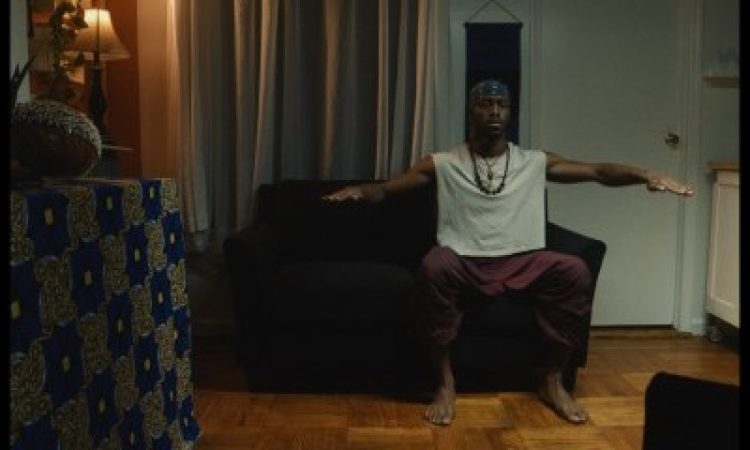
Bouey hints toward an answer in Chiron in Leo, taking viewers through an autobiographical account of main character Chiron’s upbringing. In the 25-minute film, Chiron’s story strings together themes of mental health, Black love, toxic masculinity, and intergenerational trauma. Bouey’s choreography carries each scene, the rhythms of the story’s narrator act as accompaniment, and verbal and body languages take turns cradling each other throughout the film. Bouey, playing Chiron, captures the joy and admiration a child feels for their parents and the psychological impact of the rejection and confusion that ensues when insufficient forms of love are passed down. As viewers follow Chiron’s recounts of childhood, we quickly become aware that they were not always okay.
The film opens with Chiron feeling through a depressive episode, laying in bed, fetal position, staring ahead blankly, narrating thoughts of displacement, rejection, and confusion in a solemn tone. They question their own worth, asking, “am I a back-breaking weight too heavy to bear?” The mood lifts as Chiron strolls through city sidewalks and park pathways below blue skies, casually lighting a blunt. They share memories of their father, accompanied by rhythmic gestures that animate the description of their charismatic, pro-Black, drum-playing dad. Chiron’s movement grows from gestural to postural and eventually kinespheric. They have an airy and expansive quality, occasionally shifting weight to land in balanced stances that appear effortless.
In the scene that follows, Chiron recalls the day their father’s heart iced over in response to the tragic death of Chiron’s uncle Robert. Chiron’s father became someone different that day, and inevitably, so did Chiron. Their father’s grief was weighed down by a new-found drug addiction leaving Chiron to carry the baggage for both of them.
Next we hear a distorted audio recording of a reporter reflecting on the crack epidemic of the 80’s. Nixon’s aide is admitting that it was in fact deceit that maintained the agenda of keeping “the Blacks” and “the hippies” under control. Here, Bouey’s movements are wide and shifting, with reaching limbs and swift angular shapes that quiet into a casual pedestrian stance and a conclusive nod, locking eyes with the camera in perfect timing with the voiceover of the aide’s matter-of-fact statement… “of course we did” confirming that it was indeed the political intent to mislabel the epidemic as a Black issue rather than one of public health. All the while, Bouey dances in the foreground of Lady Liberty, as if to address the dissonance between Black liberation and America’s definitions of liberty.
Dipping into themes of toxic masculinity, Chiron’s archetypal “father figure” becomes obsessed with the idea of protection by way of physical force. Teaching Chiron to box becomes grounds for abuse. He demands Chiron hit him, and when Chiron finally punches, their dad pins them to the ground, saying it’s time Chiron learns “who the man of the house is.” As Chiron reflects on this lesson of “manhood,” their hands are raised overhead as if to plead innocence; their fingers strain and curl in sustainment, hovering, almost unwillingly, over their body.
The murder of Chiron’s uncle Robert left a void in Chiron’s father, making it so he had little love to give to his family and himself. Hypermasculine coping strategies swallowed his emotions, storing them as remembrances, buried. The repressed grief became the reason to feel threatened by love and the potential of it, and he reactively taught these defenses to Chiron. Later in the film, Chiron makes a pot of tea as another voice asks if Chiron ever feels alone. Chiron declares that they can never be alone. Their self-reliance is evident, though concerning, as we soon discover the voice Chiron is responding to is their own. Chiron had applied the boxing lessons to defend themselves, creating an isolating love barrier.
Bouey inserts into the story a not-so-gentle reminder that the crack/cocaine era was situated strategically by white supremacist propaganda, painting Black folks not as oppressed, but as choosers of that fate. There’s more to the story than what’s perceived on the surface. Bouey’s work makes a necessity out of acknowledging that this complex love story has more healing to do than just from within itself. Systemic racism and cisheteropatriarchy intertwine in this story, contributing more labored stakes in this game than meet the untrained eye.
And yet, the body knows its truth, and still dances.
J. Bouey demonstrates by dancing and breathing through pain and joy, that we can continuously move through our traumas. And when we ask “how are the children?” we know our inquiry comprehensively interrogates our own inner child.