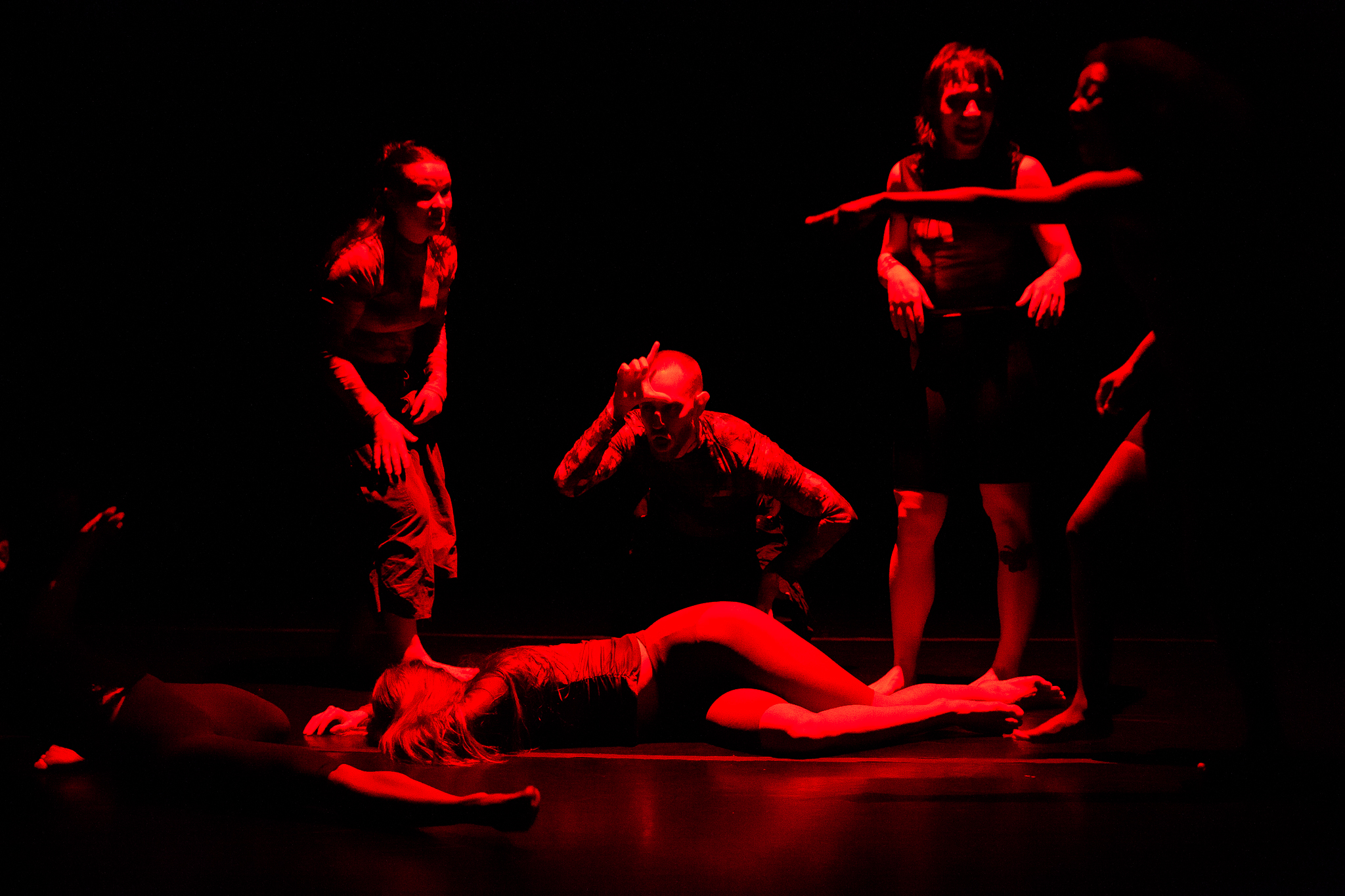
“I wasn’t Black enough, but if I was fully Black, then I was too Black.” The two dancers stay close, sometimes reaching for each other, sometimes pushing the other away, breaking into their own personal movement struggles.
“Stereotypes impacted me mentally.”
The dancers brace themselves low, feet moving in quick stationary runs, standing their ground.
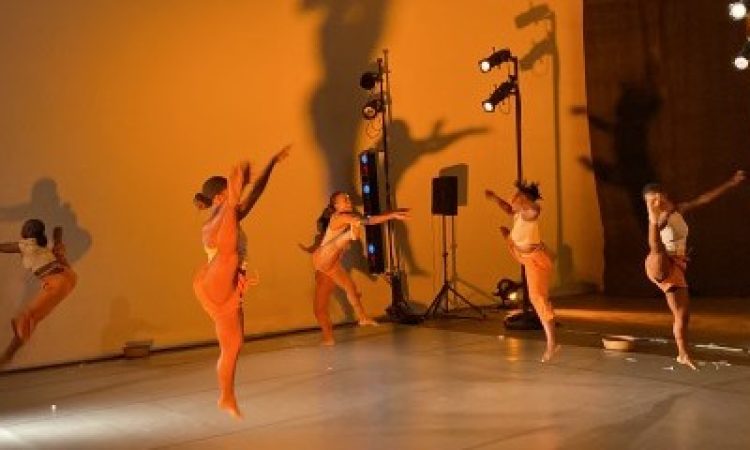
From the first duet, Outside Your Expectations blends dance, music, spoken interviews, and video to tell the multifaceted story of Black women’s experiences in America. The dancers of The Reclamation Dance Project flow seamlessly within the sounds, punctuating a spoken word by striking the balls of their feet against the ground, or augmenting the beat with a few chest isolations during a turn. The choreography, drawn from West African, Umfundalai, and hip-hop sources, is dynamic and intricate throughout. Choreographer Sophiann Mahalia showcases her dancers’ virtuosity and each movement serves the story she’s unfolding for us.
Partway through, the lights dim and we see the faces of other Black women: artists, professors, and professionals of different ages who were interviewed for the project.
“Black women are human…”
“Black women have never been prioritized in the United States…”
The audience applauds and agrees. There’s a palpable sense of catharsis, and the words of struggle getting to breathe free gives the dance even more life.
The sections overflow into each other. At the end of one trio, the dancers stomp in circles, arms floating up, just to fall down again jaggedly. They rise and turn and fall again and again past the music’s fade, stomps and sharp breaths carrying on the rhythm.
“Just trying to be okay breathing.”
While telling the story of the challenges Black women face, Outside Your Expectations centers healing. The interviewees talk about their experiences in therapy and give encouragements to their younger selves.
“Take up space!”
The dancers finish with a joyful finale to Beyoncé’s Break My Soul, strewing affirmations the audience had written before the show across the floor, then breaking out into a whirling unison Vogue section. Aziyah Batton dances closest to my corner of the audience; she breaks into a small smile, grooving with the music, fully confident as she executes full leg extensions and intricate arm movements.
The dancers pair up and clap their hands together in an old-school handshake, before pulling each other into a hug.
After a standing ovation, the conversation continues in a talk-back featuring some of the interviewees for the project. They get onto the subject of being perceived as “the healer” in their families and the burden that places on them.
“It’s so hard to think about yourself as a Black woman, when there’s generations of people like this–” Felisha George extends her arm out in front of her, fingers splayed and reaching. I’m struck by the gesture, which happened many times throughout the dance. Clearly, The Reclamation Dance Project is speaking to the lived experiences of Black women. In Outside Your Expectations, they have created a generous space of healing and beauty.
Outside Your Expectations, The Reclamation Dance Project, Cannonball Festival at Icebox Project Space, September 15-17.
*Dancers Sophiann Mahalia and Caitlin Green are writers for thINKingDANCE.
The title of this review comes from the poem “Black Excellence” by Danielle Chappell, which was featured in the performance.