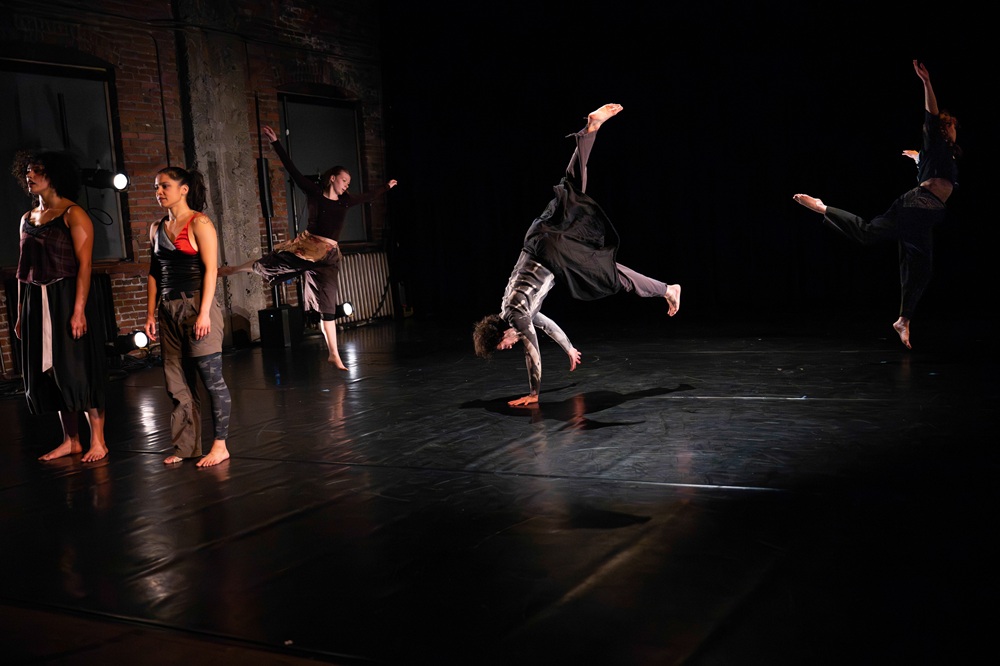
Yank, pull, force, fall, smack, waltz, swirl, wrench, toss, thrash, push, clutch, pulse, clench, switch…
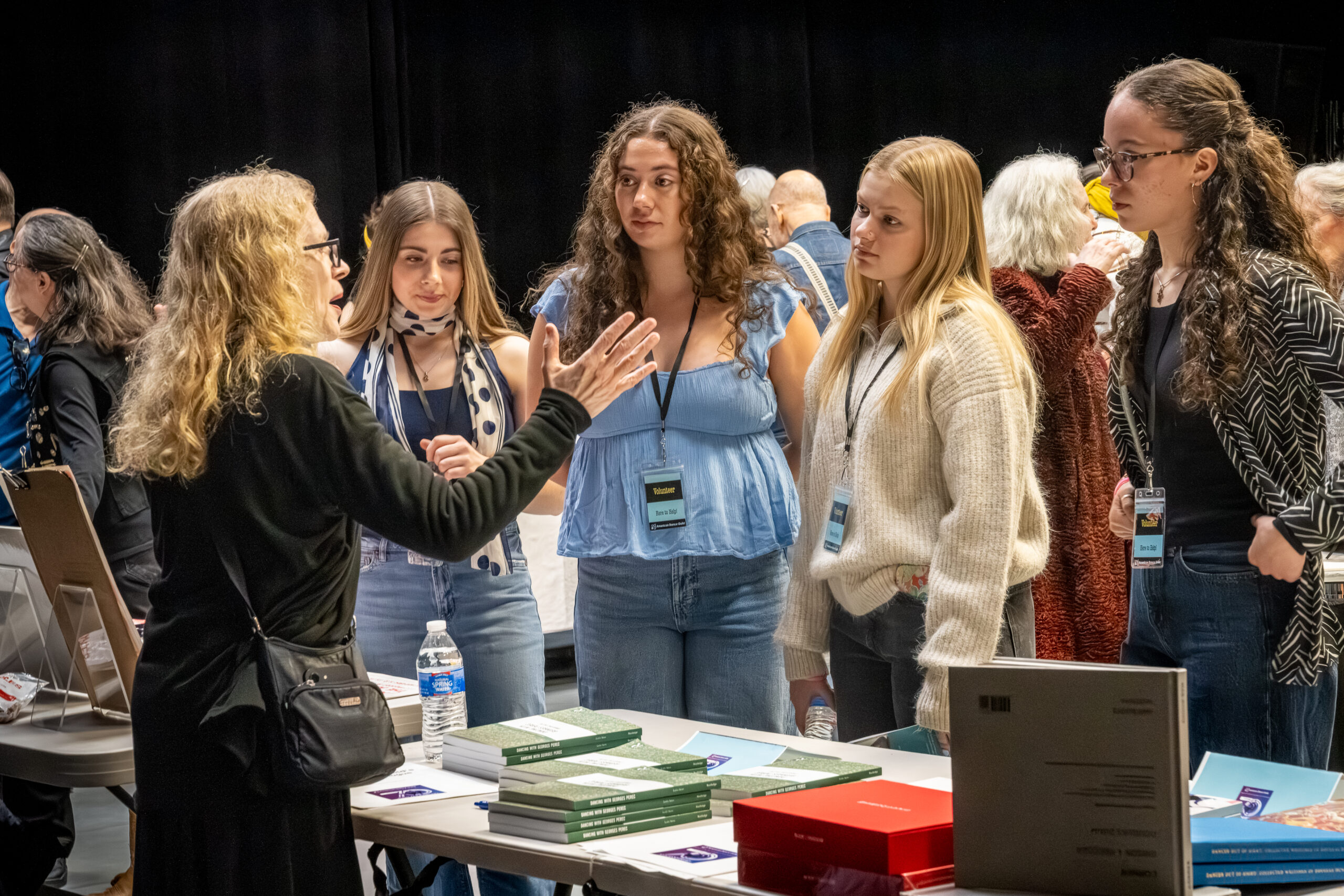
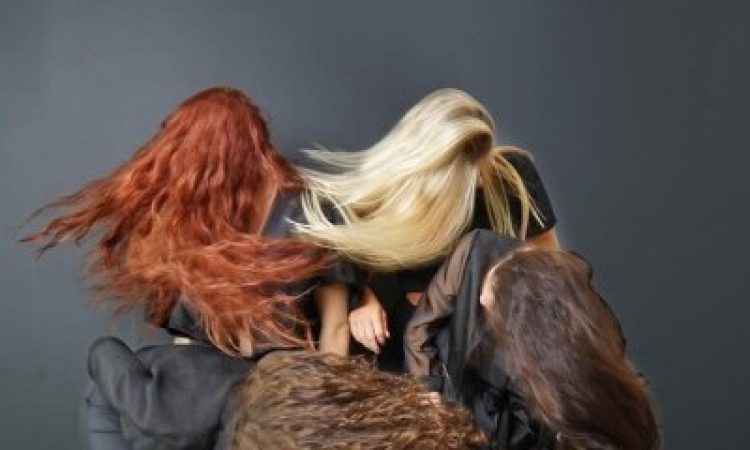
Hillary Pearson’s HAIR moved through many different modes in its 50 minutes. After the show, I gathered with other audience members to respond to the show with writing. Write Back Atcha participant Elizabeth Bergman wrote the list of verbs above, chronicling some of the actions she witnessed in the piece.
We began with a reflection exercise. Closing our eyes, we let images from the show bubble up on their own, without judgment. Our answers were all short phrases of one to two words, perhaps mirroring the stark aesthetic of the show, with its bare stage, all-black costumes, and long sections of silence. There were also a lot of verbs coming up, fitting for a show filled with near-constant movement. We went off to write, focusing on those verbs and also chronicling the relationships we noticed:
between dancers and each other
and the musicand the floor
and us as audience
Here are some of our responses:
Relationships: tense, unresolved, undetermined
Indeterminate
Continuous build, contrasted against stark silence
Cascading bodies, hard-hitting floor
→ sister bitch intensity ←
– Elizabeth June Bergman
Was the hair leading the head or was the head leading the hair? HAIR was intense and I enjoyed the physicality which you don’t often see.
– Michael R Donovan
In the beginning, I felt on the outside of an inner circle. But as I continued to watch and listen, I felt more invested in the story, the dancers, and what would happen next. My relationship evolved from being there as an onlooker, who was more invested in figuring out what it all meant, to being a participant who wanted the cyclical yanking, violence, and unresolved tension to stop.
I saw the relationship between the dancers go from individualistic to empathetically caring for one another, to almost cultish as the group watched the last girl struggle.
Where is the love? They keep pulling at each other and casting each other away and the calmest moments are when they are strands themselves — a flurry of legs reaching for the air, the slap of hands breaking falls. The smooth curves of the dancers’ floorwork carry power behind them, ending in sharp periods. Glance over the shoulder. Slide to the front of the stage and STOP.
The dancers are a little flushed and breathing deeply when the lights fade.
I feel flushed too, and a little thrown about, to be honest.
– Miryam Coppersmith
“Hair” made me feel air. I felt weight being lifted with each breath, through the falling and getting back up. The struggle in the dancers’ faces brought me into the emotions, connecting us. Letting go of fears that cling onto us, the hurt and brokenness pulling us from behind but not letting it win, escaping it.
I felt the floor and the comfort it gave the dancers.
I felt the war inside them.
– Sage Thomas
HAIR, Hillary Pearson, Icebox Project Space, Cannonball Festival, September 11–17