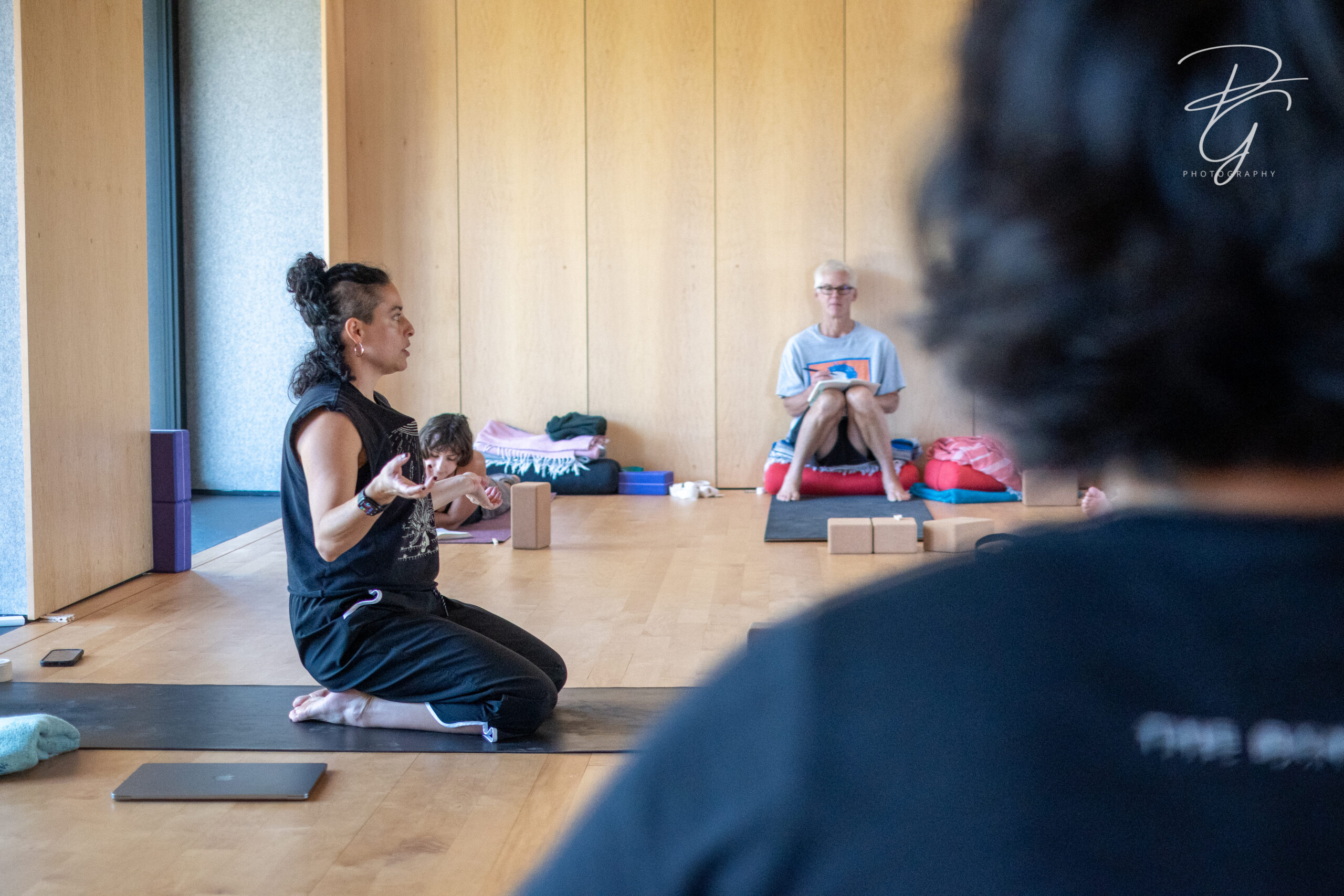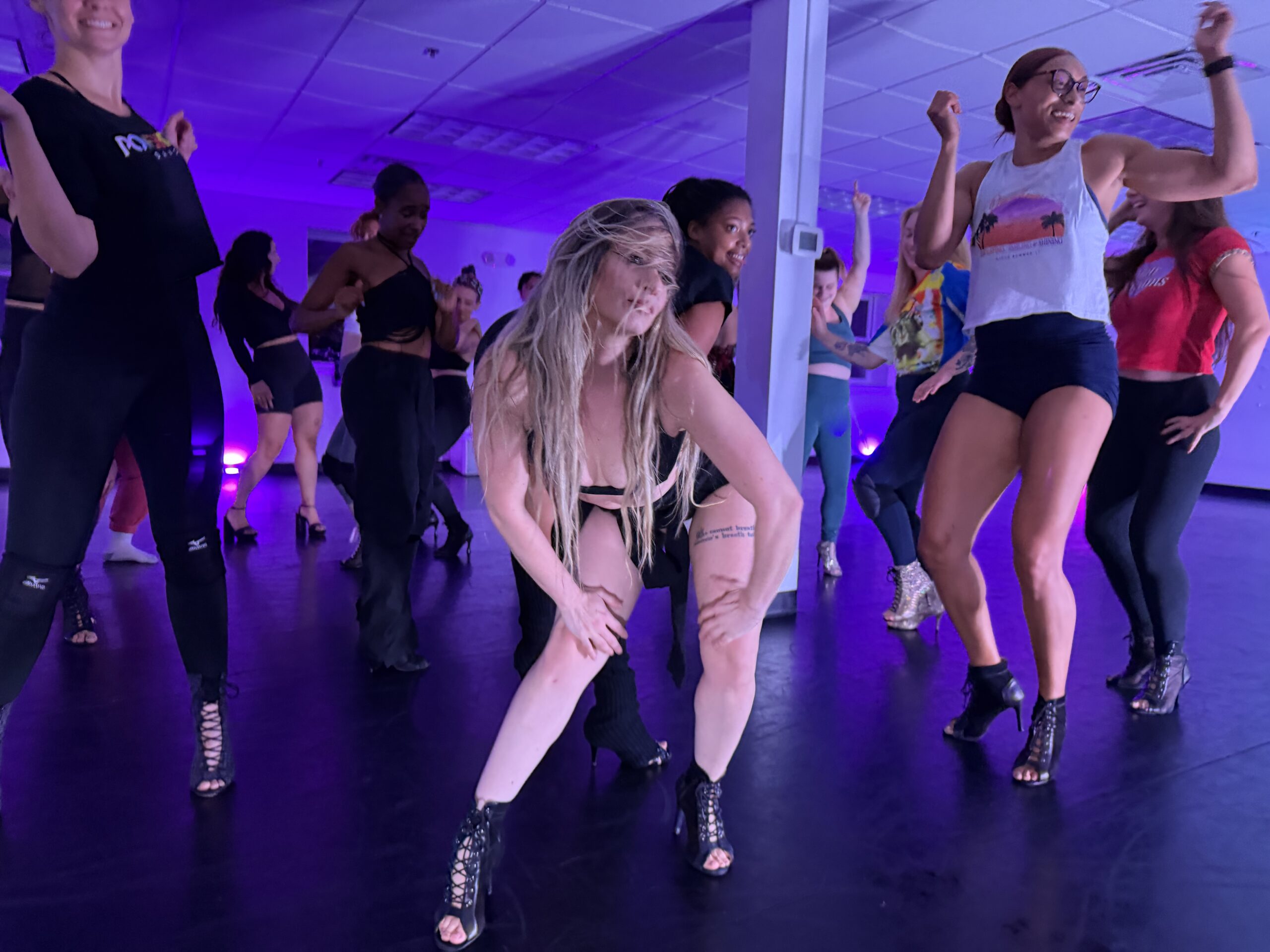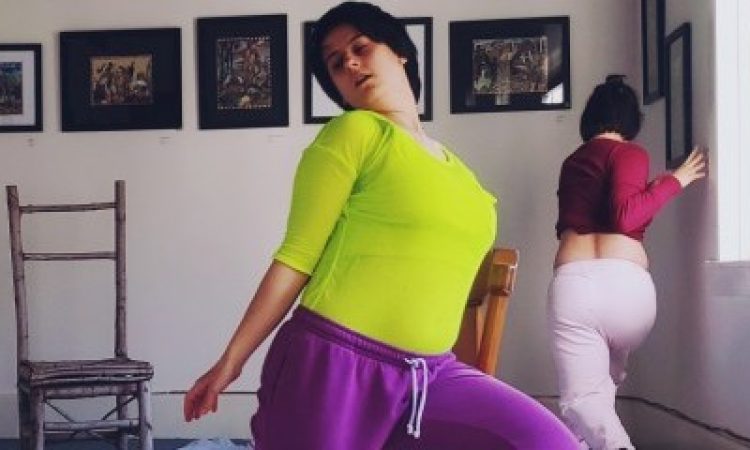
Meghan Frederick and Kate Seethaler are a duo of multi-hyphenate movement artists who have been collaborating since meeting in Philadelphia. Since meeting in 2018, they have brought three children into the world while creating Carnivore, premiering in the 2022 Philadelphia Fringe Festival as part of Cannonball at the MAAS Building. Accomplished investigators of performance in their own rights, as a creative duo they have worked and reworked Carnivore leading to this September’s premiere at the inaugural parent-artist residency at Upper Jay Art Center in Upper Jay, NY. When I saw that they were premiering Carnivore at the Fringe Festival, I wanted to check in with these artists to see how they were dealing with the shifting process of weaving parenthood and choreography
Mira Treatman: How has your artistic collaborative process evolved since becoming parents?
Kate Seethaler: Meghan was a brand new parent when we began the process back in 2019. Her daughter was about four months old when we began and would often come to rehearsal at the old Mascher space. So, I have only ever known Meghan as a parent–we met and immediately started this project. Since then, we have added two more kiddos into the mix. My daughter is almost 2 years old and her second child is almost four months. Because of these small humans, things have constantly shifted. There have been long spans of time off, rehearsals with diverted attention because all of the three children have been in the room. The content of our work has shifted from having one perspective of parenthood to two. Babies have performed with us in utero. Motherhood permeates the majority of our conversations and the entirety of our daily lives. It feels impossible to distinguish between the role of parent and artist now.
Meghan Frederick: It’s harder, messier, more chaotic. Sick kids. Kids in rehearsal. We’re either totally unproductive or extremely productive.
MT: We’re living in a time and place that objectively makes it structurally difficult for birthing parents and their partners to transition into parenthood and beyond. How does this context come up for you in your work?
KS/MF: We have it pretty easy—privileged in terms of race, class, education, the presence of our husbands as co-parents, etc—and it’s still hard. Isolation, loneliness, confusion, heartache, burnout and overwhelm. These are all in the work. But so are intimacy, joy, and tenderness.
MT: How has your view of your dancer/choreographer/performer’s body changed since giving birth?
KS: I found great power in giving birth. I have a relatively new-ish respect for my body and its capabilities. Before, I was always pretty self-conscious about my body. Now, I look down at my belly and think of the fond memories of growing a baby in there. A child I love so indelibly it breaks my heart. It’s much harder for me not to love a body that made a person I love so completely.
MF: Two births, two very different experiences, one weird, traumatic.. the other awesome and empowering. Made me understand more fully both the incredible scary vulnerability of my/the body… but the second time – its hormonal/raw/unconscious body power.
MT: What does “working-parent-artist” mean to you?
KS: It means making impossibilities possible. Means having an urgent necessity to make art in order to have time for yourself, your adult thoughts, your non-parent past self. Art becomes a lifeline in a different way I didn’t need before.
MF: it means we juggle- multitask- drop a ball, fail, work under sleeping children and choreograph in the car… but again we are relatively very lucky…
Carnivore. Kate Seethaler/Meghan Frederick, The MAAS Building Garden, September 23 – 29.