Triple Solo Bill was an evening of performances for PrideFest NYC that left me thinking about embodiment. Where do we place language, stories, identities, and hard truths in our bodies? And, in turn, what physicalities do we create from these places? The bill included a singer-songwriter/storyteller and two pieces of dance theater. The themes I saw woven through the works were love, loss, anger, fear, and the complicated details of growing up in a conservative place while discovering a queer identity. And in the case of the dance theater pieces, an investigation into how we pair language with the moving body.
Sarah Norcross began the evening with an autobiographical coming out story and live music. After the show, a friend said she found Norcross enthusiastic and conversational and that her piece felt like a campfire gathering, delivered casually and playfully. I agreed and saw that she revels in the joy of performing and gathering folks, though I felt she treated her story too lightly, not processing further into the performer’s corpus or opening outside of the self to include us, the viewers. The work was confessional, but for me, it failed to plunge much past the surface of those confessions.
The Very Same, choreographed & directed by Keith Thompson and performed by Brendan McCall, is part of the Love Alone Anthology Project. The text, one section of Love Alone: 18 Elegies for Rog by poet and AIDS activist Paul Monette, was incredible. I have yet to read it, but after seeing this piece, I need to. The section used was one that revealed a sense of bitterness or effrontery and how it can play a part in grief. McCall was adept at varying the delivery of his text: casual, careful, forceful, witty, and gentle. It came in waves, dropping in and out of each phrase with ease so that yelling became mumbled frustration, a mockery, an offhand remark, a sigh to himself.
The choreography carried this same quality, landing in different energies with seamless transitions. There were flicks of the chin, slight hand stutters, and shifting feet so precise and intentional. There were sharp jerks and bolts of tension and slow, hungry reaches, presses, and stillnesses. For every quiet gesture or quick relaxed aside, there was a place where McCall stood his ground and got larger, spiraling, turning, flashing lines and halts. As it ended, with a careful, quiet walk off stage, I felt pulled with it, wishing I could stay in the experience longer, but, knowing it’s a chapter of a larger work, that seemed right.
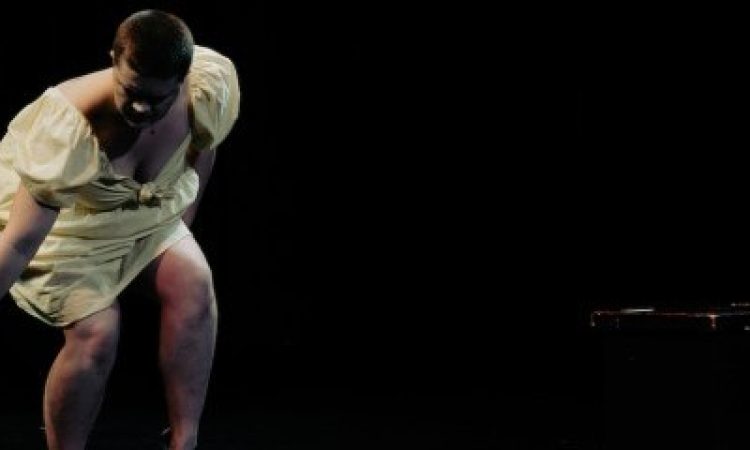
Keeping Watch, created and performed by Rush Johnston, ended the night. It was a potent and personal piece of dance theater that used monologue, dance, actions, gestures, costumes, the recorded voice of the artist and a pastor, and photographs of hate speech from churches about the LGBTQIA+ community. The spoken text addressed Johnston’s experience growing up in poverty and a conservative southern home and church. They investigate the hiding, the fear of disappointment, the power of authenticity, and the hate they face. The joy and sorrow bound up in the body were palpable and expressed through the movement cycles that ranged from light and playful to pulling, weighted, and wide joyful reaches, counterbalances that took up space and turned around themselves. There was a repetition of this vocabulary throughout the piece, punctuated by moments and images that will stay with me a while: pulling flowers apart, leaving them there to be danced around for the remainder of the show, or kneeling and shaking and praying, or sitting upstage on a table chest bared, vulnerable, quietly scanning us, interrogating our gaze I think.
The place where they lost my attention was in the middle. The piece hit a high point of connection between words, movement, identity, and their mother’s reaction to the pronoun “they” and then seemed to trail off into another set of memories and themes. Why the shift? It felt like another piece somehow dropped down into this one. It also had multiple endings, disrupting the pace and highlighting the need for some choices and edits. There is so much here, and I look forward to following this young artist as they continue to develop their work.
Triple Solo Bill: Norcross, The Very Same & Keeping Watch, The Tank NYC, PrideFest, June 23 and 24