The stage is set: a rug taped to the front of the marley; a wooden chest; a full-length mirror; and rising above them all, a tall pole. In a video, a young Black person applies eyeliner and red lipstick. They appear conflicted; they take a pair of briefs out of a chest and pull them on under their dress.
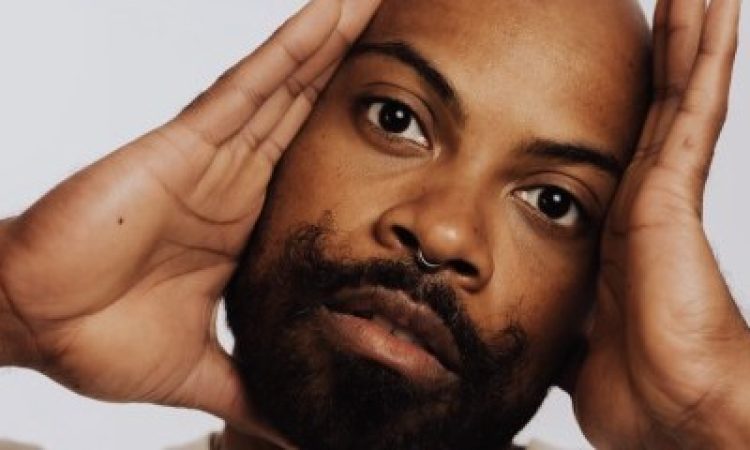
The scene changes: they are now dressed in a t-shirt and underwear, facing the camera. We see another body behind them, Toni Cannon’s, which is more muscular. Cannon’s arms reach around the other dancer as if they are rising from within: two representations of the same body. He slips into the shirt behind the other dancer and they partner, his strength lifting them as their legs rise and then descend slowly. Eventually, only Cannon remains on screen, the transformation complete.
Later, the lights come up again and he is seated on the wooden chest. I observe happiness and disbelief crossing Cannon’s face. He runs back and forth to the mirror, examining himself, before pulling clothes out of the chest to try on. Though Cannon’s experiences are not my own, his portrayal of his struggle, conflict, and joy as a trans person was profoundly relatable on a human level.
Cannon’s journey to self-acceptance as a transmasculine person is complex. During a high point he performs feats of strength, such as bending an iron bar around his neck until the ends nearly meet, to the tune of “Hot Stuff.” He doesn’t shy away from sharing his struggles, falling into forward and backward rolls from the instability of drunkenness and clutching at himself as we listen to his heartbeat, demonstrating his anxiety and panic attacks.
For his finale, Cannon does a step around on the pole and moves into a spin. His strength in balancing his body as he climbs, holds static poses, and spins around the pole is impressive. I’ll never forget the near-terror of a fellow audience member as Cannon, hands behind his back and upside down, drops from the top of the pole to the bottom, the pole held only by the cross of his legs.
ReFlection is many things: nuanced, circus with a bit of contemporary dance, a deeply authentic work. In a time where trans people are facing attacks in so many places, the ability to tell—and witness—this story is incredibly important.
ReFlection is the winner of the inaugural CSAW Award for New Circus Work from an Artist of Color at Cannonball, and was selected by a panel of working BIPOC circus professionals.
ReFlection, Toni Cannon, Icebox Project Space, Cannonball Festival, Philly Fringe Festival, September 14-17.