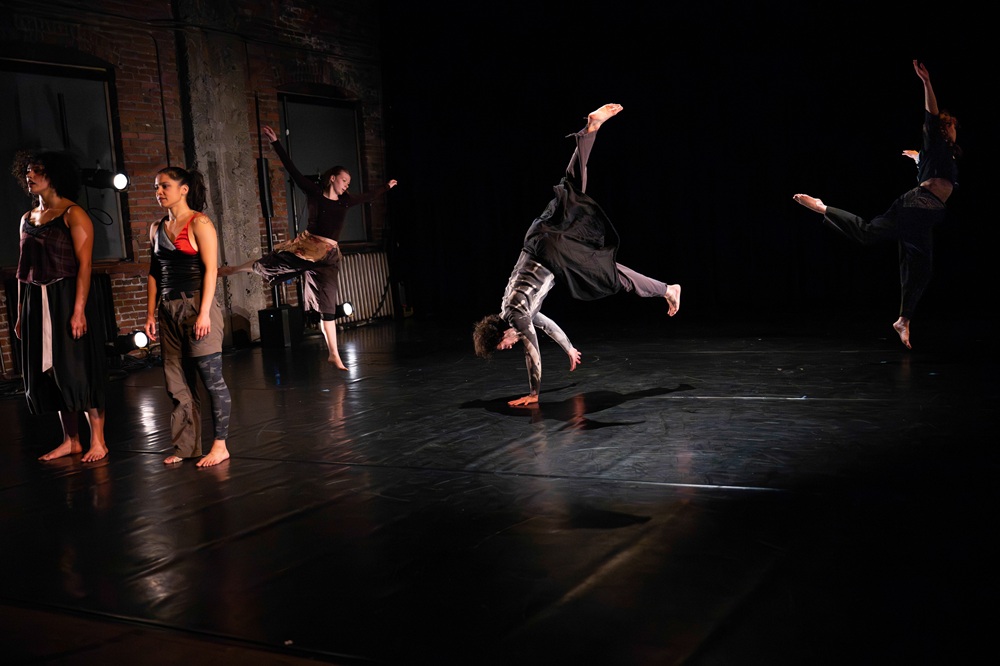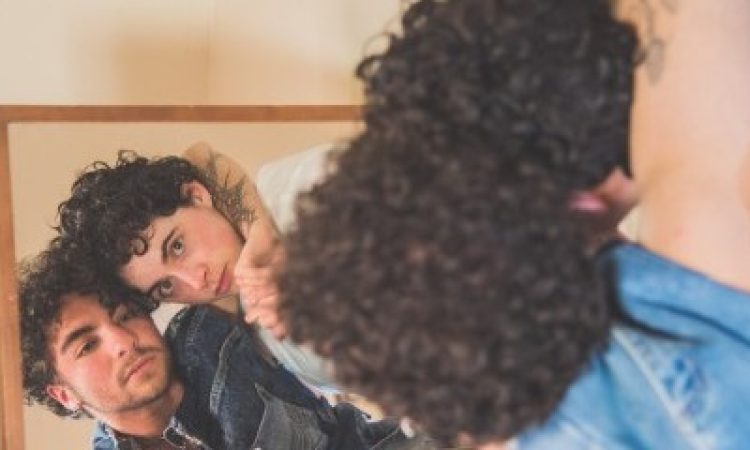
As if awakening from a tranquil slumber, Lu Donovan and Micah Lockman-Fine lay centerstage, spooning. Each reaches one arm toward the ceiling until their hands clasp together. Moving from rest to readiness, they roll over and under one another. Intertwining limbs lend support through swift suspensions and weight shifts, demonstrating strength and flow. Their bodies and attention diverge and rebound. As they anchor their garments to one another via strips of denim and metal hooks embedded in the fabric (Stoop Kids brand by Lockman-Fine), their outfits transform into extensions of their storytelling, adding a layer of physical and figurative attachment to their intimacy. Their dance alters between roughhousing and romance, simultaneously blurring the lines that separate adult love stories from childsplay, and accentuate a youthful innocence of flirtation. Rhythmic positional changes and pauses shape mini-sculptures that offer glimpses of a tender connection between men.
In a series of duets, solos and ensemble numbers, the motif of emerging from a dream-state is recurrent. Dancers begin, and sometimes end, each piece in shuteye, alluding to the dances as embodied fantasies. The soundscape adds to the ethereal feel with either a glitchy mash-up of tunes that toss between tracks, or smooth techno beats layered with serene vocals. The purposefully distorted 3D virtual avatars casted on the wall and the use of unhinged, moving mirrors hint to the illusive nature of this narrative.
Projected footage of childhood home videos serve as backdrop to the playful banter onstage. Flirtation and affection through roughhousing, wrestling, and competitive gameplay is enlivened in the choreography. In a huddle, dancers crouch together like competitive teammates strategizing. They march across the floor with flexed biceps and clenched fists, then seconds later lay on their backs with toes pointed and legs kicking in the air like synchronized swimmers. Standing again, this time with hips popped to the side, they abruptly rocket across the stage, with arms outstretched like planes. Eventually softening to a slow, gentle walk, their arms cradle as if rocking a baby. The stage is their playground.
Dream Sweet, Rough Man professes a narrative that showcases an entanglement of the often polarized gender norms in a celebration of fluidity. In reflection, I remember that the absence of representation demonstrating romantic temperament between males in the public eye renders them unfamiliar or invisible. Dream Sweet, Rough Man creates a world that restores visions of unbound expressions of affection within the context of masculinity, a sweet dream that I hope continues to span beyond realms of fantasy and performance.
Dream Sweet, Rough Man, Micah Lockman-Fine and Lu Donovan, Icebox Project Space, Cannonball Festival, Philly Fringe Festival, Sept. 1, 8, 11.