What from the past do we woefully lose or yearnfully mourn while moving toward the future? Is this loss worthwhile? Curt Haworth’s Cyborg Dreams presents these questions for our consideration. Reptilian beings access sense memories from the past to create allegorical illustrations of remembrance, regret, recognition, and resignation.
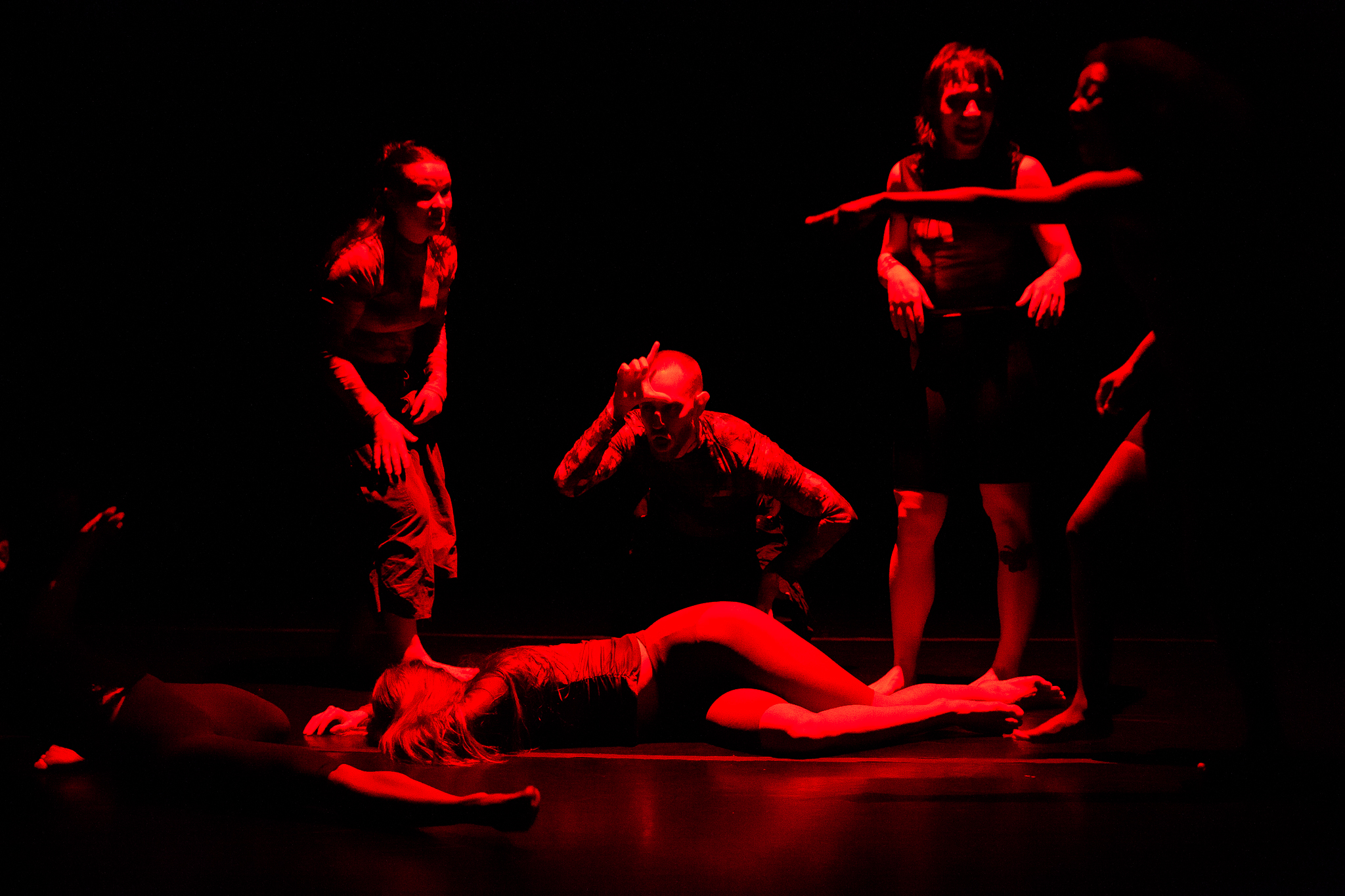
Haworth’s cast, including Kaijo Caggins, Amalia Colon-Nava, Andrew Smith, and Kayliani Sood, are pre-set and present as amorphous shape-structures. One is draped and clinging to the rungs of a downstage right ladder, while a couple exchange cuddles in an upstage corner. Another dancer rests in a fetal position on the floor, far from the audience. Each character seems to have a specific role – guide and follower, or elder and younger. The physicality of the dancers speaks volumes: one approaches another, indicating the way to proceed, and the invitation is physically virtuosic, challenging the space in every possible way. Hayworth’s dancers access changes of every kind, creating a rollerball of possibilities in time, space, place, role, and intention. The interplay between these contexts emphasizes the importance of past, present, and future in Cyborg Dreams.
The dancers breathe life and credibility to the cyborg universe with thrusting, popping, tapping, slashing, and wringing movement variations that create onstage storms. Spectacular athleticism is a major component of Cyborg Dreams, be it through the use of sultry, slinky, serpentine movement, or fiery and explosive arm and leg extensions that resculpt the dancers’ bodies and manipulate the surrounding space. The cast are all skillful movers, all interpreting this “next world” with palpably emotional stage presence.
Cyborg-robotic modes of being are evidenced not only in movement but in sound. Dancers undergo states of transformation both physically and verbally, uttering words that reference the past, while physically demonstrating phases of transformation with bodies “hiccuping” between stillness and motion in a sort of war between the self and outside forces. Isolated body parts mimic the sound and rhythm of hurled-out words–words of affirmation/negation, acceptance/denial, being/non-being. The result is a curious cross between a robot and a human undergoing realignment or reprogramming towards some sort of inevitable reality, while obstinately reaching back to cling to and hopefully embrace the instinctive responses of the reptilian, protection-triggered brain.
Cyborg Dreams creates a polyphony drawn into the space with visual lines and sparse, halting words. The intentional, harmonious physical cacophony provides an intense through-line to recognizing and then accepting how both pain and pleasure can entertain, attack, and wrestle within all minds and bodies. The dancers’ repeated movement phases, fluctuating between highly active and then restorative recuperation, create continual play with past and present, physically illustrating what it can mean to be caught in the in-between.
Soundscape crafter Tim Motzer’s compelling use of electronics fills the Icebox space, creating a panorama of sound spanning from dark to light, making Cyborg Dreams a rich landscape of spectacular and intentional sound. The movement reminds us of where we were, are, and may be going.
Curt Haworth: Cyborg Dreams – Icebox Space, September 23, 26, 29 Fringe Festival 2023