For some, it’s a turning point.
For others, a necessary place to be vulnerable and honest.
For anyone, it’s a distinct relationship.
Having a mentor can occur anytime during a career. Whether a young artist or a seasoned professional, the mentor/mentee dynamic has a storied history in the greater Philadelphia dance community. This article series explores how mentorship is an indelible bedrock to a lifetime of dancing.
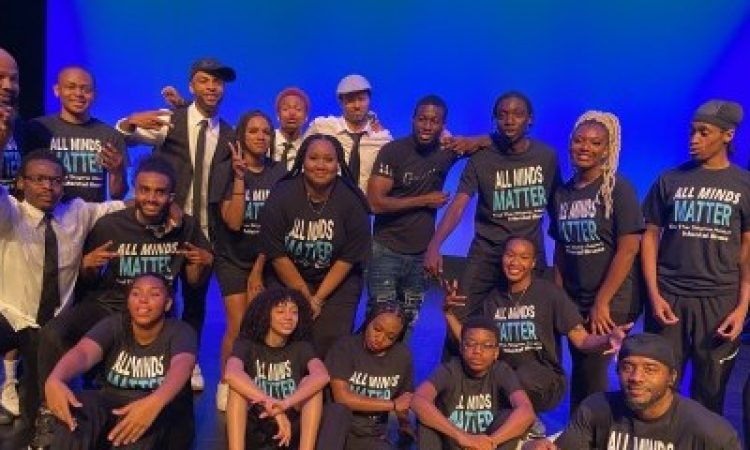
For Timothy Porter, aka Supreme, mentorship always went beyond dance: “You mentor [students] in life: to make good choices–from family issues to issues in the neighborhood–as well as issues within themselves.” As the co-founder and co-director of 215 Live Entertainment, Porter, 45, has influenced many inner-city youth dancers who perform in music videos, award shows, background dances, Off-Broadway Productions, and more. Some of Porter’s students now manage their own dance studios and study dance in college. Reflecting upon these years in mentorship, Porter is “mostly proud to have kept students safe and off the streets.” Porter believes mentees should bring open-mindedness, honesty, and a willingness to take feedback as a tool for growth and resilience. This brings to mind a quote from choreographer Jonathan Burrows in A Choreographer’s Handbook: “Your mentor can’t solve your problems for you, but with any luck they might help you solve them for yourself.”
For dance artist Megan Bridge*, 44, a successful mentor/mentee relationship is a deeply personal one. “Seeing the mentee is integral–challenging and pushing them, as well as taking care of them and helping them see themselves.” She emphasizes how mentorship is “guiding and leading, but not being pedantic…allowing the mentee to see and discover on their own is significant.” As a multifaceted dance professional, Bridge remembers her first mentor when she was 14 years old: “I started taking the train into the city and taking classes with Janaea Rose-Lyn, the director of Convergence Dancers and Musicians…pretty soon I was taking company class, and I was cleaning the studio in exchange for free classes…we would hang out after class–she gave me books and introduced me to her community.” Similar to Porter’s idea of mentorship, the facets of mentorship for Bridge span beyond movement, to a full “seeing” of another person in a specific chapter of their lives, and connecting mentees with a greater network of support.
At 68, Elaine Colandrea has served in multiple roles of mentor and mentee. She reflects, “I love being a mentor. I love holding space for another. I love sharing anything from my own experience and knowledge that could have value to another…each person opens me up to other ways of seeing, thinking, sensing, feeling, and creating.” Elaine credits her college mentor, Patricia Nave of Montclair State University, for steering her toward her extensive practice-led research: “Pat took an interest in the whole of my being–she was the first dance teacher to express this level of support. I loved her classes. Due to asthma, a condition that plagued my life and impacted my dancing, she urged me to experience Bioenergetic therapy. Now many decades later as a person whose life is deeply informed by somatic practices, I realize Pat launched me in exploring this way. I will forever be grateful to her.”
There’s a commonality in these stories: seeing one’s whole self–with dance as one of many parts–and meeting people where they are in life. The dynamic between mentor and mentee is not linear, as the roles can shift, and shift again. Mentorship does not have a timestamp or a roadmap. Its impact hinges upon each specific person: their openness to change, to be honest, and to welcome new possibilities in art and life.
“On Aging and Mentorship: Being Seen” is a three-part article series. To share your own stories in mentorship, please contact the author at meganm@thinkingdance.net.
*Megan Bridge is a former writer, editor, and director of thINKingDANCE.