Burgundy Blue Dance returned to the stage recently with choreographer Sevon Becker-Wright’s The Album Series: Dreamland. The show took inspiration from Dreamland, by Glass Animals. The album, released in 2020, is more autobiographical than Glass Animals’ prior music; the album was composed in the period after drummer Joe Seaward was in a near-fatal cycling collision, and Dave Bayley took inspiration from home movies to ‘60s rock and the early-2000s hip-hop of his life growing up in Texas.
As a dancer, I was intrigued by the concept of choreographing an entire album and expressing a more extended impression of an artist’s music than is often possible, as choreographers are typically limited by time and licensing. And it was certainly a unique way of absorbing an album—almost like a live music video but for an entire album rather than just one song. In one song, three dancers ran in place, their cannon getting faster and faster, before freezing. The early-2000s hip-hop inspiration shone in both music and movement; from the audience I was taken back in time. These movements elicited choreography I performed in high school, which was a huge nostalgic kick. I experienced nostalgia while also craving a fresh take.
Billed as an “an immersive in-person event where music, dance, & dreams collide,” The Album Series: Dreamland guided us through an entire album of music together. Entering the open, rectangular-shaped room, I had a choice: sit in the center, on a blanket on the floor, or in one of two small seating areas in the corners. While all viewpoints were purportedly similar, unfortunately I found that the chair I chose offered limited views of the side of the room I was seated on. During the show I realized the floor was by far the better choice, but it was too late to relocate.
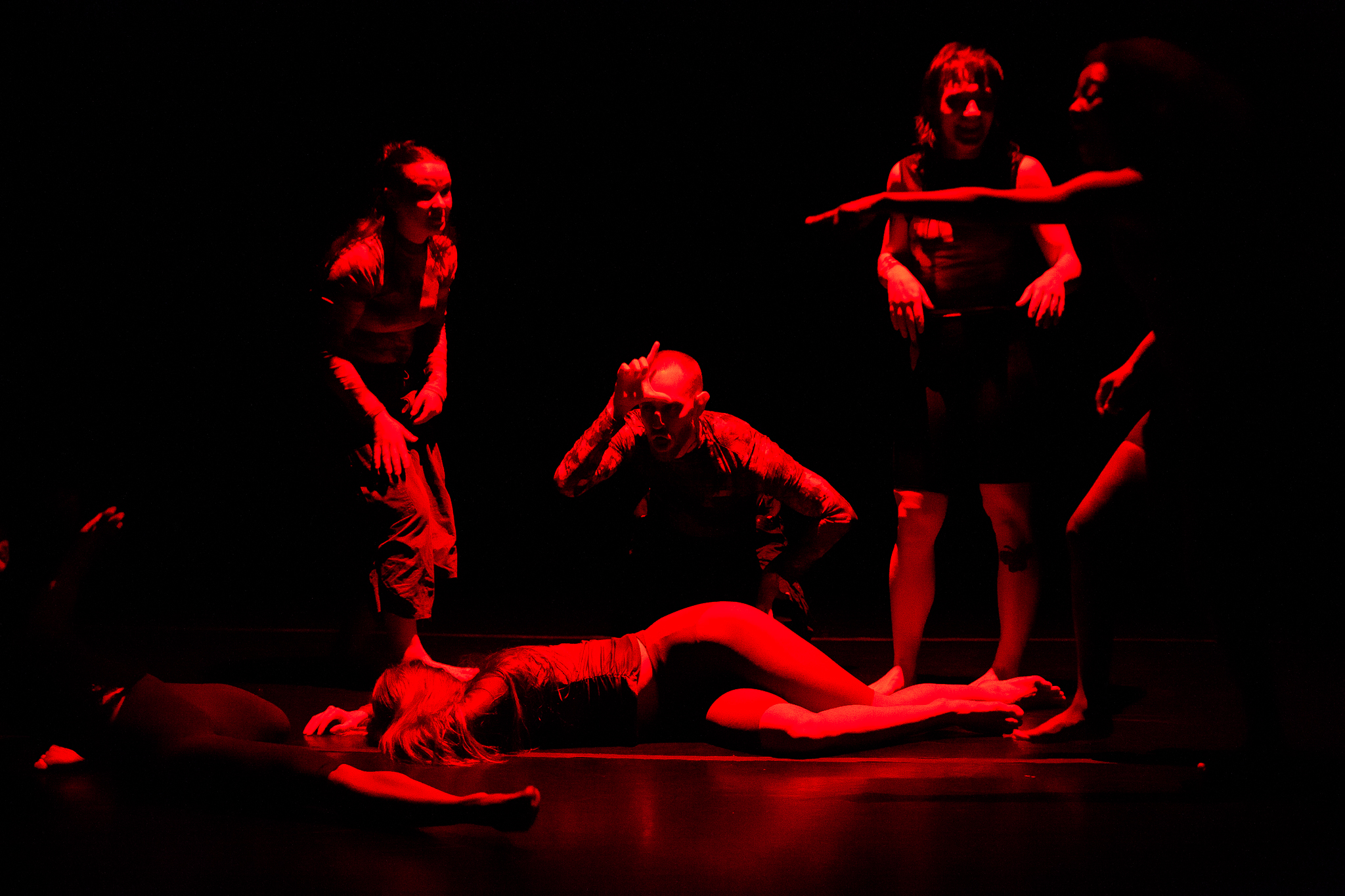
Throughout the show, dancers performed in different sections of the room, including an area to the left, where a couch was placed, and to the right, where there appeared to be a mattress. These spaces were used for dance as well as transitions and costume/ prop changes, blurring the lines between performance and preparation and alluding to the blurring of boundaries between dreams and reality referenced in the program. I craned my neck to follow a dancer as they climbed atop the mattress and laid down. A memorable moment for me was when a dancer was swung forward by partners with their stomach toward the earth and head reaching toward the sky, emerging more distinctly into my line of vision. Eventually my attention was pulled towards the clarity of dancers shifting closer. Two dancers stood facing each other opposite me, close enough for me to see their expressions, which were soft, almost neutral. They revived an embrace echoed a few times during the performance – a hug in slow motion, arms almost dragging through the air until they wrapped around one another. Sinking to the floor, they embraced again, rocking from side to side. The intimacy in the slowness reflected the softness of the music.
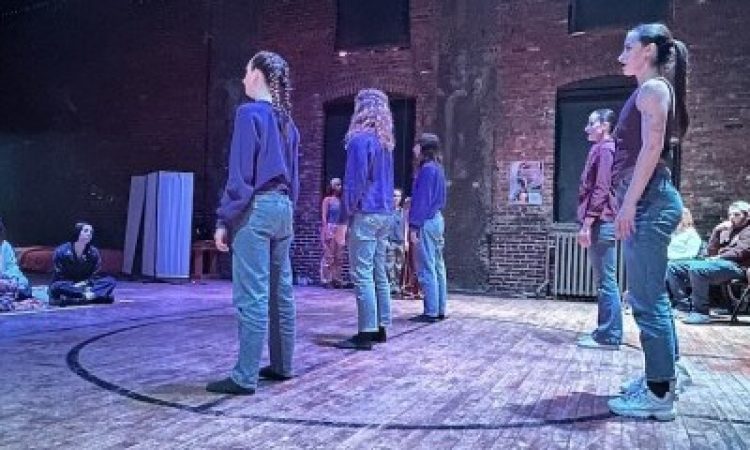
The performance was at its best when the dancers immersed themselves by surrounding the interior audience on the floor. Standing in a circle, the group walked counter-clockwise at a steady, confident pace. One dancer stood to the side, occasionally pushing one of the dancers forward, breaking the rhythm. This action felt like the nightmare spoken of in the program, like something unseen holding power over you.
The pauses between the individual songs broke the flow of the performance; it felt like a series of short dances, rather than connected ones. I would have loved to have seen more intentional transitions or connections between the pieces, and I felt I was missing the magic of the totality by experiencing only bits and pieces or individual dances, each dance contained within a song rather than connecting the album as a whole. The costumes were also disjointed – while smaller groups shared similar costumes, they didn’t coalesce into a singular vision.
What I find exciting is that The Album Series: Dreamland is part of a series; Becker-Wright plans to explore this theme by choreographing and presenting more performances featuring an entire album’s music. While I saw the potential in The Album Series: Dreamland, it felt like a work in progress that didn’t quite gel. With the next album, I look forward to seeing how Becker-Wright and her dancers move from a nascent dream to a dream realized.
The Album Series: Dreamland, Burgundy Blue Dance, Christ Church Neighborhood House, February 16-17.