we are spectators in a typically unwatched game. as Thomas Choinacky (director/choreographer) relays in their program note, being “efficient and unnoticed” is the name of the game. it poses the question of invisibility, and how often those of us who exemplify endurance of the highest degree, do so beyond the spotlight.
the stage is framed by two matching pieces of the set, each one adorning softly jagged, curved lines. lit in green hues, two members of the ensemble, Shizu Homma and Eliyana Fabiyi, enter the space. Fabiyi sits down, painting a blank canvas with a tennis ball coated in black paint. Homma watches silently, judging. the music is soft, revving. Justin Jain and Malik Ever, the rest of the ensemble, form a line upstage as a Siri-like voice begins to recite a score of tennis plays.
this sequence foreshadows the energy that continues to grow throughout the piece. it is refreshing and exciting to peer into the inner world of ball people. in a comedic vein, the dancers charm their way through the anger, frustration, and repetitive motions of the constant retrieving. they sing and speak their way through the ritualistic patterns of an intense tennis match. Ever brings out small squares of painted cloths from backstage as i wonder just how many more there are. in what feels like an endlessly repetitive and enduring process, Ever eventually emerges with the final piece of fabric, totalling 32 pieces.
endurance. we’re considered good at our job when we endure without fret, which Choinacky highlights throughout the work. the dancers endure with an air of lightness and warmth that is manifested through the camaraderie of the group. as well as the specificity of movement and directional changes in the staging. Fabiyi, Jain, and Ever sing a beautifully carried out trio that is expansive and animated. behind the stoic facades required of their job we see their bright essence peeking through.
as the work continues the tone shifts to a trance-like states. they retrieve. Homma begins an enduring solo, twitching and convulsing gaze droopy. in this moment, the atmosphere changes drastically, only to be brought into the picturesque world of the media – embarking spectatorship, led by Jain and Fabiyi. voices are given to the people who are often ‘unnoticed’, lent to the background of the scene. the ensemble reconfigures the space, creating a new floor and then creating a sculpture of pieces from the work, the interview chair, balls, fabric, canvas, and themselves. it felt like watching them rewrite a story, and find not only satisfaction, but strength through the reframing.
good game!
Forehand Down the Line, Arden Studio Theatre, September 6-8
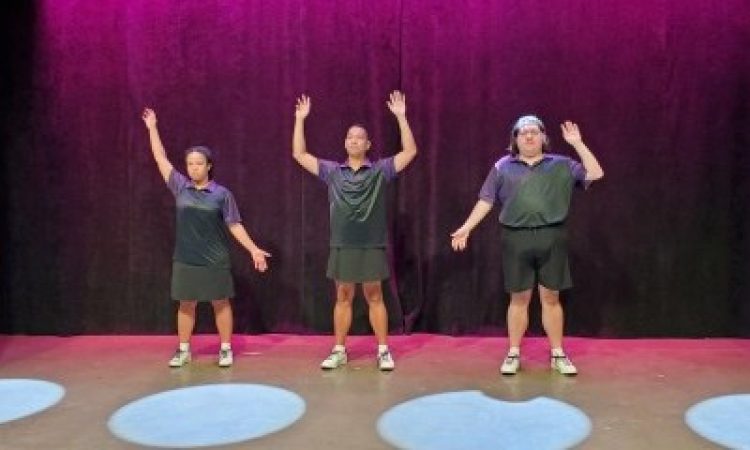
Image description: pink backlight, three dancers, left most has right arm up and left arm down, middle has both arms bent upward, right has bent left arm and straight right arm, all in purple polos, two white set pieces frame the image with black curved lines.