Bodhisattva Beer Run begins with a talking head. A video projected onto a large screen to the left of the stage depicts someone talking about beer, and mantras; then co-creator/performer evan ray suzuki enters with only one shoe on to crush a beer can with his foot.
Dressed in Adidas pants and tie-dye shirts, suzuki and co-creator/performer Glenn Potter-Takata alternatively utilize expressive facial movements and deadpan expressions throughout the piece to add to an ironic tone. Standing at the front of the stage, suzuki’s eyes flutter as if he is falling asleep, or sleepy-drunk. Potter-Takata also moves slowly, beginning in a collapsed table position, sort of like a bug on his hands and feet with hips pointed towards the ceiling, lowering to the floor and tipping knees to the side.
On screen, different pieces of a clay, Buddhist-esque, god statue float in slow motion, beginning with a horse head. Over time, the pieces slowly assemble to form the god/dess.
At one point, Potter-Takata reaches into a container and pulls out a buried pink horse statue before gently setting it on top. Kneeling, suzuki puts a stick in his mouth and balances beer cans on top, four in total. As he stands, they crash to the ground and the sound is amplified, sending both suzuki and Potter-Takata into a frenzy of movement.
The talking head returns, musing about the god, about the horse bodhisattva, (which relates to compassion), and about the “moravian barley” in the beer – all Coors Light, in case you were wondering. Potter-Takata and suzuki also speak in monotone into the mics, repeating the commercial-like language, repeating the mantra. They each hold a beer can in their hand, crush it, hold it in their mouth, rise, and wiggle forward. They lift their beer cans into the air and crush them on their heads. One performer falls, setting off the frenzy of movement again while a video plays of them hitting beer cans with a baseball bat in the woods. They reenact this motion of hitting the beer cans with the baseball bat on stage and record it live, and then play it back on the screen.
The stage is littered with beer cans as suzuki and Potter-Takata dance and wiggle with small stuffed horses strapped to their faces and eventually close with rhythmic chanting and we are surrounded with the sounds of meditation, the beer cans, the statue, the beer cans, cymbals, and the beer cans.
With influences of Buddhism including meditation, mantras, and chanting, Butoh, along with a lot of beer cans, the piece is a meditation on Buddhism and Asian-American culture and a satirized examination of America’s ubiquitous beer-drinking culture.
Bodhisattva Beer Run, Icebox Project Space Gallery, Fringe Festival 2024, September 14-21, 2024.
Homepage image description: evan ray suzuki dancing on the floor with a horse plushie attached to his face
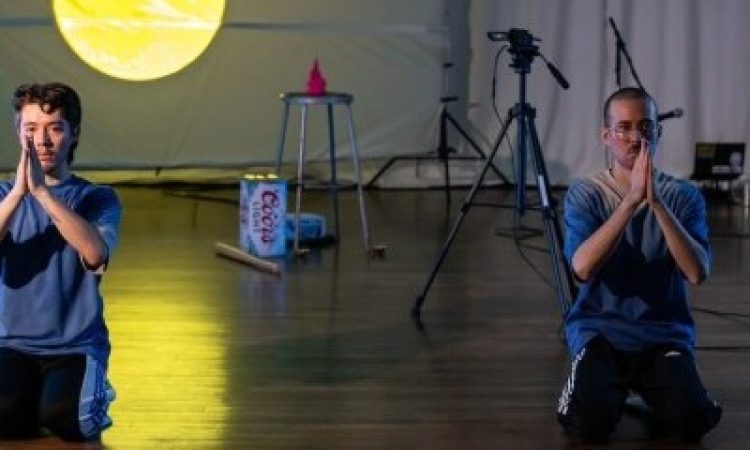
Article image description: evan ray suzuki and Glenn Potter-Takata kneeling with their hands together in gassho with a projection of the moon in the background.