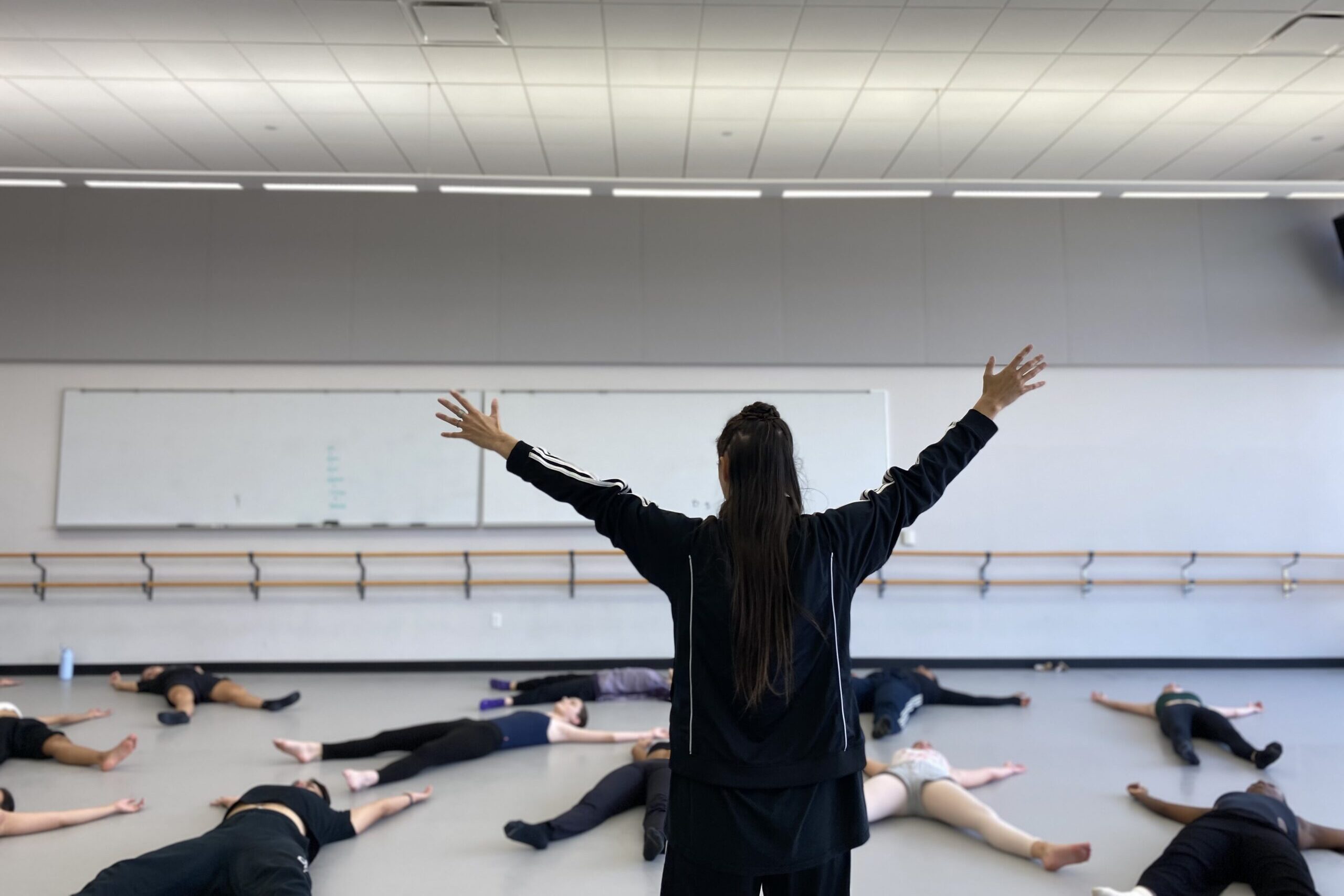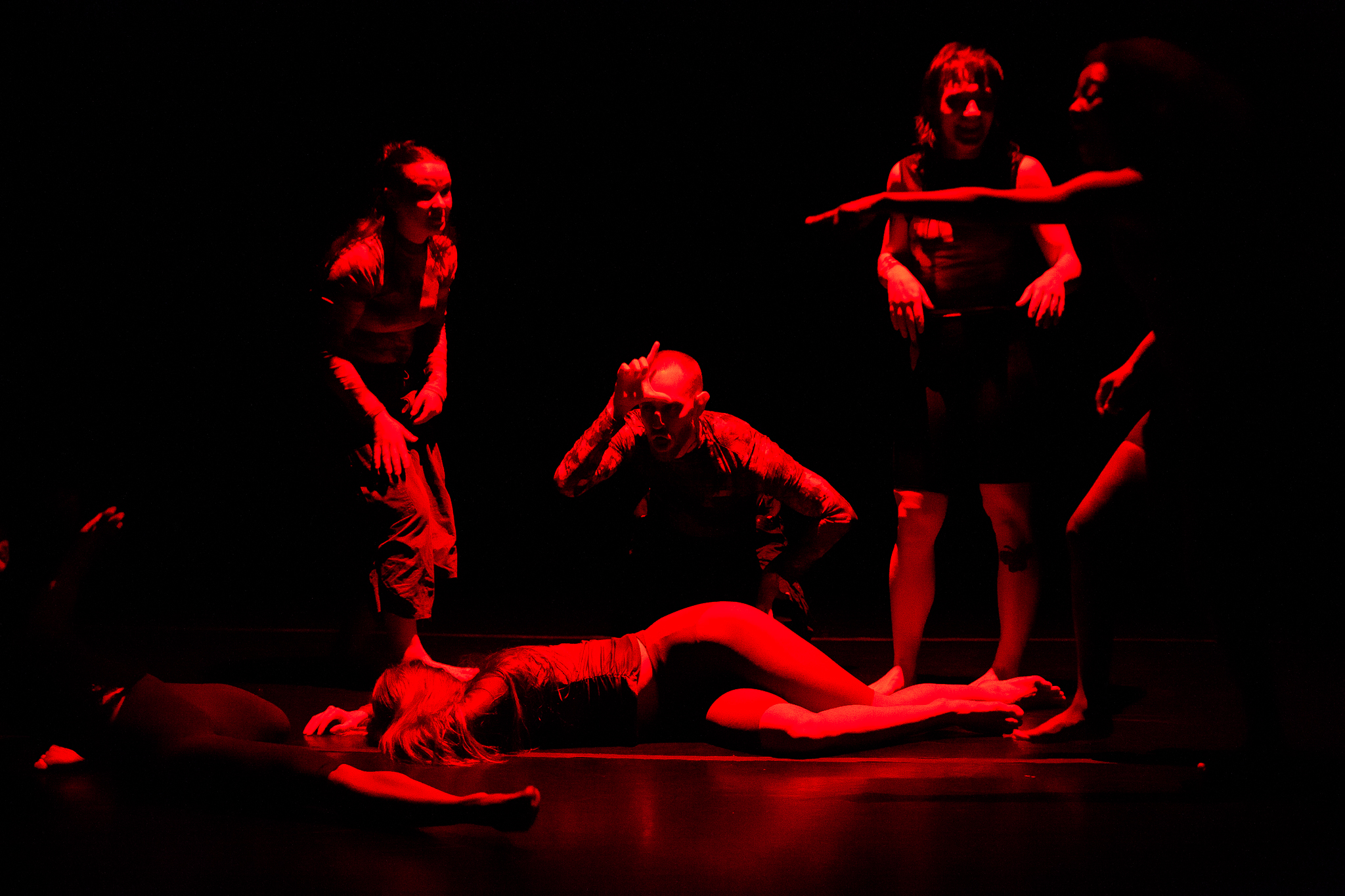
“What if community is an active verb—something you do and participate in rather than passively feel a part of?” This question, posed by Editor Tonya Lockyer, sits at the heart of Artists On Creative Administration: A Workbook from the National Center for Choreography, the latest dance-centered publication from the University of Akron Press.
A combination anthology, archive, map, collage, oral history, spelunking expedition, and time capsule, Artists On Creative Administration is first and foremost a book of stories about people and how those people have made dance happen. By bringing together 30 artist-administrators from across the United States, the National Center for Choreography Akron successfully builds a network of intertwining voices, focusing on relationship building as the foundation of making a life in dance.
Broken up into four sections—Place, Leadership, Capital, and Pathways—the collection shepherds readers through tales of economics, activism, togetherness, capacity building, imagination, family, and home. The book is a welcome reprieve from the advice-chucking-assembly-line-style “how to do business” guides typically geared toward non-artist professionals in the “emerging” phases of their careers.
Silas Riener says, “I am writing to you from the middle of this story.” Indeed, this is true of all the contributors in this book, each of whom seem to know that they are writing largely for others in this murky mid-career-mid-project-mid-life place. We need this repository of ideas and experiments, both past and in progress, situated for a reader who has been there too.
The 30 contributing artists write autobiographically and emphatically. The book is honest. And, as Makini puts it, honest not in the “just telling the truth as one might on the stand in a court trial in which the goal is to tell as much of the truth as is necessary to refrain from lying” kind of way. There are details, and plenty of them. The artists generously offer up salaries, living costs, timelines, the names of creative partners, resourcing programs, examples of their own artistic materials, and pointed truths about life as a dance artist lately. This collection of stories focuses on problem solving and encourages personalized solutions while understanding that the challenges of artistic administration are ongoing without a singular “fix” for everyone.
Lockyer asks, “What if [a] project began the moment you started thinking about it, and it ends the moment the last person stops thinking about it?” With its high re-read value and relevant stories, Artists on Creative Administration won’t be forgotten any time soon. My personal copy is already covered in notes. Raja Feather Kelly’s “Choreography, Performance, and the Absolute Truth About Being an Artist,” Delphine Lai and Christy Bolingbroke’s, “The Practice of Questioning and Generating Revenue,” Silas Riener’s “Middling,” and the exchange between Miguel Guitierrez and Michelle Fletcher in “Beg Borrow Steal (Back),” are particularly resonant highlights that I have already recommended to students, mentors, colleagues, and friends.
Artists on Creative Administration is a split bill performance at its best. The writers’ individual voices remain clear in the midst of the collective and the chapters create a cohesive whole while functioning episodically. Humor, joy, hope, tough truths, and pragmatism each take center stage. The 30 contributors and the whole team at NCC Akron should take tremendous pride in this gem of a primary source document.
Go read their stories. Buy the book.
Tonya Lockyer (Ed.), Artists on Creative Administration, University of Akron Press, 2024
Contributors: Nora Alami, Julia, Antonick, Christy Bolingbroke, Banning Bouldin, Yanira Castro, Maura Cuffie-Peterson, Katy Dammers, Raja Feather Kelly, Michelle Fletcher, Chelsea Goding-Doty, Miguel Gutierrez, Rosie Herrera, Cherie Hill, Delphine Lai, Tonya Lockyer, Makini, Aaron Mattocks, Jonathan Meyer, Rashaun Mitchell, Hope Mohr, Dominic Moore-Dunson, Cynthia Oliver, Karla Quintero, Antonio Ramos, Silas Riener, amara tabor-smith, Kate Wallich, Marýa Wethers, Pioneer Winter, Miranda Wright