At the height of Philadelphia’s radiant spring, I slip into my favorite rainforest green t-shirt and head to the Mann Center for an afternoon of food, music, and dance. Surrounded by the greenery of Fairmount Park and the distant shimmer of the Center City skyline, I chill out on the lawn and watch young dancers in tutus and flowy skirts rehearsing one last time for their showcases at the Mann.
Nearby, families cheer as kids’ acrobats balance on yoga balls with playful precision, their joy infectious. BalletX’s Dance eXchange teaching artists appear, encouraging curious children to learn an interactive dance sequence and join in the flash mob of One Dance One Philly. These delightful mini-stages, featuring local youth arts organizations, set the tone for the evening’s main event: a full-throttle celebration of movement by the dancers of BalletX.
Having experienced BalletX’s mixed repertory programs before, I was eager to see how choreographer Jennifer Archibald would shape a full-length contemporary ballet for the open-air theater at the Mann. Archibald’s 70-minute world premiere, Maslow’s Peak, draws thematic inspiration from British writer William Golding’s novel Lord of the Flies (1954), a tale of boys stranded on an island after a plane crash, grappling with the collapse of order and ethics. Rather than a literal adaptation, Archibald uses the novel as a launchpad for a deeper exploration of “human nature, morality, and coalition-building.” The title also invokes psychologist Abraham Maslow’s hierarchy of human needs, from basic survival and safety to love, esteem, and ultimately self-actualization. Through the ballet, Archibald raises compelling questions about the trajectory of civilization and whether a true “peak” of human needs can ever be reached.
In the video shown prior to the performance, Archibald emphasizes her intent to create a ballet for everyone, where audiences can see themselves reflected. Distinct from the tales of classical ballet, her “documentary ballet” approach blends theatricality with education and accessibility. She worked closely with dramaturg Kate Mattingly to shape the narrative and collaborated with scenic and projection designer Guy de Lancey to craft a vivid jungle world: a downed airplane wing, vine-like ropes, an elevated Pride Rock-style platform, and a pair of haunting projected eyes. The immersive design earns the evening’s first applause as the stage lights rise on a tableau of still dancers. Emily Morgan’s sharp costume design furthers the transformation, shifting a uniformed ensemble in military black jackets into individualized jungle figures in vests and shorts.
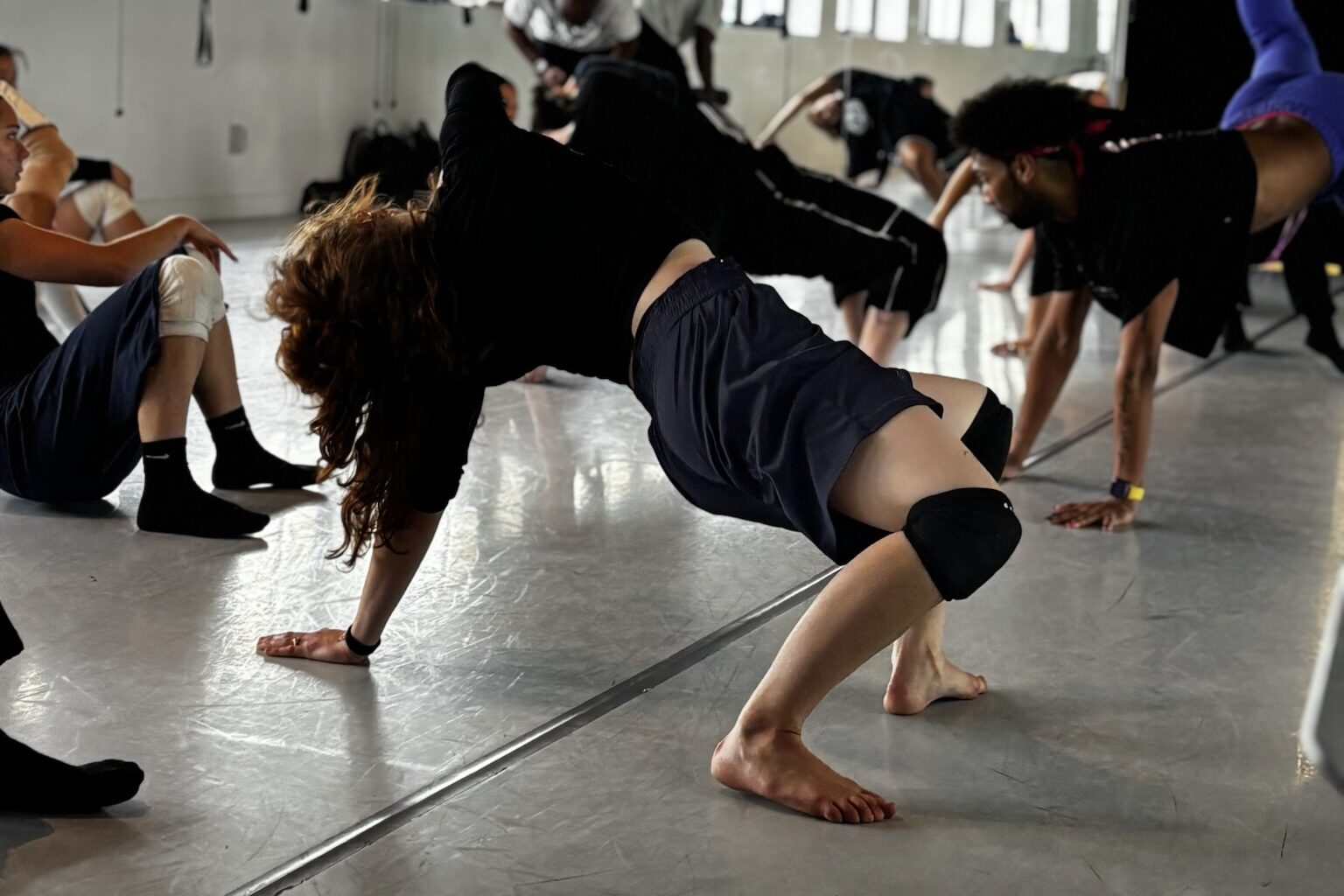
Archibald’s choreography skillfully fuses ballet and hip-hop vocabulary to express both social order and conflict among the characters. The sixteen dancers hop rhythmically on one leg in unison, the other leg circling like a piston, evoking a tense, militaristic cohesion. Departing from classic partnering norms, the dancers engage with the set while supporting one another: lifting partners from swing ropes or gracefully catching them mid-fall from the rock platform. In scenes depicting clashes between two groups led by Jerard Palazo and Jared Kelly, dancers burst into dynamic floor rolls, handstands, and swift inversions. Within the fast, syncopated drumbeats, one dancer effortlessly springs from a kneeling turn into a cartwheel, then glides to the floor after a poised attitude spin.
The set’s elements (rope, airplane wing, and rock) sculpt a rare vertical landscape on stage that enriches the choreography with moments of suspense and invention as the dancers climb, swing, and descend. Nature amplifies the theatrical experience. During the first act, a sudden rainstorm sweeps through, with thunderous rumbles and wind-blown rain drifting into the open-air pavilion, mirroring the turmoil unfolding on stage. Among the many striking scenic elements, the recurring projection of large amber eyes looms over the jungle setting, casting an eerie sense of omnipresent surveillance. While evocative, the eyes occasionally draw my focus away from the dancers themselves, momentarily competing with the physical storytelling.
As one of the city’s most community-engaged dance events, BalletX’s Festival at the Mann draws a lively, intergenerational crowd through a vibrant pre-show lineup and Archibald’s powerful documentary ballet. Aligning with Archibald’s vision of creating a ballet for everyone, the festival offers a compelling gateway for both new and returning audiences to experience the energy and relevance of contemporary ballet.
BalletX Festival at the Mann, BalletX, TD Pavilion at the Mann Center, May 2-3.