“there are things you have to feel to know” (p. 255).
this is a statement by Zulema Pedroso of the Yoruba Andabo (the Cuban, state-sponsored Rumba ensemble), as recounted by social anthropologist Maya J. Berry in her 2025 book, Defending Rumba in Havana; The Sacred and Black Corporeal Undercommons. in Defending Rumba, Berry documents her time studying rumba while living in Cuba for several years in the early to mid-2010’s.
there are things that can only be learned through the five senses.
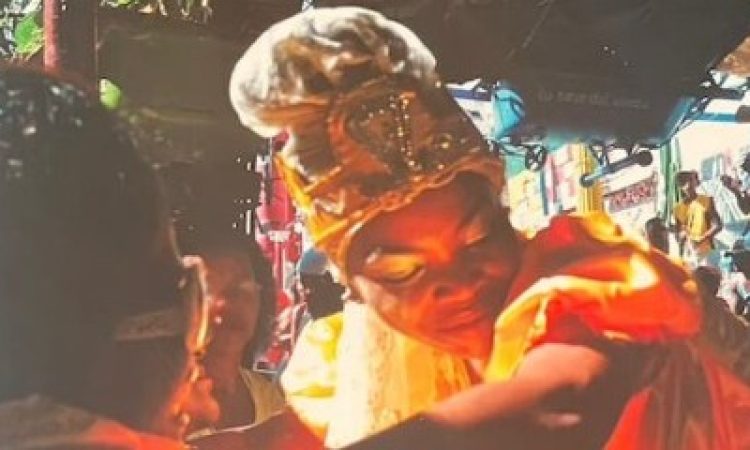
the Black body in Cuba has communicated through the language of rumba, and, similar to the policing of Black expression in western society, the Cuban political state has policed rumba. for the Black diaspora, rumba is a method of exchanging feelings and information that has roots in African based religions, as it honors African deities or Orishas. rumba is the largest form of Black expression in Cuba, and it is not immune to the gender stereotypes of a patriarchal society. Maya J. Berry outlines the ways in which economic necessity, Black feminism, gender binaries, and racial tensions frame the expression of Black culture through the dance form of rumba in Cuba. in Defending Rumba, Berry applies these intersectional lenses to explore the deep political history of the country and the evolution of the rumba. throughout the text, Berry weaves in her personal ruminations and reflections of the practice.
there are things that can only be exchanged through physical understanding.
Berry begins Defending Rumba in the wake of the 1959 Revolution and contextualizes the economic reforms and political realities that came into place under Fidel Castro. at this time, “African-inspired religions were criminalized and violently persecuted” (p. 25), sending the practices of rumba underground. this led to groups like Yoruba Andabo being subject to strict guidelines on where and how they could perform, how they could gain profit, language they could use, and even the implications of the practice. syntax and naming is an integral aspect of this text and of Berry’s own research. rumba was strictly rumba and religion was religion. there was to be no intersection as far as the state was concerned. Berry raises the questions of how to counter oppression and how to keep a culture alive while the mass legal structures attempt to quiet, silence, and criminalize it. she contextualizes the dance form amidst the country’s vast history of dealing with racism and stratification within race relations. at times this was dense and hard to follow, but the further i read, the more situated i became into Berry’s historical recounting and analysis. Berry’s thorough research leaves no stone unturned when discussing the intersections of economics within race, and how gender also situated women and men at different levels of class in a gender binary-forward form.
as the political and economical groundwork is laid for understanding race relations in Cuba, Berry interweaves firsthand anecdotes through a Black feminist lens to contemplate the intersections of gender and sexuality in the practice of rumba. rumba guaguancó and rumba yambú are the two main male/female courtship focused forms performed in rumba. within the masculine role, there is an emphasis on penetration and the subduing of the feminine role, which mimics the oppressive stereotypes of servitude for the Black femme body. rumberas are expected to fulfil this role of servitude while also being desireable or seductive. Berry takes her analysis further into history, describing how this mirrors what grew out of the period of enslavement that Black women endured where the intersectionality of Blackness and womanhood heightened their limits and restricted them further into oppression. Berry outlines different approaches made by rumberas that refuse to take part in these expected roles. speaking to Yamilé, another rumbera. Berry describes a moment when a rumbero attempts to lead a rumbera into a prototype of servitude by dropping a rag towards her. Yamilé explains her response, “…[I] toss it right back at him as if to say, here, wash it yourself.’ And then I walk away.’…she gave her imaginary partner a head-to-toe scan, as if to say, ‘you tried to humiliate me to make yourself look powerful. Now look at yourself, dirty and alone.’” according to Berry, by “maintaining her fidelity to the syntax of clave that keeps all rumberas and rumberos in sync, her defiant refusals of sexist expectation were accepted as fair arguments within the conversation” (p. 122).
with the understanding of the gendered implications in tow, Berry then looks to the art of the movement itself, the sway of the hips, the undulation of the torso, and the information to be gained by the act of looking. we are drawn back to the five senses. the feeling, the looking. the constant awareness of rumberas/rumberos indicated the racial consciousness necessary to keep their livelihood within the constraints of white supremacy. “Being a professional rumbero meant becoming adept at code-switching to make one’s movements legible in different ways to different audiences when it mattered” (p. 84).
Berry documents the lives of this community so they can focus on living and their stories will not die with them, but be passed along as reminders of the refusal to counter predetermined sanctions and barriers given by a money-hungry and stratifying regime. Defending Rumba is a text for artists who wonder how they can exist, commune, find joy, support, and live outside the parameters that are set for them. the importance of communal gathering is imperative to the survival of the rumba and for all oppression anywhere. the way through is through one another. i save you, you save me.
Maya J. Berry, Defending Rumba in Havana; The Sacred and Black Corporeal Undercommons, Durham and London: Duke University Press, 2025. 266 pp.