“the body as palimpsest”- Rece Komorn offers this proposition in lithographs, a score for two, with choreographic composition and sound development by Komorn.
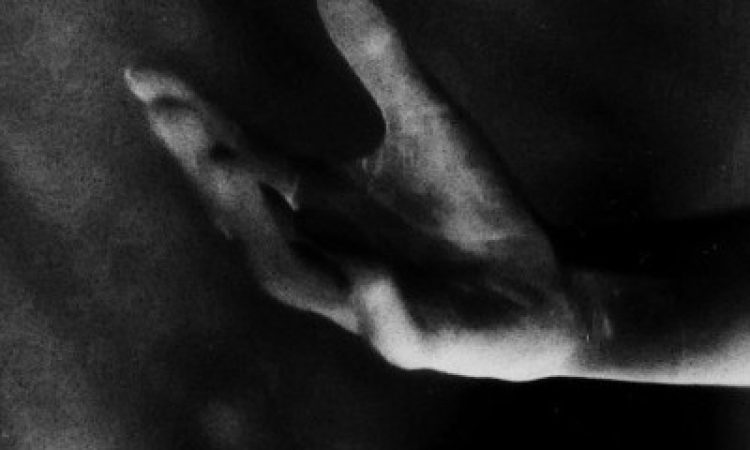
In the dark at the Icebox Theatre, I hear an entrance. Collaborators/Performers Jahnell Boozer and Ally Wilson imprint themselves upon the space. They are within and of themselves the writing tools, channels for information and searchers amongst the unseen debris. The choreographic score, like a lithograph, is full of handmade (and in this case full-body-made) copies. Rich in repetition, modern and sleek, almost futuristic in its stylistic presentation, Boozer and Wilson shine with impact in the task of this particular spatial excavation.
Rece’s crackling score grows as the performers, blind-folded, seem to remember an ancient echo of imprint. The pitter-patters in the music are reflected in sounds of body percussion which rupture out of the reverberating performancescape.
Grounded-collapse, hands gesture toward catching a drop, Sustained…
Now they can see: unmasked, their eyes reflect swelling and rhythmic release. Holding feet and ankles, echoforms reflect off of their bodies, overlaid upon the clean, grey performance space. Clasping and releasing into flow; smelling, searching, tracing, and swelling.
Images emerge only to be interrupted by new sparks, brief, buzzing and impactful like the life cycle of a fly.
The dancers make contact, their touching a tool in their invisible archaeological dig. They remove layers and begin to run. Now in thong leotards and sheer shorts, they become human metal detectors, reading the Earth as they impress upon her.
Like a sprinkler or human antennae searching for signal, one elbow twitches open and shut. As they thump and repeat, slice and sweep through a visible fog, the human friction detectors describe invisible activity.
Clasp, Head drop, Run in place, Lay down.
White noise, moving images and projections, all by Komorn, transform the space. Disguised vocals speak an alien language which echoes in a watery tiled space deep underground. With the projected images, I moved through walls and long nighttime corridors; a faceless human here or perhaps a fan or film rolling; words, human ribs, a ghostly puddle. The gorgeous flux of visuals illuminates the mission of the performers as they crawl upstage across the floor.
Red lights return the dancers to their feet. Unburied and emerging, they now wear skirts and see each other. Imbued with the qualities of the surroundIngs, they are receivers, navigating suction and static; the labor of microphones.
lithographs, Philadelphia Fringe Festival, Icebox Project Space, Sept 7.