Live music pumps inside FringeArts, the venue transformed into a Zimbabwean shabini (temporary club in somebody’s home) for the premiere of nora chipaumire’s, Dambudzo.The Shona word for “trouble” is an apt title for this universe where the floor says, “Open Late” and “Chi Buku,” (Bemba for “big book,” and the namesake of the popular African beer Chibuku).
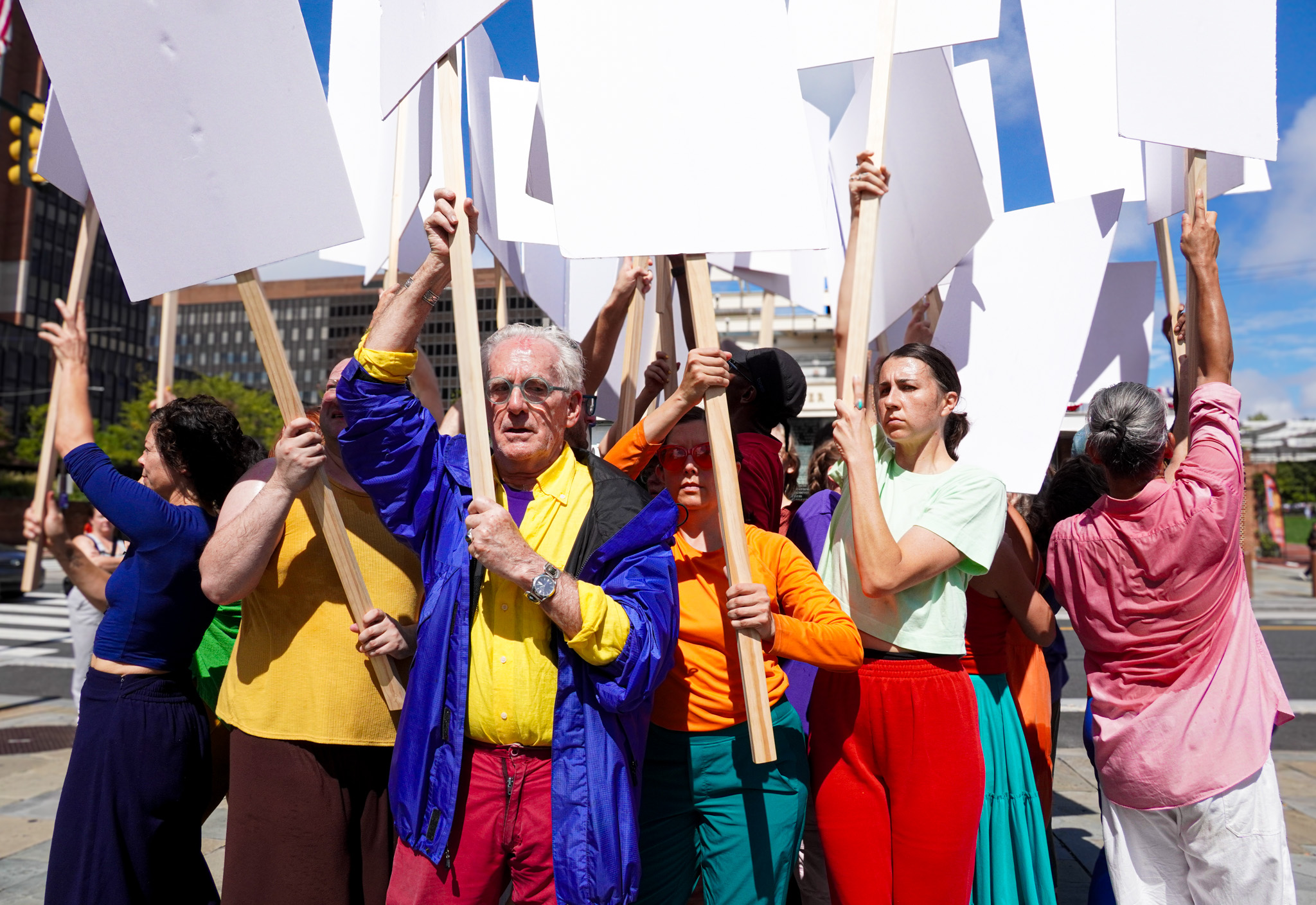
Rotating lights, shadow dancing and soccer balls give way to picket signs reading, “YesYesYes,” and “SAVED.” Boxing gloves remind us there are many rounds to come and chipaumire’s whistle tells us who is protecting the world within Dambudzo. She shouts, “Hallelujah,” bringing into sharp focus the message that, “SAVED” does not refer to blocking a soccer goal, but points directly to the violence which continues to stem from missionary efforts on the African continent.
The whole performance reflects the culture, community, resilience, and creativity of African heritage, albeit with an undercurrent rooted in colonization. From the beginning, the evocation of Chibuku—a drink first brewed by traditional means by African women, then commercialized by a German settler and served on credit to miners (provided they wrote their names in the record keeping “big book”)—reminds us that culture keeps a record of incursion.
Performers hurl clay globs at a wall in a kind of game that quickly transforms into a dance of rapid footwork, accompanied by more shouts of “Hallelujah” and the sound of dogs. The ensemble violently smears one of the dancers in clay. He seems to die. He is resurrected by chipaumire, covered in the mud that tore him apart and now seems to put him back together.
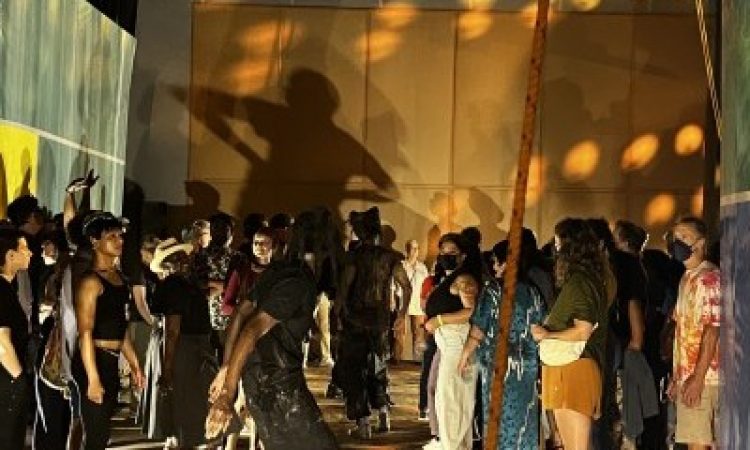
Saxophone and gospel-infused sounds take over. Walls move. Part of the ceiling becomes a wall. We have all been here long enough that it starts to feel like home. Soon chipaumire affirms this feeling saying, “There is no we and us” and also, “We know all about you. You are here to know about us.” We listen to the songs of the performers and to the question, “Can we get a key to the city?” which precedes the heartily accepted invitation for the entire audience to join the dance party.
Mid-performance, chipaumire jokes, “We are spirit people. We don’t need visas,” but the struggle was all too real for three cast members who had to fly back to Johannesburg to apply for their visas (denied upon leaving Berlin), only arriving a couple days ago with some help from Senate Minority Leader Chuck Schumer.
Grateful for tonight, it takes the shadow play of faux growling dogs to make us leave. We are not at home anymore. Now we are the intruders.
Dambudzo, Philadelphia Fringe Festival, FringeArts, Philadelphia, PA, September 18-20, 2025.