“Don’t let the boo hag ride yah”
Ishmael Walker’s The Boo Hag introduces audiences to a Gullah/GeeChee figure that’s both terrifying and thrilling to watch come to life. We follow the journey of Mabel Sellers (played by Lydia Del) who starts a new job as a cleaner for a particularly racist and exacting Carol Ann Waters (played by Natalie Marino).
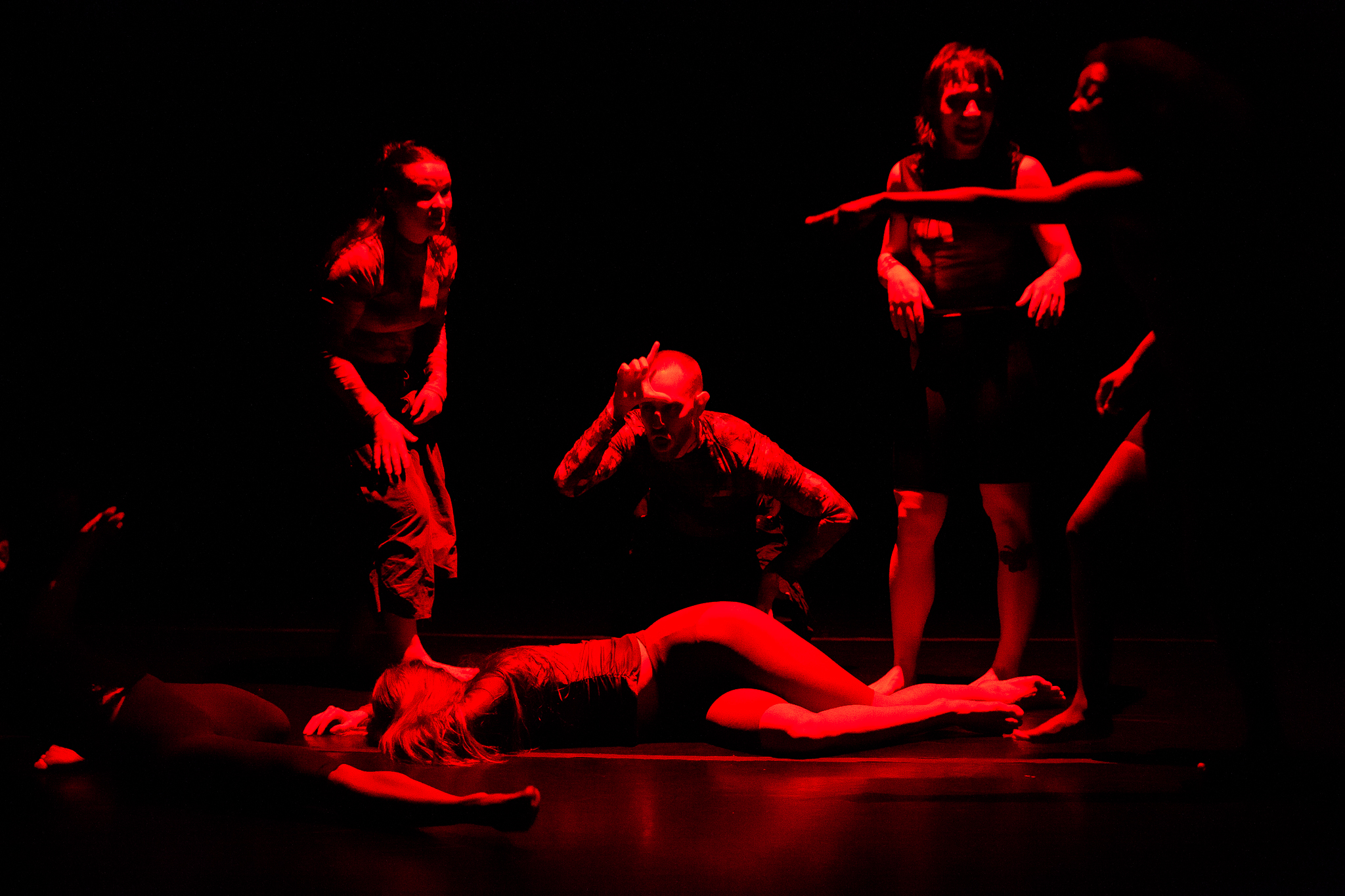
Ms. Waters’ possession by a boo hag is the highlight of the piece. With a mouth stitched together by black string and black slits for eyes, the hunched over creature lurches toward Ms. Waters rhythmically. He shakes bells attached to his arms and groans in her face as she screams. Light contact improvisation pulls her out of bed, and she dives through the boo hag’s legs as Mabel plays hand drums from a nearby seat. Ms. Waters says multiple times that she wants to be free, but seems stuck, waiting for her late husband Mr. Waters to come home.
The boo hag raises her up and seems to stretch her with his movements, preparing her to be skinned and worn. They spin together and then perform a shuffling side step; Ms. Waters transitions from terror to joy as she mirrors him. Quick steps shake bells in complex rhythms, and Ms. Waters struggles to keep up with his deft footwork. He points at her, and she begins to derobe. His scary sucking noises send her screeching, and he drags her back to the bed. Blackout.
The theme of freedom is salient. Ms. Waters, who tries to trap her housekeeper into working more hours and being at her beck and call, is also entrapped as she waits for Mr. Waters to return. Mabel is trapped working for this woman by her socioeconomic situation and the racist systems that dispossessed her and her family of any wealth they might have had in the past. Movement links the two together when Mabel, racked with anger and sadness after being treated horribly, bursts into song in a stand out performance; Ms. Waters moves in time with her voice and rhythm. How will Mabel find freedom for herself? You’ll have to see the play to find out.
The Boo Hag, Hoodoo Technique, September 21-24, Icebox Project Space, Philadelphia Fringe
Homepage Image Description: A red humanoid figure squats to one side with its dark mouth open in a disturbing smile. The figure holds a human shaped fabric which it appears to have peeled off its own body.
Article Image Description: A red humanoid figure squats to one side with its dark mouth open in a disturbing smile. The figure holds a human shaped fabric which it appears to have peeled off its own body.