Walking into a cavernous room bathed in blue light, I notice Icebox Project Space’s name matches its physical iciness. 3 bundles of flowers in wicker baskets dot the corners of white marley, adding some warmth and life to the energetic vacuum.
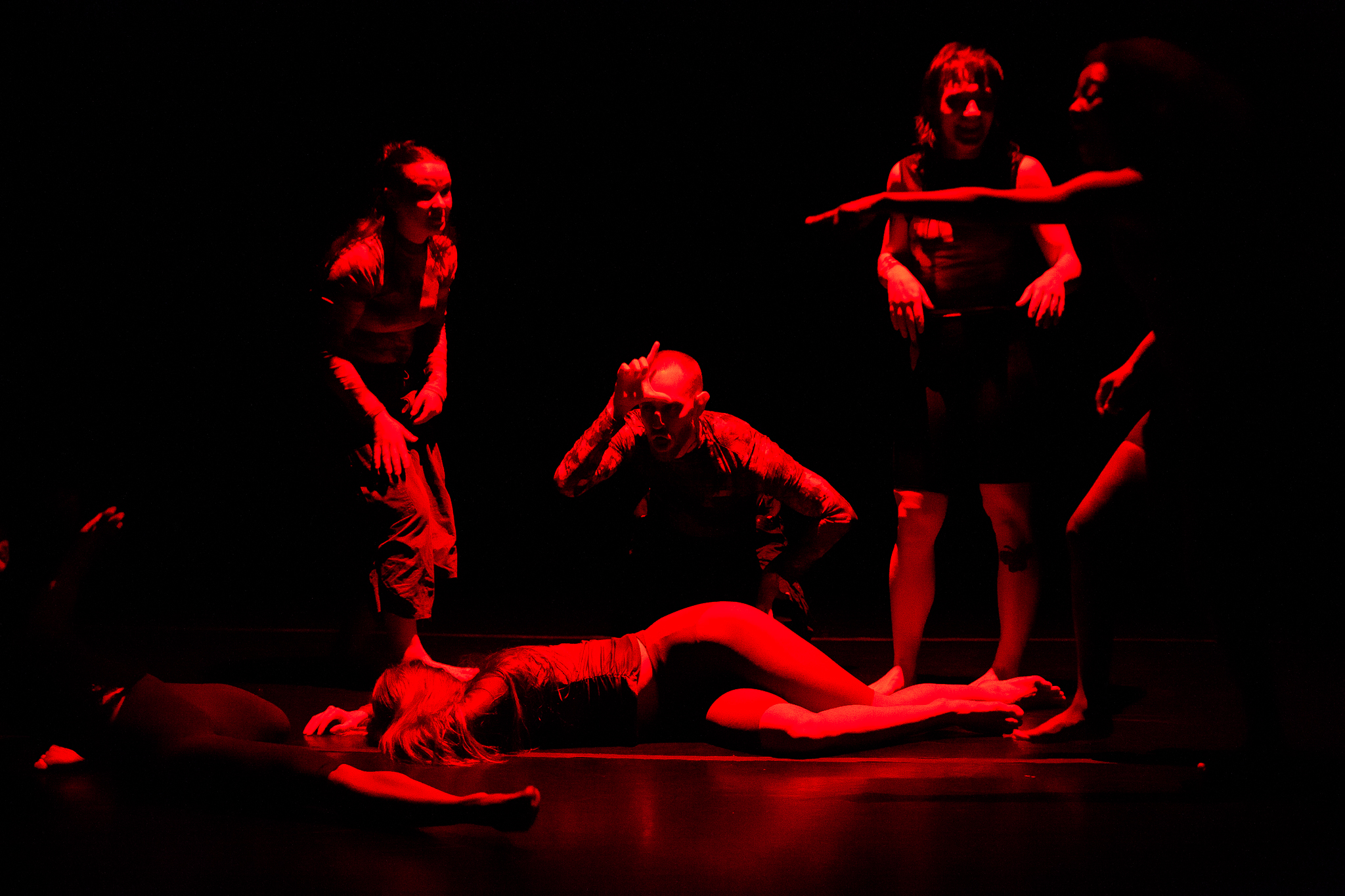
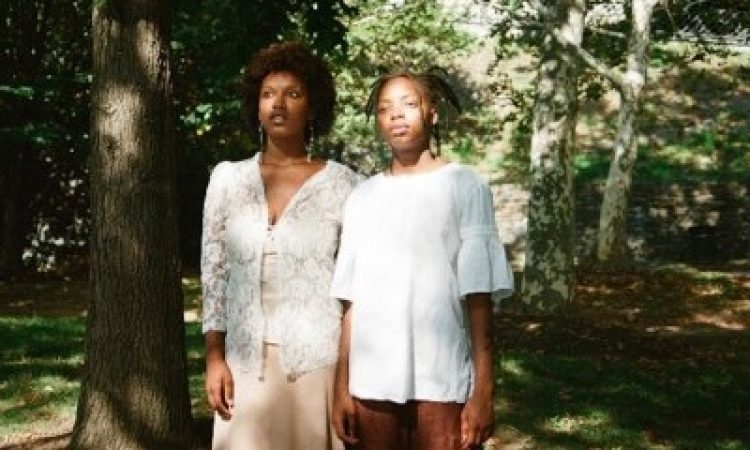
In silence, the first image of The Return to Innocence Lost – Destiny Williams’ hand covers Deziah Neasia’s mouth from behind, fingers interlaced over the poetry of a voice struggling to be heard. Traces of melodic speaking peter through Williams’ grip, and my ears strain to hear Neasia’s words clearly. From then on, language echoes throughout the show, moments of captive imagination: Neasia tangles herself in a microphone cord, lilting language floating through the room. Then, Williams wanders the stage waxing poetic about the fleeting feelings of the moment, discarding pages full of writing down to the ground with ambivalence, while Neasia moves from the inside, out.
What ties together these stark, but moving images are a rigorous, athletic blend of solos and duets, all seamlessly woven together, mood bound by emotive choices in lighting. As the performers variate on flexed-footed floorwork – double-stags and double-tucks flying through the air, bodies turning on a dime – I note the breadth of embodiment onstage. Williams and Neasia move very differently – between their performances and physicalities is the difference between internality and externality. Unsurprisingly, however, both fold into the opposition of the other with ease, accentuating long-held expansions and extensions with quiet, tender partnering and speedy footwork.
After the performance, I find myself reflecting on Neasia’s program notes – is the title a reference to the song “The Return to Innocence Lost” by The Roots? With this knowledge, the performance darkens — pulling us into the heaviness of muffled language, ruminations on the Mother – both personal and universal, and cycles of strength that fracture into vulnerability and strain. Who are these bodies to one another, and what secrets do they carry between them? Is their secrecy a part of the performance? A generational hush from past and present, the work itself feels like a secret at times as voices ring just out of reach, muffled by hands and microphones that change sonorous inflections into distorted silence. I leave hearing the quiet of the yawning gallery space, wishing for the clarity of Neasia’s and William’s physical song.
The Return to Innocence Lost, Deziah Neasia, Icebox Project Space Gallery, September 19, 25.