A Call to Prayer starts with a little booklet – a spiritual zine of sorts that doubles as a program. Inside, a call to ancestry, freedom, and time that collapses into flesh, abolition, and ritual. A condensation of spirit advocating for a return to body and land. A poetic thesis for meditative performance. A prayer.
Tucked inside each individual booklet is a note. I don’t notice it until the Fringe staff tell us to hand over this one-line invocation in order to enter the space. Fumbling through its pages, I feel like I’m opening a fortune cookie. I assume each little note is unique – mine talks about transformation and sovereignty. I hold the paper in my hand, waiting for my turn to have choreographer and performer Zaquia Mahler Salinas welcome me into the space. Once I reach her, wordlessly, her hands hold space around my chest and shoulders, touch my feet, ground me. I feel like my aura’s just been read – her presence acts as a healing container. I drop my prayer in an urn filled with water, streams of paper already swirling around inside. Then, I take my seat.
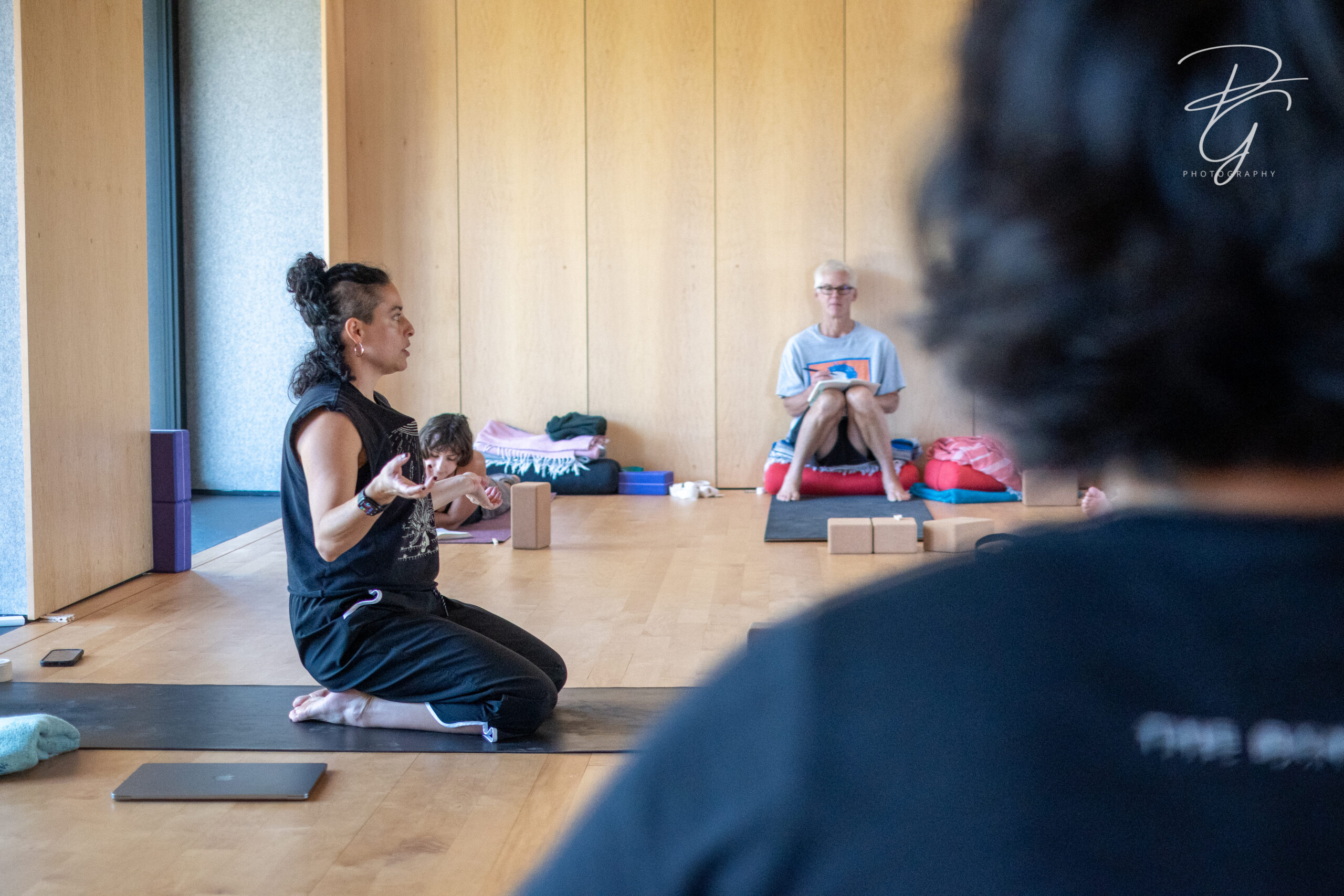
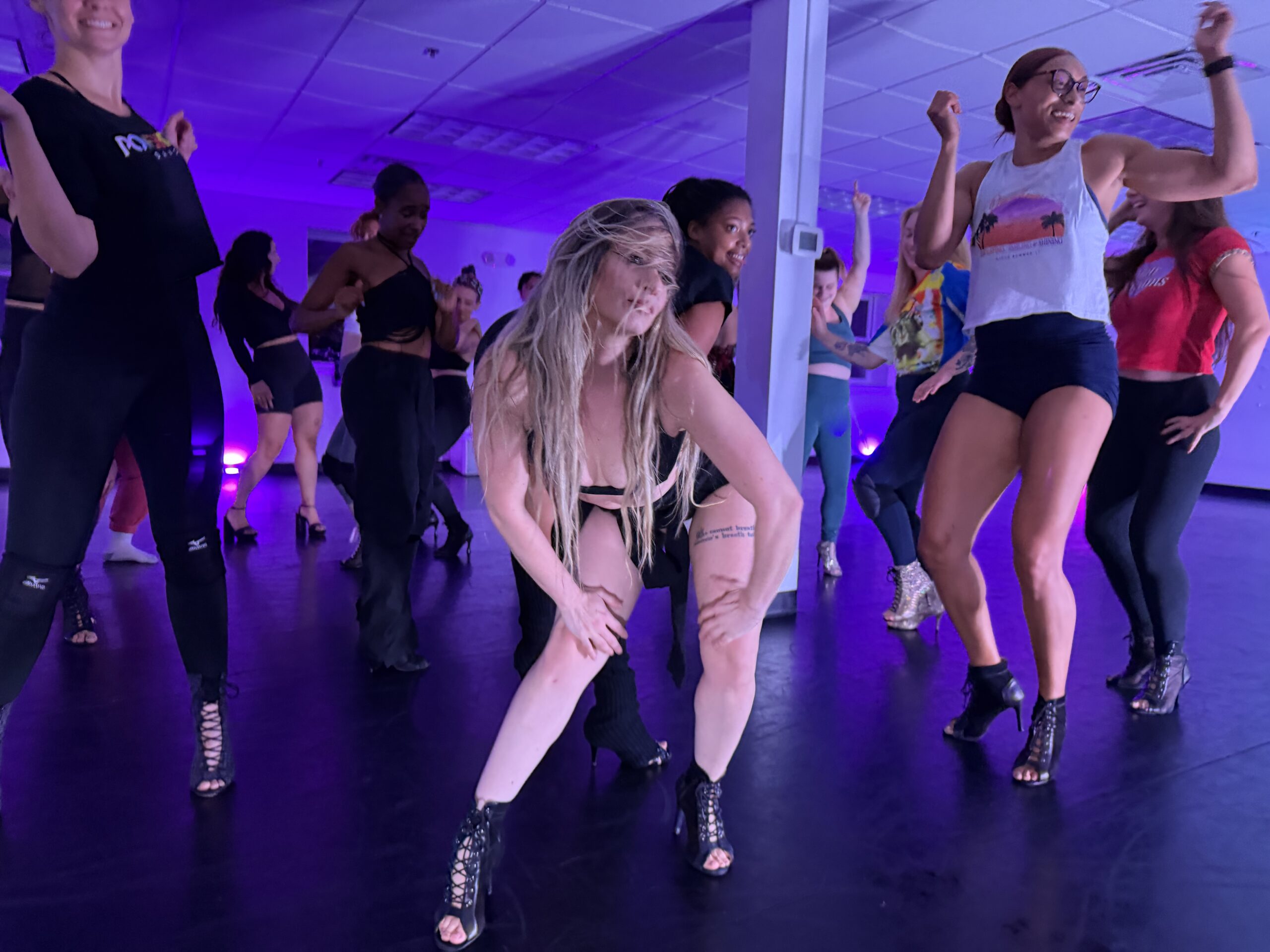
Two dancers wearing black – Sergio Barrientos and Guillermo Castro – hold space, and Salinas soon joins them, placing the prayer-and-water filled urn downstage. The dancers are a powerful, somber, trio, each holding my attention in totality at different points in the work. Salinas shines with a sharpness in her gaze, drawing back an arrow that collapses systemic structures. Barrientos feels the most at ease when athletic contemporary movement breaks into house-like footwork, kicking down walls with a stylish swipe of hand. Castro’s partnering – whether he has someone draped on his back, balanced on his lap, or spinning in the air above him – feels safe even to the eyes.
Throughout, the trio returns to the water-filled urn, cleansing hands and faces. With different languages permeating the soundscape, what they build between them compresses global histories and prayers into one liquid container – rituals coalescing into a physically demanding finale of electronic resistance, a universal mediation on the desire to hold faith against political constriction. Important hope. Yet, to work for the global, there must be grounding in the personal, and I left wanting to understand more of Salinas’s own specificities that back the brave, skillfully-crafted rituals she builds – ultimately, a prayer for more of her in the work.
A Call to Prayer, Zaquia Mahler Salinas, Icebox Project Space Gallery, September 26.ankita