For nearly three decades, Richard Move has been interpreting, honoring, and recontextualizing the work of modern dance pioneer Martha Graham (1894-1991). In anticipation of Move’s upcoming Martha@BAM-The 1963 Interview, I met with them to learn more about embodying this American dance icon.
Below is an edited transcript of an in-person conversation with Move from September 22, 2025.
***
Brendan McCall: Martha@BAM – The 1963 Interview is based on a talk between Martha Graham and Walter Terry. How did you discover it?
Richard Move: I have to thank 92NY because I didn’t even know about the interview. Their archivist came across it about 15 years ago, as it had not been cataloged in any way, sort of undiscovered. I was the first person they let know about this recording, which was this amazing gift. I did a ten-minute excerpt as part of the 92NY´s 75th anniversary celebration in 2011. The great raconteur and author David Rakoff played Walter Terry. [Lisa Kron plays this part in the current production.] I just fell in love with this recording.
BM: What did you find so compelling about it?
RM: To my knowledge, it’s one of the only sustained interview recordings of Martha Graham. We have short films and interviews, news reels, radio interviews, quotes in the press, her own writing. But to just sit and hear directly from her for an extended period of time was very unusual. She revealed her thoughts and how she made certain roles in a way that I hadn’t seen or read about anywhere else. Also, I was struck by the time of the interview: March 31, 1963. She was just short of her 70th birthday. The ’60s were probably a pretty difficult decade for her. She had rheumatoid arthritis by then, which changed the shape of her hands; and she was starting to drink. She always said she wanted to be remembered more as a dancer, not just a choreographer, but she was pushing 70. I was touched by how vulnerable she was at certain moments during this interview. It’s a really rich, loaded, layered moment in her life.
BM: I’m thinking about her legacy. Graham had worked for over 40 years by this talk, but dance and America had really changed by 1963.
RM: She wanted the inspiration and the why to be understood: the common universality of jealousy and revenge, which we’ve all at least thought of. In the recording, she really takes us through a kind of palette of human experience and emotion with her theater and her characters and her performances. And she gets very analytical about her technique, and how it should keep evolving even as certain principles have to remain. She even gets specific about some exercises.
BM: Doing this piece in 2025 is interesting. Most audiences have assumptions about Martha Graham, but your work has consistently interrogated those notions since I saw you do Martha@Mother.
RM: This portrayal of Martha over the years really grew out of this downtown scene of wild performances and night clubs. Mother only had 60 seats and people stood in the back; the stage was 8×12 ft.
BM: The ‘90s were such a different landscape for the arts here.
RM: One could say Mother went the way of gentrification of the Meatpacking District, an area unrecognizable today compared to what it was then. The economics have changed. I don’t know how that informs anything we’re doing in The 1963 Interview, but I like to feel that we stay connected to that previous spirit.
BM: One of the questions inherent to your piece is gender–with Lisa playing Walter, you being Martha. How do you feel that conversation has shifted since this piece premiered?
RM: Just last night in my scrolling, I read about a political group suggesting trans people be put on a terrorist watchlist.
BM: It’s horrible. As we’re taping this interview, people are being fired or threatened if they don’t mourn the death of a far-right influencer correctly.
RM: I have to remind myself of this because, for Lisa and I, playing these roles just comes so naturally. Martha’s a part of me, but American politics is a different beast now. There’s a timelessness to the piece, but also a timeliness to it that didn’t exist when we performed it in 2011. The legacy and the temporality is a whole other layer, us doing this piece 14 years later. Plus it’s the 100th anniversary of the Graham Company this year. I think we use the word icon too much, but Martha truly was. There’s a real duty to try and do justice to her as best we can.
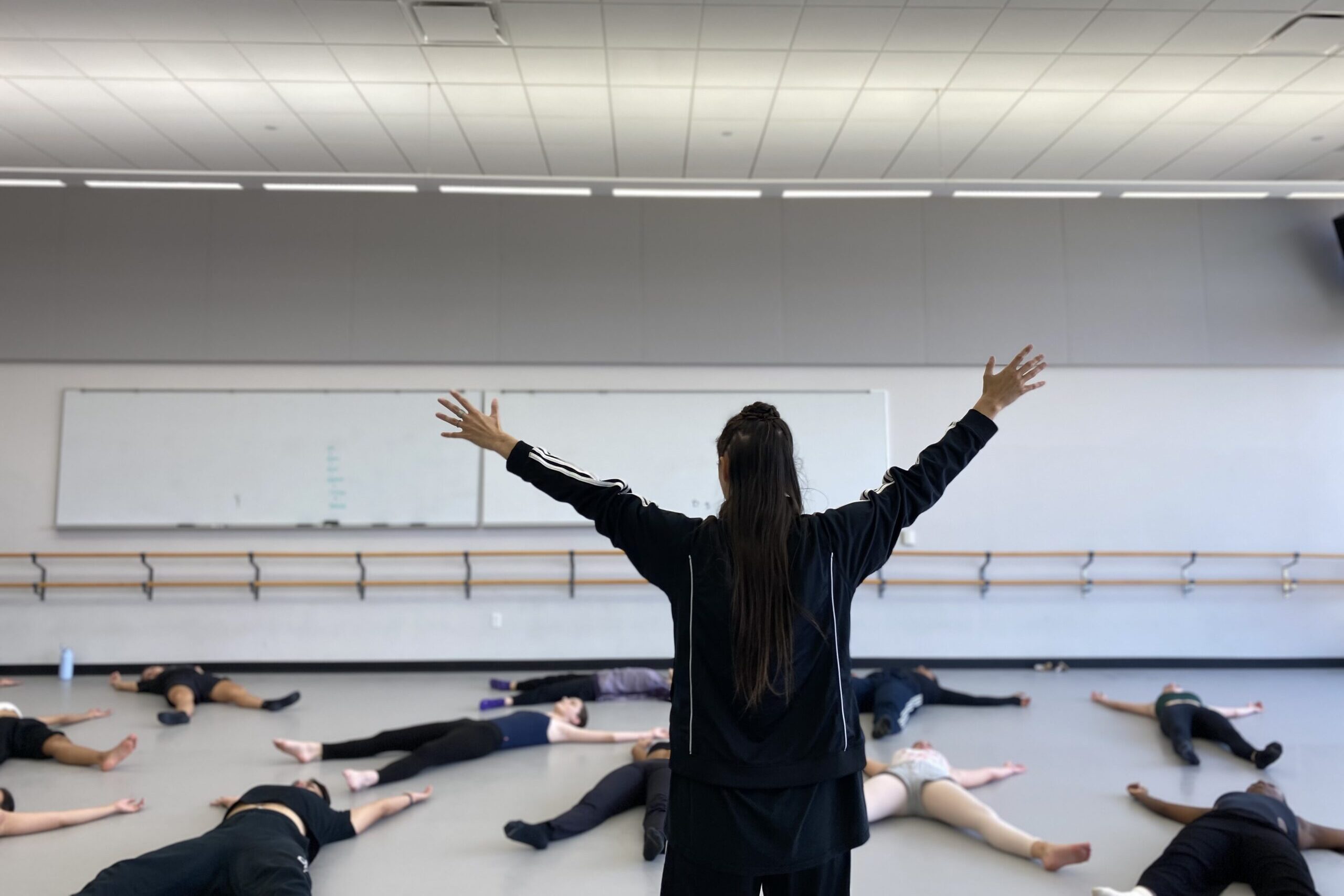
BM: It’s clear you have a deep respect for your subject, while commenting on her simultaneously. More than merely recreating the interview, you’re interpreting it as a dramatic text. There’s a drag element to this piece. You’re dressed as Martha, capturing her gestures and vocal patterns. You have two former Graham dancers collaborating with you, making the piece into a kind of theatricalized lecture-demo. How do you navigate all of that?
RM: My dancers PeiJu Chien-Pott and Catherine Cabeen were both in the Graham Company, and they feel the weight of evoking Martha in this particular kind of performance context. Linda Hodes was in the room back in 2011 during the original process; she was Graham’s right arm as co-artistic director of the company for the last years of Martha’s life, so she brought a lifetime of devotion. But I also enjoy deconstructing. I come to the material from a performance perspective, and want to take it all apart and present it in a new way.
BM: Watching your rehearsal last week, I noted the different elements you’re using at once. It’s like documentary-theatre: you’re rigorous with the pauses, the repetitions of words, the manner with which Martha speaks in this recording.
RM: I love it. I feel like her language, and Walter’s, is musical to me.
BM: When PeiJu crosses the floor, doing this incredibly muscular Graham sequence, it’s in witty contrast with you, embodying Martha herself.
RM: I love hearing the effort of the dancers during the performance, not obscured in any way by a musical soundtrack. And in the recording you hear their breaths. Martha stutters. Walter clears his throat a bunch of times. I love all that realness.
BM: How do you approach this mash-up of artistic styles?
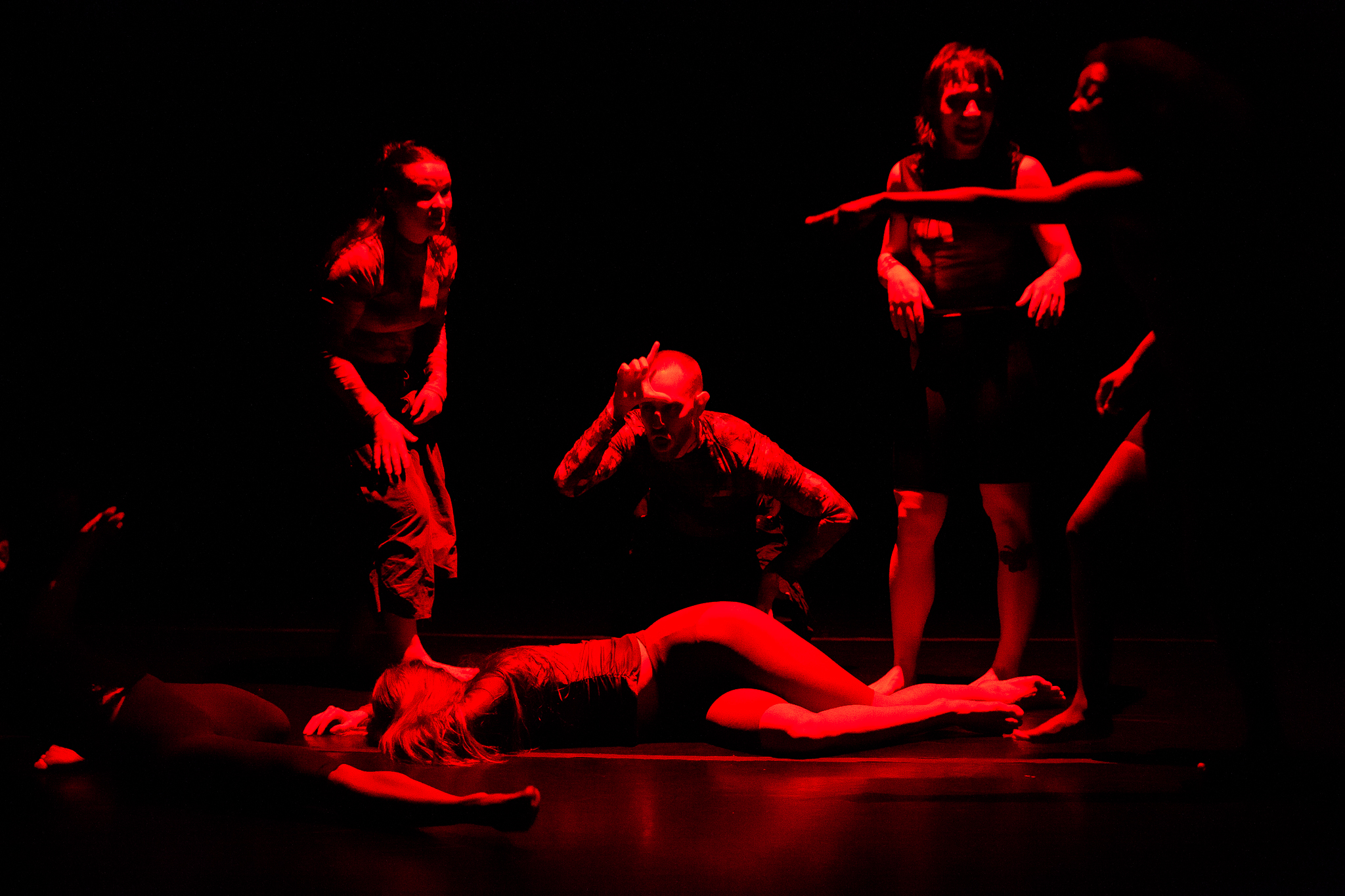
RM: A lot of that is intuitive, and just what I am drawn to aesthetically. I like those juxtapositions. I’m trying to make visible the levity of some moments–Graham giggles a few times during the interview–as well as the gravity of others. That tension, that simultaneity, is very powerful. It’s almost like there are multiple conversations happening. Meta-theatricality. It’s a funky term, but I’ve always used it for this piece. I am very aware of these levels, we’re all aware of them. But to pull it off, we really just have to be committed to the moment that we’re in. The comment is present in what we’re doing, but we can’t be commenting while we’re performing.
***
Martha@BAM – The 1963 Interview, conceived, staged, and directed by Richard Move, will perform October 28 – November 1 at BAM Fisher as part of BAM’s Next Wave Festival 2025. The piece features Richard Move as Martha Graham and Tony Award winner Lisa Kron as Walter Terry, as well as two former Graham company dancers, Catherine Cabeen and PeiJu Chien-Pott, demonstrating Graham’s distinct dance vocabulary
Brendan McCall in Conversation with Richard Move, in-person September 22, 2025.
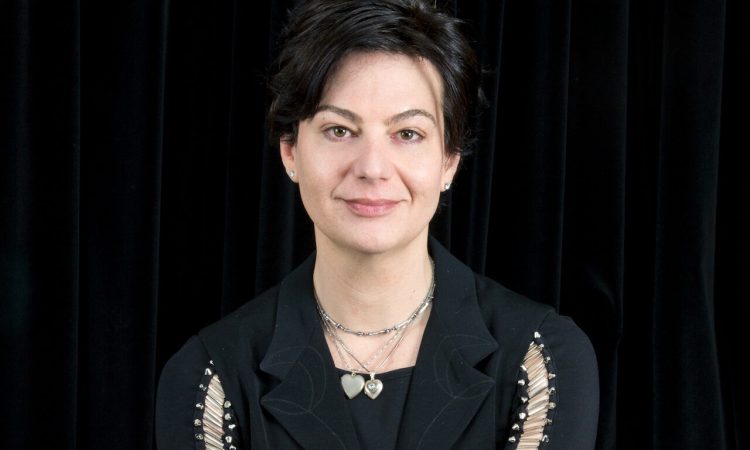
Homepage Image Description: Richard Move sits facing the camera, a warm smile on their face. Their short wavy black hair matches the color of their long-sleeved top, which has thin lapels and light-colored stitches running down each arm. Two necklaces with heart-shaped pendants are visible.
Article Page Image Description: Richard Move wears a tight sheer dress of a rich dark blue, with only their face, hands, and feet visible. Their legs are open wide, only the balls of the feet on the floor, and they extend their gripped hands to the left as they dramatically turn their head to the right. Fans of modern dance will recognize that this image is a recreation of the dance solo “Lamentations” by Martha Graham.