There is no fourth wall in Nylah Jackson’s Can You Feel It?—the line between performer and audience isn’t blurred: it’s gone. But only if you’re paying attention. This is an experience, not a presentation.
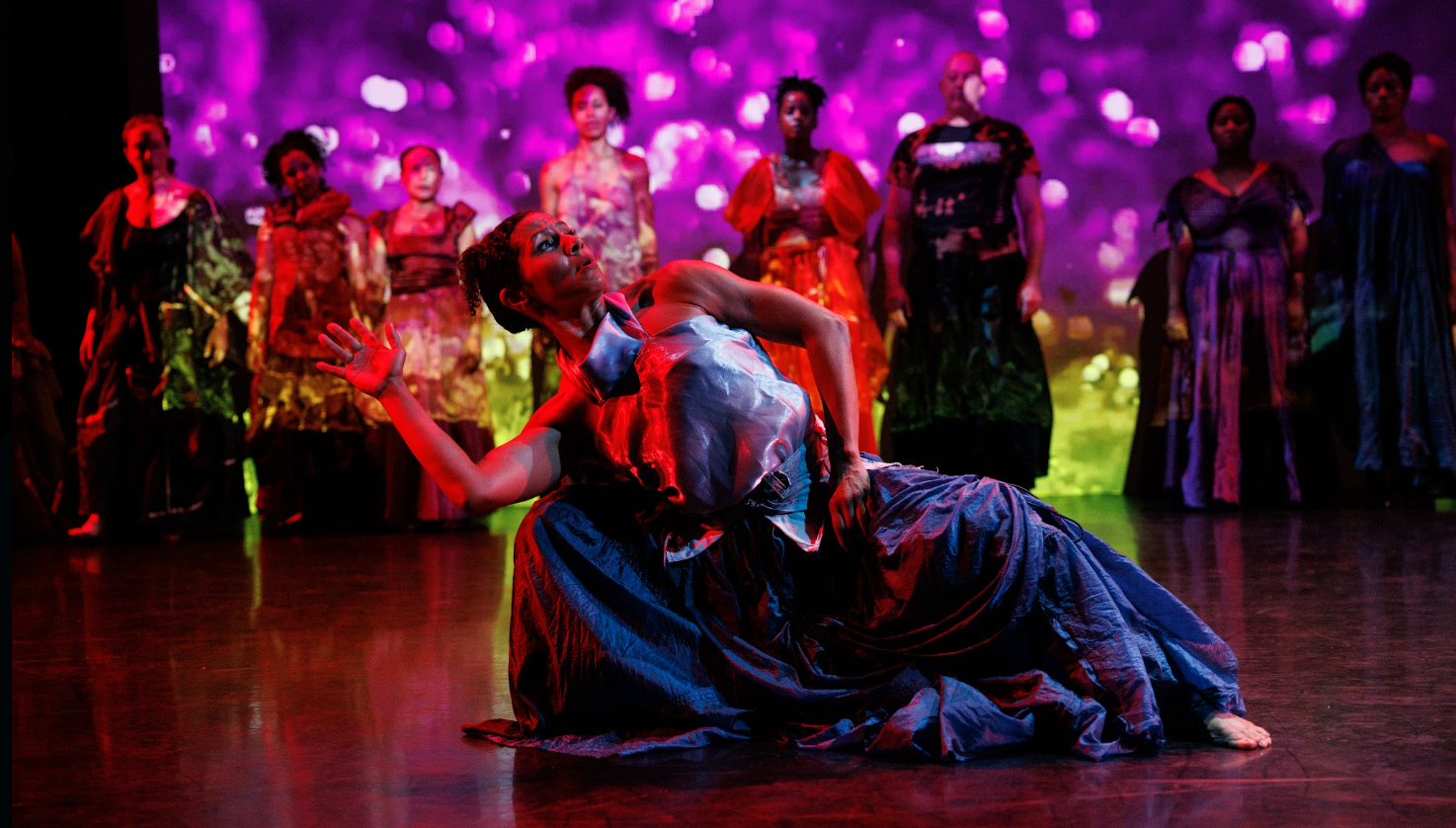
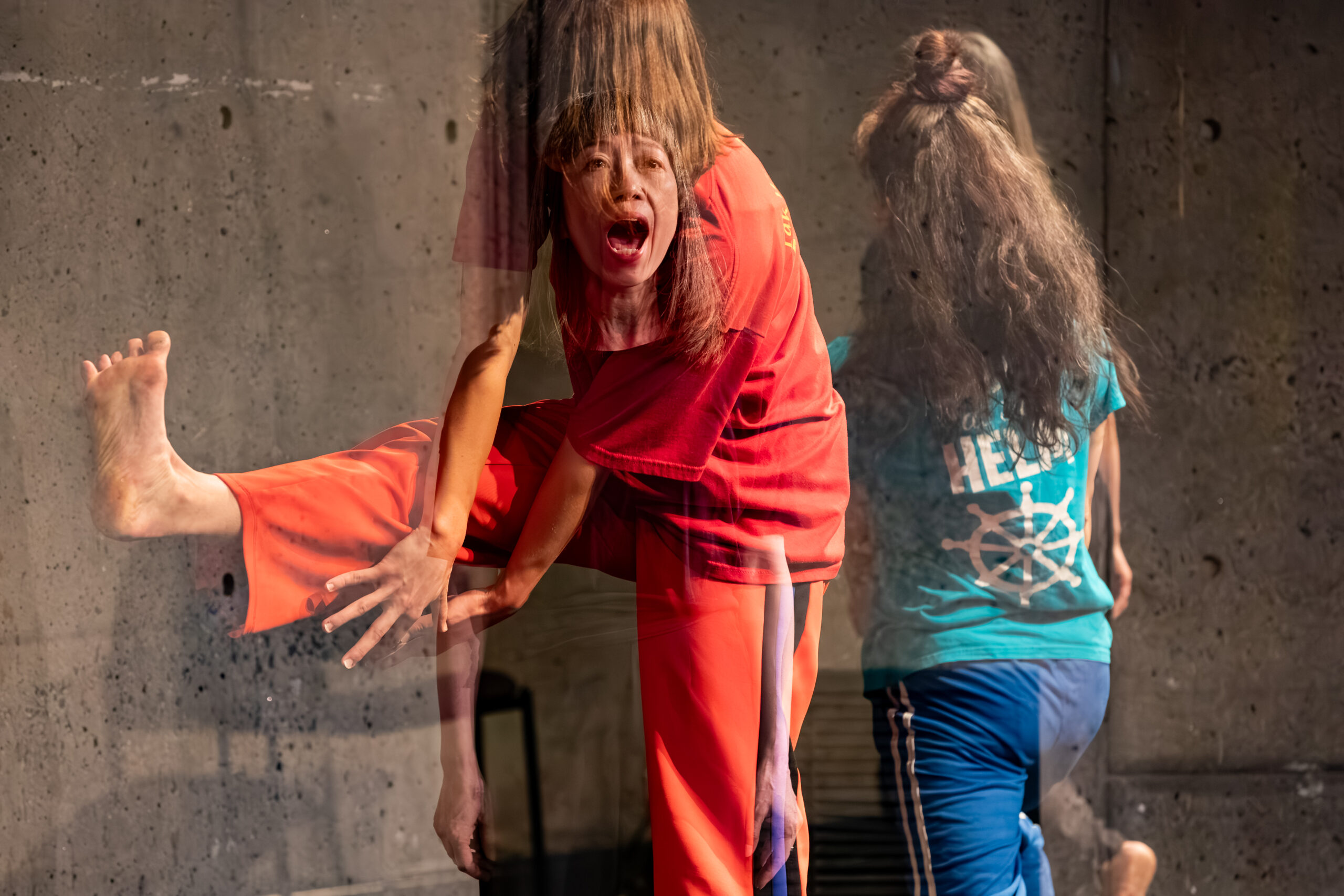
The performance, the crowd, the black box—it’s one band, one sound. Megumi Oshikiri enters, moving to the pulse of a heartbeat. Others join in. The dancers tick, glide, and lock before dropping into mutual release. Oshikiri claims her space. The ensemble rides inside the pocket like a perfect wave.
Oshikiri’s face stays with me: she expresses concern. The entire cast seems to be searching for something, and that searching is the point.
The performers engage the audience directly, making eye contact, addressing viewers aloud, fostering intimacy, humor, and a keen sense of self-awareness. One dancer asks the audience, “Do you have a pen?” Someone offers up a vape pen—
“Not that kind of pen,” Jackson tells me later. We laugh. It’s absurd, spontaneous, real.
In a standout scene, Michaela Delaney Guthrie mimes a stress spiral, coming undone by a bad case of the Mondays. She pats her pockets for her lost keys, but the other dancers are absorbed in their own inner worlds, detached and unbothered. The ensemble lines up diagonally like morning regulars at a coffee shop—scrolling, zoned out, earbuds in. Together, but not with each other. The rhythm pulses through the room, but everyone seems to feel it differently.
From my seat in the back, I watch a dancer break from the line and move down the aisle toward the audience. The beat hits me—I feel it in my chest. I hesitate, caught in an electric pause. I tap the woman sitting in front of me. “I think they want us to dance,” I whisper.
She smiles. We rise—five glorious seconds—before she slips into the cast, leaving me suspended in the rhythm, half witness, half participant.
This is Nylah Jackson. Jackson isn’t just a dancer. She’s a provocateur, a director, a gifted emerging choreographer with a rhythm all her own. I later ask her, “What did you want us to feel?” She doesn’t blink: “Anything.”
Not everything. Not the right thing. Just…something. Anything.
Can You Feel It? gives us space to feel—and to move—together. And that’s where the magic begins.
Thank you, Nylah. For the invitation. Yes, I can feel it.
Can You Feel It?, Nylah Jackson, Asian Arts Initiative Black Box Theater, September 19-21.
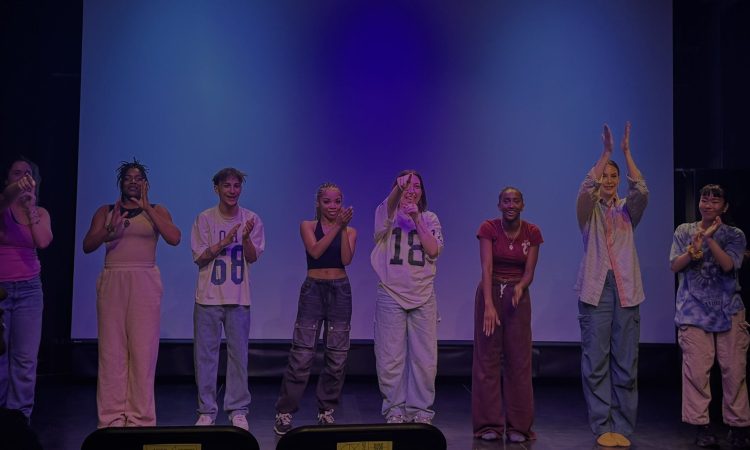
Article Page Image Description: The full cast of Can You Feel It? basks in applause under blue stage lighting following their performance at the Asian Arts Initiative Black Box Theatre.
Homepage Image Description: Dancer Kayla Bailey caught mid-spin, wearing black pants and a black top, her body suspended in motion. Her arms extend gracefully, and the movement of her spin creates a dynamic sense of energy and rhythm, capturing the intensity and freedom of the performance.