Part of what makes a Philadanco evening distinctive is the audience. Vocal, responsive, and unafraid to express admiration, their cheers are not interruptions but affirmations of the power unfolding on stage. Tonight’s crowd is composed of American dance legends, former company members, and longtime patrons gathered to celebrate Philadanco’s enduring dedication to preserving and innovating predominantly Afro-centric dance forms—spanning 65 years as a school and 55 years as a premier company. Much like a family reunion, many patrons have come for the same reason: to honor Aunt Joan and the legacy she has built.
Joan Myers Brown, founder of the Philadelphia School of Dance Arts and the Philadelphia Dance Company (Philadanco) has long been recognized as a visionary who has reshaped the landscape of American dance. Coming of age in a field that privileged light-skinned dancers and excluded Black bodies from mainstream stages, Brown dreamed of a school where Black Americans could train in methods designed for their physicality and artistic inheritance.
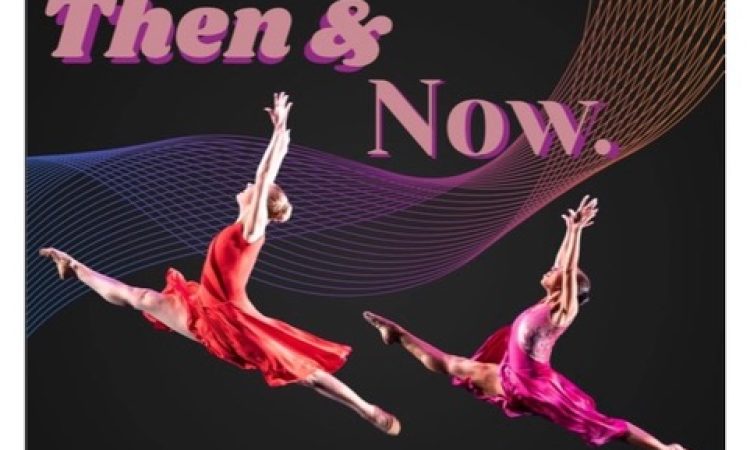
“Then and Now” marks Philadanco’s 55th anniversary season, revisiting repertory gems while introducing a world premiere.
The evening opens with Donald Byrd’s Everybody (1996). Set to Ruffneck and Yavahn’s Everybody Be Somebody, which hit #1 on the U.S. Billboard Dance Club chart in 1995, Byrd’s piece carries the weight of its era. The song’s hypnotic, house-driven pulse, boldly experimental nearly 30 years ago, now reads as a marker of its moment.
Everybody was once uncharted territory: Performed in late Baroque–Rococo–inspired costuming to house music, the dancers strut with an opulence that’s equal parts pride and play. They fan themselves, strike poses, and glide down imaginary runways with sculptural gaits and disarming glares. As dancers, we know that walking is never neutral. There is strut in it, ownership in it, the power to command a room through gait alone. The opening section is all watch-me confidence, and Philadanco only has to walk for me to be completely locked in
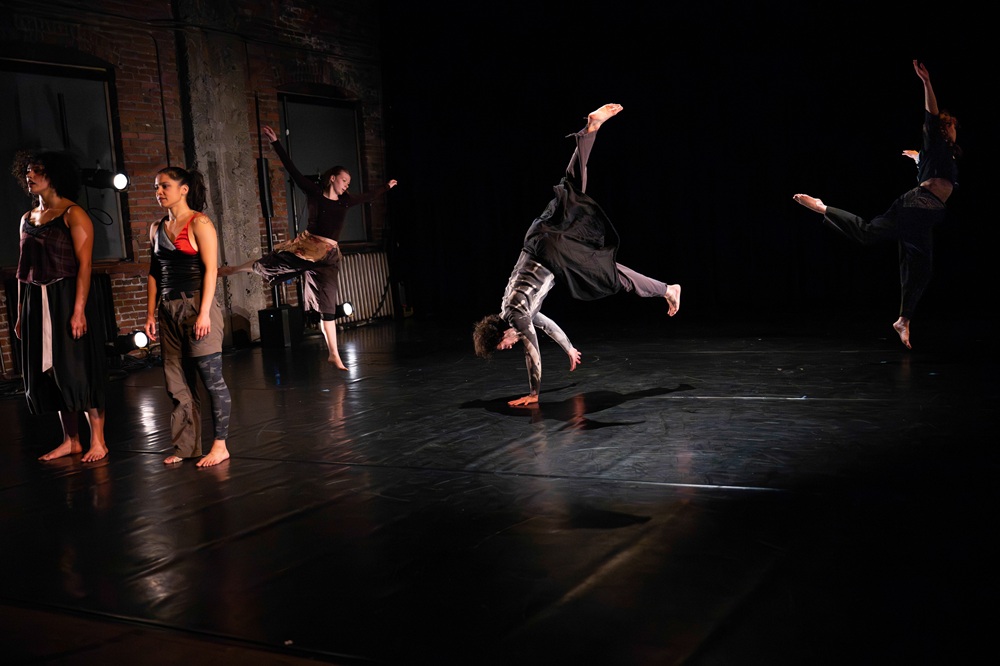
Present in tonight’s audience is renowned choreographer Ronald K. Brown. Brown’s from Exotica Back to Us (1995) channels the full vibrancy of a 1970s aesthetic while remaining rooted in the movement languages that define his work. The choreography is fluid and deeply grounded, driven by a low center of gravity and a dynamic interplay of the torso, pelvis, hips, and head.
There is joy here: whole-body articulation so central to West African, Afro-Caribbean, and many global social dance traditions breathes life into the space. What makes Exotica stand out is not simply a fusion of forms, but the way Brown merges classical training with a full-bodied approach through a technique that feels both precise and liberated. The work makes you feel, makes you move, and gathers people together in shared power and delight. People are dancing in their seats. This is your first signal of delight.
World premiere, Heirborne by Juel D. Lane, is inspired by the Tuskegee Airmen, the first African American military aviators, and by Bessie Coleman, the pioneering pilot who defied segregation to take to the skies. Lane’s choreography, animated by the refrain “my mama ain’t never touched the sky, but she gave me wings,” imagines flight as inheritance. Dancers surge across the stage with propulsion and height, their lifts and leaps evoking an ascent that is both figurative and almost spiritual.
Tommie-Waheed Evans’s With(in)verse (2018) closes the program with a meditation on gospel, not as celebration or evangelism, but as an existential plea. The movement builds at the edge of desperation in a world vibrating with sorrow, faith, and personal reckoning; the dancers often look upward as if searching for redemption from a profound spiritual bottom.
When company member Raven Joseph later shares with the audience that she can “access her God in her way” through the piece, it crystallizes the work’s resonance. Yes, biblical echoes surface, but to stop there would miss the heart of the work. With(in)verse is Evans’s ode to the transformation made possible only through vulnerability. It reveals a new dimension of Philadanco’s ensemble: the dancers are not just technicians—they are embodied storytellers.
I walked away from the performance with a renewed sense of what a Philadanco dancer can be. They are technicians, certainly, but their stamina, style, and total body control from crown to toe are remarkable. They demonstrate precise command of the spine, fearless athleticism, and a sense of groove that navigates complex polyrhythms with ease. Their timing is exact, yet each dancer layers subtle inflections, a glance, a lift of the chest, a shift in weight, that elevate artistry above technical mastery. And they all exude a fierce presence, effortlessly cool, impressively strong, and utterly captivating. To study body isolations, contractions, and their execution at the highest level, you need only watch a Philadanco company member in action.
Viewed as a whole, Then & Now lays bare Philadanco’s fearless fusion of styles and genres in a declaration of resilience, artistry, and power. Joan Myers Brown’s spirit radiates through the company: radiant, bold, unshakable. Her vision, as illuminated by Philadanco, is a shining example of the vital contributions of Black choreographers, dancers, musicians, and institutions to American dance history and contemporary culture. Here’s to Joan Myers Brown, whose passion, courage, and love for dance remind us why we keep watching, learning, and dreaming.
Then & Now, Philadanco, Philadelphia, Kimmel Center for the Performing Arts, December 5-7.