“Your beauty haunts you when you call your own aliens and criminals.”
Malaya Ulan, the younger half of the mother-daughter team leading the AniMalayaWorks Collective, says these words to a now distant Ecuadorian-American boy whose brown beauty has been encumbered by xenophobia and self-hatred. In a black dress, Ulan mourns her classmate’s loss of connection to his heritage and himself. She alternates between song and spoken word, eventually settling for a text, “When you twist your mother tongue for the American dream…,” as perhaps the only way to get through to him–a poignant comment on the isolating reality of an increasingly high-tech world.
“Agos Y Vientos,” is a three-act Sarswela, created by Ulan with her mother and co-director, Anito Gavino. In the digital newspaper-style program notes, Sarswela is described as a “vibrant tapestry of spoken dialogue, contemporary song, and expressive dance” and a source of immense artistic power. The Agos (“water currents” in Tagalog) and Viento (Spanish for “wind”), blended in the work’s title, are reflected in the richness of its musical forms which bridge Philippines’ connection to Cuba at the heart of its connective pulse.
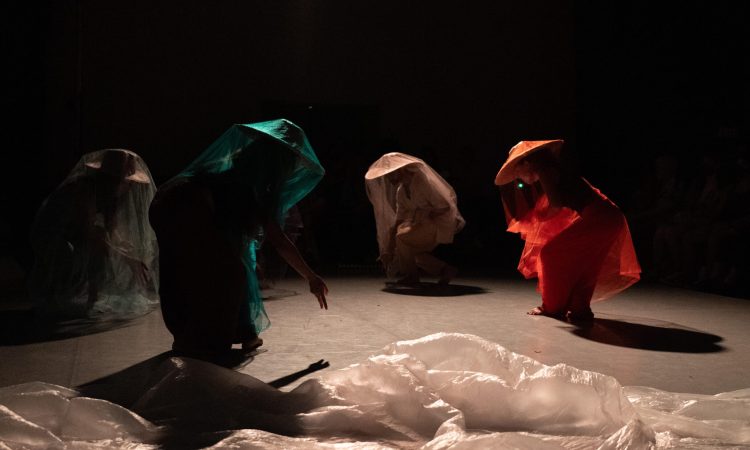
In the opening scene, Anssumane Silla and Yoel Malcolm DeJesus layer percussive emphasis atop recorded music and Ulan’s singing surfaces as if to summon in the curving pathways of Gavino, Marsell Anhel Chavarria, Athena and Nikolai. Underneath gauzily-draped salakots (conical Asian-style farmer hats), their procession is equal parts planting and mourning as they gesture to Earth.
Ulan screams, “How will the butterflies find us again?” Amidst Torian Ugworji’s projections depicting the “labyrinth of smoke, military bases, and floods” which has scarred the people and the land, the spirit of togetherness is elusive for now.
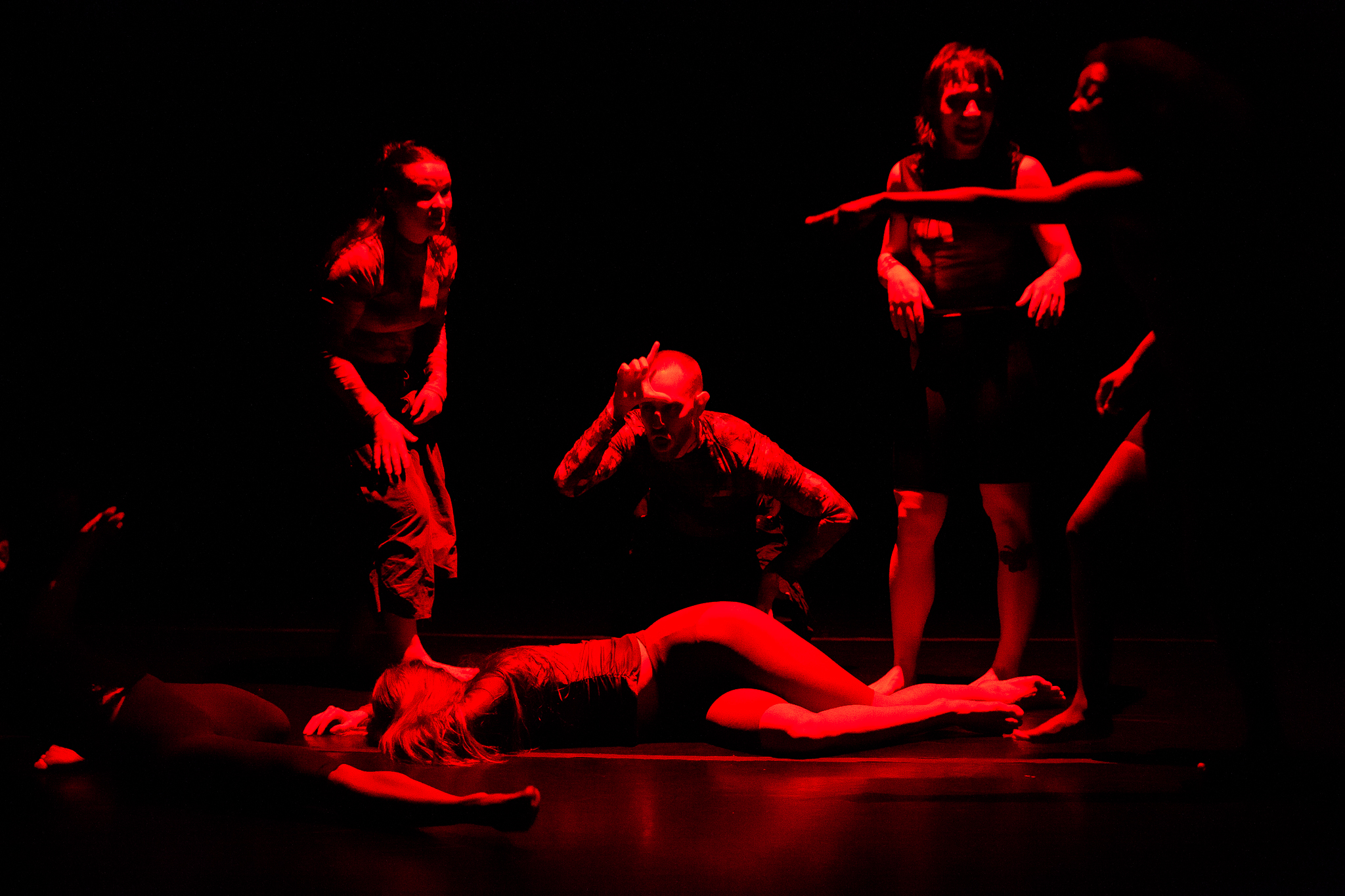
With heaps of satirical humor, vaudevillian dance passes set to titles like “Operation Wetback” and a participatory conga-line deconstructing into violent reckoning with the animal nature of our humanity, this Sarswela reminds us that in turning away from the spirits, we forget Earth.
Gavino’s partner, Cuban immigrant and artist, Pedro González sends us a video message, “You write your voices to awaken those who are still asleep.”
In the final act, we are revisited by the percussive progression of dancers from the opening scene, but this time, the performers seem to be harvesting self. The lights dim as they recognize “Kapwa” (the Tagalog word representing shared identity) in each other. It is fitting that Ani means “harvest” and Malaya, “freedom.”
Agos Y Viento, AniMalayaWorks Collective, Philadelphia Fringe Festival, Icebox Project Space Gallery, Sept. 11-12, 2026.