For 10-15 minutes, the audience is more compelling than the performers. They hadn’t finished setting up, and it seemed they never agreed on who would do what. They plug in projectors as we get out our own chairs. Unnecessary comments, embarrassed explanations, silent treatment, self imposed time out–the room stinks of family dysfunction.
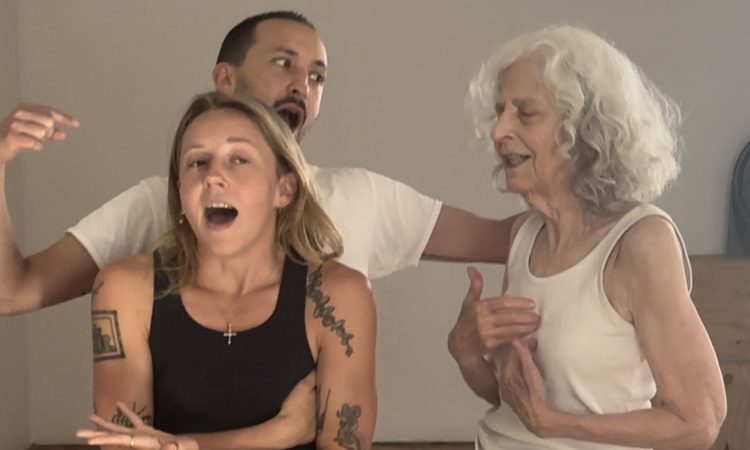
In Zeze Schorsch’s room/in/nation, performers Adam Kerbel, Annie Peterson, and Sheila Zagar play themselves as well as a makeshift family that Schorsch passively directs. “You know,” Schorsch crouches close to the person next to me, pauses, looks side to side, then continues with a hush, “you don’t have to stay here. You can move. You can do something else. You can go.” Is she putting our agency in our faces? Giving us an out?
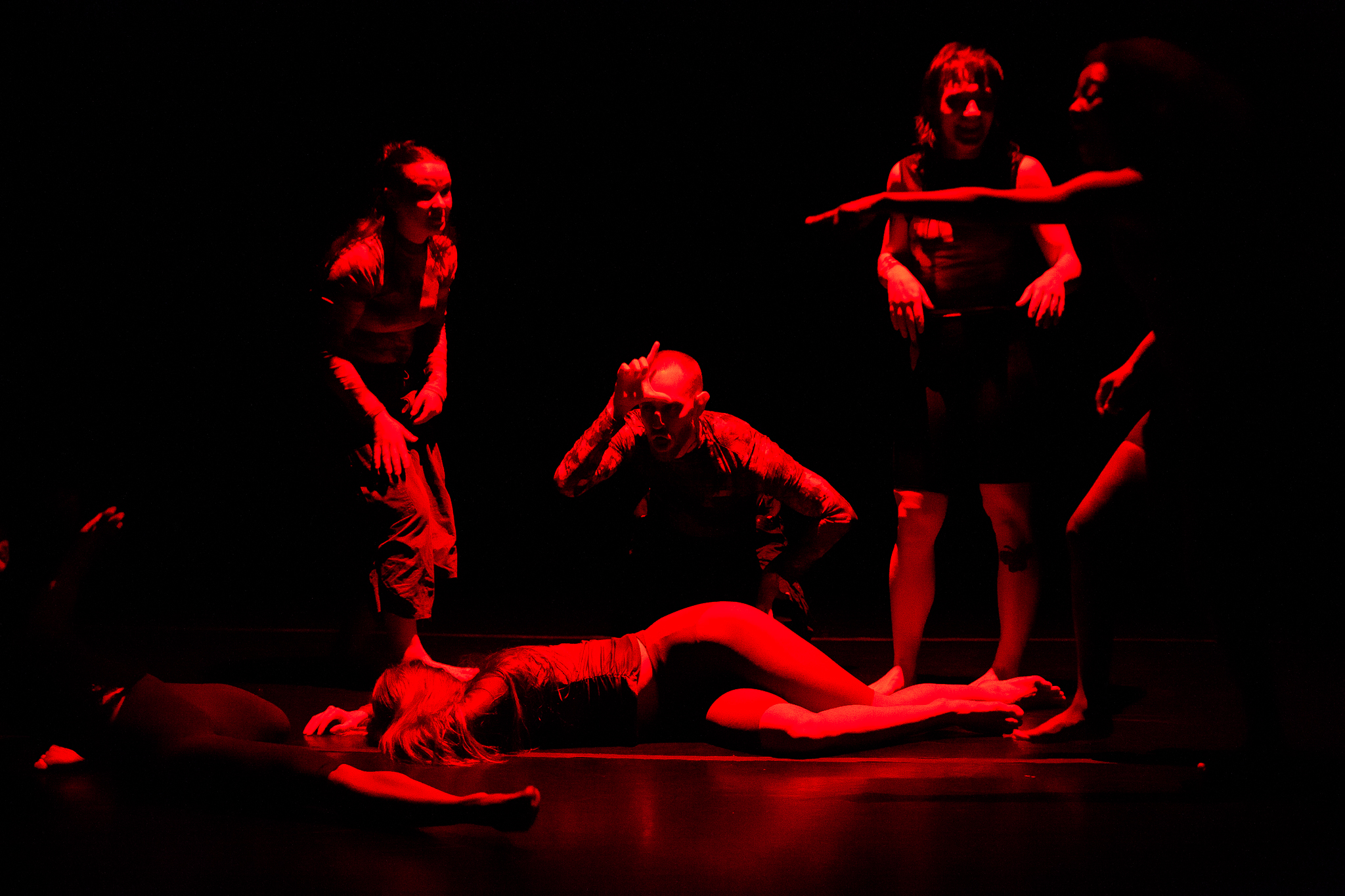
Sheila, Annie, and Adam–(I know the convention is to use artists’ last names, but room/in/nation was so informal I want to use their first names)–tweak, mumble, and fume in front of layered projections of themselves dancing-ish. Sometimes they make eyes and stare, almost laugh, or cry, or strain to stay mad. After too long, they reconcile-ish in the main room.
“You’re not supposed to wear white after Labor Day!” Annie blurts. They’re all wearing all white. “It’s 9/11,” Adam adds. Zeze starts a song, the projections gone. The three contact, weave, fall, and lift each other, talking all the while.
“I fucked this up,” Zeze concedes from the balcony.
“I think it’s going fine,” Annie placates.
They move us to one side and ask, “Who’s your favorite?” They take turns down a catwalk: roll, hopscotch, pose, shake their hips to something upbeat as we clap our votes. The competition disappears into counterbalances, embraces, and a somber song. They begin to wave, “over here, over here!” They’re waving toward the balcony where Zeze had just been, when she says, “I want to end this.” “Alone?” they ask her.
The family, Sophie Lewis argues in Abolish the Family, is the “base unit” controlling labor and enforcing patriarchy and racism. room/in/nation, then, pulls at our families’ entanglement with abusive systems we work to abolish and struggle to escape. They shine the projectors on Zeze like stage lights, overlaying her with themselves, as Zeze lip syncs to Bjork (something about you being a part of me I can’t get rid of, but I might be misremembering). Our family patterning, our nation, indelible, no matter how much stain remover.
room/in/nation, Zeze Schorsch, Asian Arts Initiative, Cannonball Festival, September 11-13